We spent decades treating rivers like concrete drainage ditches, and now we are paying the price. When California faced its most brutal megadroughts in recent history, wild coho salmon population numbers plummeted toward the abyss. Traditional hatchery releases and expensive structural fixes failed to stop the bleeding.
Then conservationists stopped fighting nature and started copying rodents.
According to a July 2026 study published in Frontiers in Ecology and Evolution, building artificial structures that mimic natural beaver work completely altered the math of survival . In one specific northern California tributary—Sugar Creek in the Scott River watershed—juvenile coho salmon survival skyrocketed from a meager mean of 8% before restoration up to a staggering 60% afterward.
If you want to understand how a few logs, willow posts, and mud can outperform multi-million-dollar engineering projects, you have to look past the surface current.
The Problem With Modern California Streams
Coho salmon are delicate creatures. They need cold, slow-moving, connected wetland habitats to survive their early juvenile stage. Centuries of trapping removed the original keystone engineers—the North American beaver—leaving watersheds bare, straight, and deeply incised.
When heavy winter rains hit, water rushes down these straightened channels at terrifying speeds, washing young fish away. When summer droughts arrive, the same streams dry up into stagnant, scorching trickles.
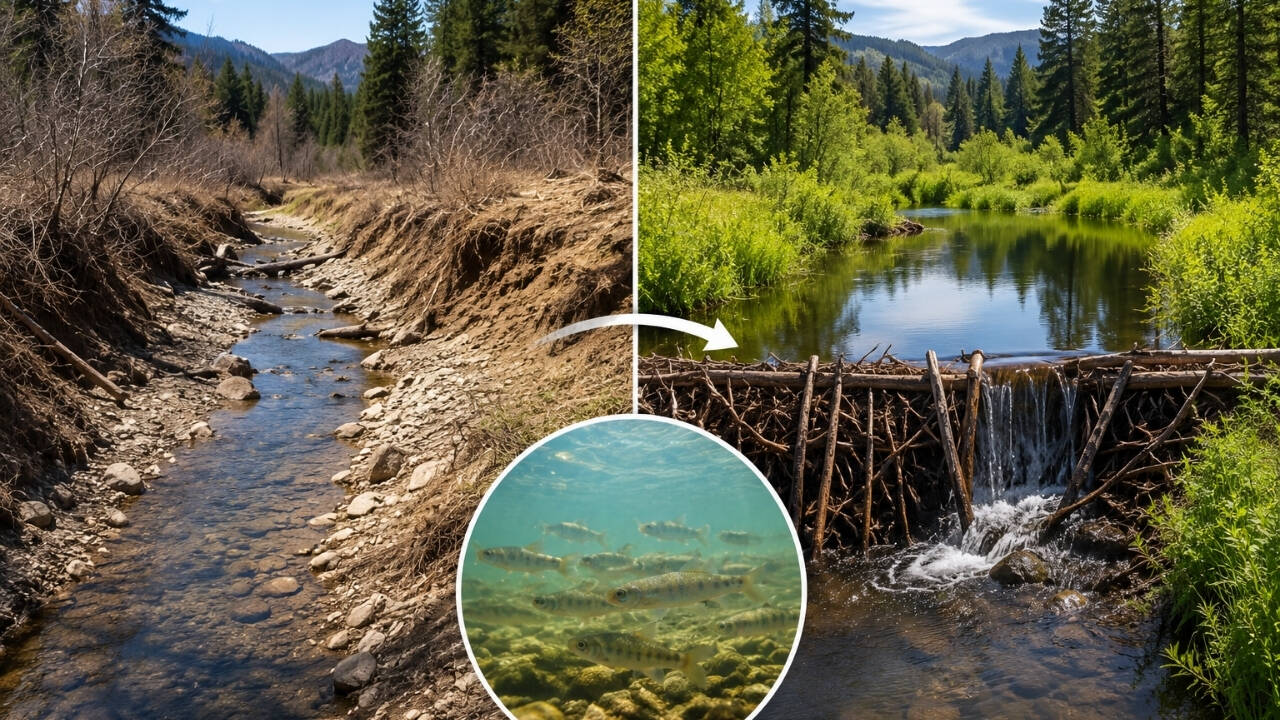
[Straight Channel] ---> Fast Runoff ---> Washed Out Fish / Dry Summer Bed
[Beaver Dam Analogue] ---> Slow Ponds ---> Cool Water Refugia & High Survival
Most watershed management ignored this structural deficit. Agencies kept trying to dump more fish into hostile waters without fixing the habitat itself. That strategy is like throwing swimmers into a raging rapid and wondering why they drown.
How Beaver Dam Analogs Change the Game
Conservation teams stepped into tributaries like Sugar Creek and French Creek to construct Beaver Dam Analogs, often called BDAs. These aren't permanent concrete walls. They are hand-built structures made from wooden fence posts driven into the streambed, woven tightly with willow branches, and packed with gravel and organic sediment.
The results hit fast:
- Groundwater Rebound: The artificial obstructions slowed water velocity, forcing it out of deep carved channels and back onto the flat floodplains. Groundwater tables rose by nearly three feet in monitored zones.
- Temperature Control: Deep, slow pools retained the cool snowmelt through scorching summer months, giving coldwater fish a safe thermal refuge.
- Habitat Expansion: These restored wetlands created off-channel sanctuaries supporting thousands of juvenile coho when neighboring streams went completely dry.
The Real Surprise: The Real Beavers Showed Up
The best part of the project wasn't just the human-built wood piles. It was the biological domino effect.
Once the ecological conditions recovered, wild California golden beavers moved back into the project sites on their own terms. They took over the maintenance, repaired the human-built structures, and expanded the wetland network organically. During regional droughts that wiped out coho populations across neighboring, unrestored basins, the Scott River population managed to anchor the entire Klamath basin's adult returns.
Nature didn't need a corporate committee. It just needed its old plumbing back.
What This Means for River Restoration Moving Forward
We can no longer afford to manage water through sheer brute force. If state agencies and private landowners want to rescue endangered aquatic species from climate collapse, they have to pivot away from heavy engineering and lean heavily into process-based restoration.
Look at your local watershed policies. Push local conservation districts to fund low-tech, process-based structures instead of massive concrete stabilization. Re-establishing the small, messy, flooded meadows that trap water and feed aquifers is the only playbook left that actually works.