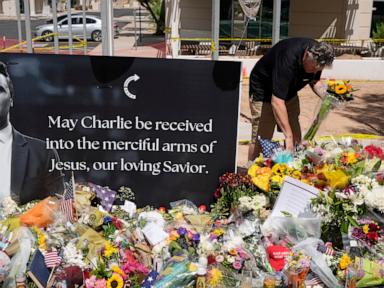
The upcoming days are going to be brutal for the family of Charlie Kirk, but they are also going to lay bare a terrifyingly detailed forensic trail. Starting Monday, July 6, 2026, a Utah courtroom will become the epicenter of a high-stakes legal battle that has been building for nearly ten months. Prosecutors seeking the death penalty against 23-year-old Tyler James Robinson are about to put on a five-day mini-trial designed to prove he was the lone sniper who assassinated the conservative activist on a college campus.
If you think this is just a routine procedural step, you are mistaken. This preliminary hearing is the first time the public, and Charlie Kirk's family, will see the full weight of the state's evidence presented openly. Kirk's widow, Erika Kirk, and his parents, Robert and Kathryn Kirk, will sit in the same room as the man accused of pulling the trigger. The entire proceeding is being livestreamed, ensuring that a hyper-polarized nation can watch every piece of ballistic and digital evidence drop in real time.
State District Judge Tony Graf Jr. has a clear job here. He doesn't have to decide if Robinson is guilty beyond a reasonable doubt. That is for a later trial. Right now, the threshold is much lower. The state just needs to show there are reasonable grounds to believe Robinson committed the crime. Legal experts say the prosecution has what looks like a total slam dunk, but the defense is still swinging hard to take capital punishment off the table.
The High Stakes Minitrial in Provo
This five-day event in Provo, Utah, is not a simple reading of charges. It functions as a condensed version of a murder trial. The prosecution is hauling out DNA findings, autopsy results, witness statements, and terrifying video footage of the actual killing. Because the rules of a preliminary hearing allow for secondhand information and hearsay, prosecutors can move quickly, painting a comprehensive picture of the attack without calling every single witness to the stand.
The defense team has spent months trying to keep the public out. They wanted cameras banned and tried to restrict access to the courtroom, arguing that intense media coverage would poison the jury pool. Judge Graf shot that down. Erika Kirk actually fought to keep the trial accessible, matching her public stance of transparency since the day her husband died.
You have to understand the specific legal mechanics at play here. Utah law only allows the death penalty under specific aggravating circumstances. To keep lethal injection on the table, the state is going to argue that Robinson didn't just kill Kirk; he endangered thousands of innocent students who gathered to watch a political debate. When a sniper fires a high-powered rifle into a packed crowd, every single person in that square is in the line of fire. That is the leverage the state is using to push for the ultimate punishment.
The Mountain of Physical Evidence Locking in the Prosecution
When Robinson turned himself in a day after the shooting, he didn't leave investigators scrambling for clues. The forensic trail he allegedly left behind is incredibly dense. Let's talk about the physical evidence because it goes far beyond a simple eyewitness identification.
First, there is the DNA. State forensic analysts found genetic material consistent with Robinson's profile on the most incriminating parts of the crime scene. His DNA was pulled directly off the trigger of the recovery rifle. It was found on the fired cartridge casing left behind, on two additional unfired cartridges, and on a towel that was wrapped around the weapon. For a defense attorney, explaining away your client's DNA on the literal trigger and ammunition of a murder weapon is an absolute nightmare.
Then you have the digital and paper trail. Prosecutors reveal that Robinson left a literal paper confession. He allegedly hid a note under his computer keyboard meant for his roommate, who was also his romantic partner. The note was chillingly direct. It read that he had the opportunity to take out Charlie Kirk and he was going to take it.
If that wasn't enough, the text messages sent right around the time of the assassination completely dismantle any argument that this wasn't a premeditated, politically motivated execution. Robinson text messages to his partner spelled out his motive in plain English. He wrote that he had enough of Kirk's hatred and that some hate cannot be negotiated out. When the partner text back in shock, asking why he did it and how long he had been planning it, Robinson didn't deny it. Instead, he later told his partner to delete the messages and stay quiet, which earned him an additional charge of witness tampering.
The defense tried to block these recorded statements from the roommate, arguing that the roommate should have to testify in person so they could cross-examine them. Judge Graf denied that motion earlier this week. The recorded confessions are staying in, and they are going to be devastating when read aloud in open court.
How the September Assassination Unfolded on Campus
To understand why the evidence is so compelling, you have to look at the exact timeline of September 10, 2025. This wasn't a chaotic, impulsive shooting. It was a cold, calculated tactical movement executed on the campus of Utah Valley University in Orem.
The suspect arrived early. Security cameras tracked a gray Dodge Challenger pulling onto the campus at 8:29 a.m. Investigators noted that the driver was dressed differently when he first arrived compared to his appearance during the shooting, suggesting a planned wardrobe change to evade security.
By 11:50 a.m., the suspect showed up again on campus video feeds. He was walking through a grassy area toward a parking lot just north of the university grounds. This time, he was wearing a black shirt featuring an American flag in the center, a dark baseball cap, and oversized sunglasses. At 11:53 a.m., he paused at the top of a flight of stairs, checked his phone, and walked down into a pedestrian tunnel. FBI surveillance photos later captured him moving up a stairwell in an adjacent parking garage.
Meanwhile, the Turning Point USA outdoor event was getting underway. By noon, around 3,000 people had crowded into the campus square. Kirk walked out at 12:09 p.m., energizing the crowd by tossing hats into the audience. He took the microphone and started speaking at 12:11 p.m.
While Kirk was speaking, the shooter was making his move. At 12:15 p.m., video showed the suspect crossing a public walkway railing directly onto the roof of the Losee Center. He disappeared from view briefly, ran across the roof structure, and dropped into a prone crawling position. By 12:22 p.m., he was lying flat on his stomach, staring through a rifle scope at Kirk, who was standing just 130 meters away.
One minute later, at 12:23 p.m., a single rifle shot rang out. The bullet struck Kirk directly in the neck. Witness accounts from journalists on the scene describe immediate, catastrophic blood loss as Kirk went limp.
The shooter didn't linger. Video caught him sprinting from the south corner of the roof to the north corner, where the drop to the ground was shorter. He hung from the edge, dropped down at 12:24 p.m., and fled into a wooded area. He left behind a clear footprint in the dirt, proving he was wearing Converse sneakers, and ditched the scoped rifle nearby.
The timeline is tight, verified by multiple synchronized security feeds, and links the physical movements of the suspect directly to the timing of the fatal shot.
The Surrounding Drama and the Exploding Microphone Theory
You cannot talk about this case without addressing the massive online circus that has developed around it. Despite the overwhelming ballistics trail, internet subcultures have spent months trying to spin alternative theories. The most prominent voice driving this skepticism is conservative commentator Candace Owens.
Owens has repeatedly used her platform to question the official findings, causing massive rifts within conservative media and turning Point USA circles. Her main talking point is the bizarre exploding microphone theory. She and her followers have analyzed slow-motion event footage, claiming that the wireless microphone clipped to Kirk clothing exploded at the exact moment of the shooting, rather than a bullet hitting him from the roof.
Owens also released videos focusing on enhanced images of the SUV used to transport Kirk to Timpanogos Regional Hospital, pointing to fragments inside the vehicle that she claims warrant federal investigation. She has heavily critiqued the immediate security failures and questioned the actions of Kirk's inner circle in the hours surrounding the assassination.
Let's look at this realistically. Real forensic investigators don't operate on internet video clips. Every piece of official documentation, from the autopsy report to the physical recovery of the rifle and the matching shell casings, points to a standard kinetic ballistic impact from a distant firearm. No official agency, local or federal, has found a shred of evidence supporting a detonating microphone. While Owens keeps her audience captive with these theories online, the courtroom this week will operate entirely on the hard physical evidence compiled by the Utah County Attorney's Office. The online theories and the legal reality are moving on two completely separate tracks.
Legal Warfare Over the Death Penalty and Media Contempt
The run-up to this hearing has been messy behind the scenes. Just over a week ago, Judge Graf found Deputy Utah County Attorney Christopher Ballard in civil contempt. The defense team caught Ballard talking to journalists about specific ballistics data and a bullet fragment pulled from Kirk's body. They accused the prosecution of launching a media tour to prejudice potential jurors before a trial could even be scheduled.
The defense used that contempt ruling to demand that Judge Graf strip the death penalty from the case entirely. They argued that the state's loose lips made a fair trial impossible. Graf agreed that the prosecutor crossed the line, but he refused to take capital punishment off the table. Instead, the judge stated the court would expand the jury pool and use intensive screening questionnaires down the line to weed out anyone influenced by the leaks.
This shows you exactly how aggressive the defense is going to be this week. They know the factual evidence is brutal. Their best move right now is to find procedural errors, attack the state's handling of information, and chip away at the aggravating factors required for a death sentence.
Next Steps for the Courtroom
If you are following this case, you need to know what happens next. The hearing will consume the entire week. You can expect the prosecution to systematically present its core blocks of evidence.
- Days 1 and 2: Focus will be on the campus security footage, the timeline of the shooter's movements, and the eyewitness accounts from people in the crowd.
- Day 3: Expect the highly technical forensic and DNA testimony. Experts will detail how Robinson's genetic profile ended up on the rifle trigger and wrapped towel.
- Day 4: The digital trail. The state will introduce the note under the keyboard and the text message confessions sent to the roommate.
- Day 5: Autopsy findings and closing arguments regarding whether the legal standard for a trial has been met.
Once the five days wrap up, Judge Graf will issue a ruling on whether Robinson must stand trial for aggravated murder. If he binds the case over, Robinson will finally enter a formal plea, and the clock will start ticking toward a massive capital murder trial. Keep your eyes on the live feed because the defense will likely use their cross-examinations this week to telegraph exactly how they plan to fight a case where the physical evidence seems completely locked down.