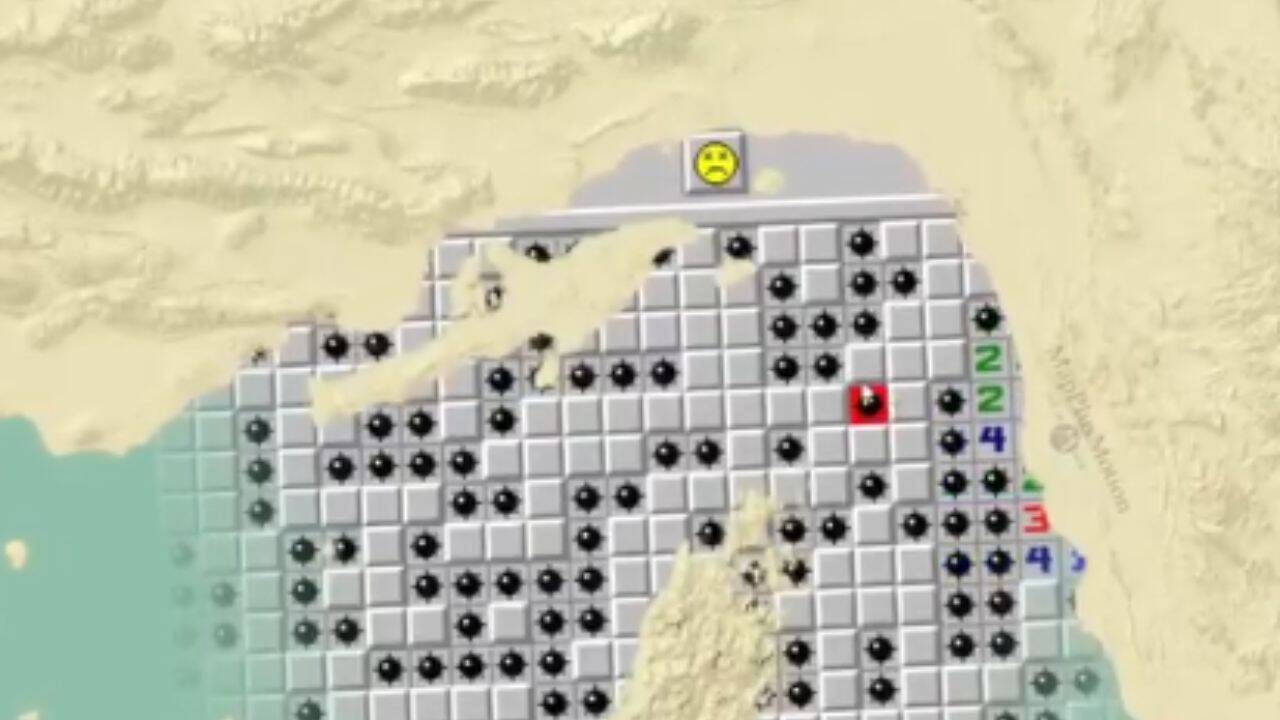
The short-lived peace in West Asia is dead.
If you thought the interim ceasefire signed last month would actually hold, Wednesday's thunderous daylight airstrikes on Greater Tunb Island just shattered that illusion. For 90 minutes, U.S. fighter jets and naval vessels pounded Iranian missile storage facilities, coastal defense systems, and launch sites on a tiny, strategically vital speck of land in the Strait of Hormuz. Hours later, a second wave of strikes followed.
This isn't just another routine exchange of fire. It's a massive escalation that signals a complete breakdown of diplomatic backchannels. The U.S. has officially reimposed its strict naval blockade on Iranian ports, and Iran is threatening to choke off the world's most critical energy transit routes.
If you want to understand where this conflict is actually heading, you have to look past the surface-level military briefings. Here is what is really happening on the ground, why Greater Tunb Island matters, and what this escalation means for the global economy.
Why Greater Tunb Island Is the Ultimate Geopolitical Choke Point
To understand why U.S. Central Command chose this specific target, you need a quick history lesson. Greater Tunb Island is not just a random patch of sand. It is a highly militarized outpost sitting directly on the edge of the Strait of Hormuz shipping lanes.
In 1971, Iran seized Greater Tunb, Lesser Tunb, and Abu Musa islands from what was about to become the United Arab Emirates. The UAE has contested this seizure for over half a century. By positioning anti-ship cruise missiles and radar systems on Greater Tunb, Tehran essentially gained a physical kill-switch over the strait.
- The Shipping Lane Factor: The deep-water channels used by massive oil tankers pass directly next to these islands.
- The Tactical Advantage: Placing mobile missile launchers here allows the Islamic Revolutionary Guard Corps (IRGC) to target commercial ships with almost zero warning.
- The U.S. Response: Striking this island is a direct attempt to blind Iran’s coastal surveillance and strip away its physical leverage over the strait.
Some military analysts suggest that if the U.S. or its allies were to physically seize these islands, they could permanently control transit through the strait. But doing so would require a bloody amphibious assault, something Washington is desperately trying to avoid. Instead, the U.S. is relying on precision air power to systematically dismantle the infrastructure Iran built up over decades.
The Collapse of the Interim Deal and Trump's High-Stakes Gamble
This current cycle of violence did not happen in a vacuum. It is the direct result of a collapsed diplomatic framework.
The wider war originally erupted on February 28, 2026, with sudden U.S. and Israeli strikes inside Iran. After months of grueling conflict, both sides signed an interim ceasefire last month. It was supposed to buy 60 days of calm to negotiate a permanent peace and address Iran's nuclear program.
It failed miserably.
Talks stalled because Iran refused to stop asserting control over shipping lanes, even attempting to levy transit fees on commercial vessels. When Iran officially closed the Strait of Hormuz on Saturday and attacked seven commercial ships over the following week, the deal was dead.
President Donald Trump is now taking a massive political gamble. He is facing heavy domestic pressure to keep the U.S. out of a grinding, multi-year ground war. His strategy is simple: apply maximum military pressure from the air and sea to force Tehran back to the negotiating table.
On Tuesday, Trump openly threatened to target Iranian civilian infrastructure, including power plants and bridges, if negotiations do not resume. He even floated the idea of a 20% tariff or fee on all shipping passing through the strait. It is a chaotic, high-pressure tactic designed to squeeze Iran's already fragile economy.
But will it work? History suggests otherwise. Iran's leadership rarely backs down when backed into a corner.
The Human and Military Cost of the Daylight Strikes
The shift to daylight bombing runs on Wednesday marks a major change in U.S. military tactics. Previously, the U.S. conducted its operations under the cover of darkness to minimize risks to its pilots and aircraft. Going in during the day is a deliberate display of dominance. It tells Tehran that the U.S. can strike whenever and wherever it wants, with total airspace control.
The toll of this escalation is rising rapidly:
- Casualties in Iran: U.S. strikes overnight and into Wednesday killed at least seven military personnel at the Bampur military base in Sistan and Baluchestan province.
- Civilian Impact: Government spokesperson Fatemeh Mohajerani stated that at least 30 civilians have been killed in recent days.
- Injuries: Over 260 people were wounded in the overnight strikes alone, marking some of the highest casualty counts since the war began.
- Target Areas: The strikes hit deep. Beyond Greater Tunb, U.S. missiles hit a guesthouse and barracks for the 388th Mechanized Infantry Brigade near Iranshahr, as well as port facilities in Bushehr, which sits dangerously close to Iran's only active civilian nuclear reactor.
These numbers show that the U.S. is no longer just targeting isolated launch pads on uninhabited beaches. It is hitting active military barracks and command hubs.
Iran Strikes Back: The "Everyone or No One" Energy Threat
The IRGC has made its policy crystal clear. If Iran cannot export its oil and gas due to the U.S. naval blockade, then no one else in the region will export theirs either.
"The export of oil and gas from the region will be either for everyone or for no one," the Revolutionary Guards warned in a statement on Wednesday.
This is not an empty threat. The IRGC has already launched retaliatory drone and missile strikes against regional military installations hosting American forces in Jordan, Kuwait, and Bahrain. They are actively trying to raise the cost of the conflict for Washington's regional allies.
The economic consequences are already showing up in global markets. About 20% of the world's petroleum passes through this narrow waterway. Oil prices jumped another 1% on Wednesday, continuing a steady climb toward a one-month high. If the Strait of Hormuz remains locked down, global energy supply chains will buckle, sparking a massive new wave of inflation that will hit consumers worldwide.
What Happens Next: Actionable Steps for Navigating the Crisis
We are rapidly heading toward a tipping point. If you are an investor, a supply chain manager, or just someone trying to understand how this impacts your wallet, you need to prepare for a prolonged period of instability.
Here is what you should watch closely over the coming weeks:
Monitor Maritime Insurance Premiums
The cost to insure commercial vessels traveling through the Gulf of Oman and the Arabian Sea is going to skyrocket. If insurance companies refuse to cover ships transiting the region, it won't even matter if the U.S. Navy keeps the lanes physically open—commercial operators simply won't make the trip.
Watch for Cyber Retaliation
Iran knows it cannot defeat the U.S. military in a head-on conventional war. Expect Tehran to heavily rely on asymmetric warfare. This means an imminent threat of state-sponsored cyberattacks targeting Western financial institutions, shipping registries, and energy infrastructure. Hardening your organization's digital defenses should be an immediate priority.
Prepare for Long-Term Energy Supply Diversification
If your business relies on petroleum-based products or global shipping, you cannot count on Middle Eastern stability. The era of cheap, reliable transit through the Persian Gulf is on life support. Start auditing your supply chains now. Look for alternative routing or alternative sourcing in the Western Hemisphere or West Africa to shield your operations from sudden price spikes.
The situation is incredibly volatile, and the window for a diplomatic resolution is closing fast. Expect more strikes, more retaliation, and volatile energy markets as both sides try to break the other's resolve.