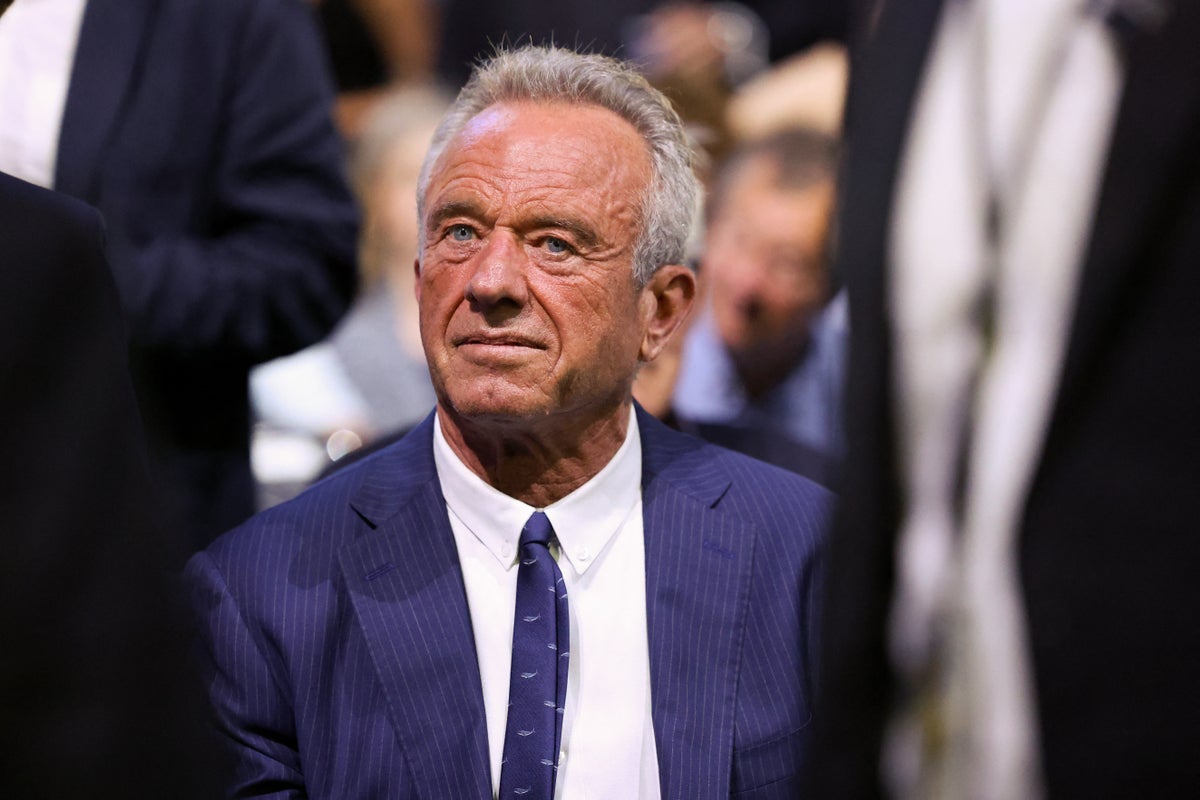
You have probably seen the headlines bouncing around social media. The ones claiming Robert F. Kennedy Jr. once dropped a live snake into a swimming pool packed with screaming kids at a childhood birthday party. His sister, Kerry Kennedy, shared the story, and the internet immediately did what it does best: split into factions of pure outrage and total disbelief.
It sounds like a caricature of a political villain. But if you actually know anything about the Kennedy family history—or how RFK Jr. has operated for the last fifty years—the story isn't just believable. It is entirely on brand.
This isn't a random piece of gossip meant to destroy a reputation. It is a glimpse into a bizarre, chaotic family dynamic that explains exactly how a kid who used to throw reptiles at his siblings grew up to become the U.S. Secretary of Health and Human Services.
The Incident That Blew Up Social Media
Kerry Kennedy dropped this specific family secret on the heels of another viral moment. Just weeks earlier, video surfaced of RFK Jr. wrangling two southern black racer snakes with his bare hands on the patio of Dr. Mehmet Oz's Palm Beach home. In that video, his wife, Cheryl Hines, can be heard shouting in the background, begging him to stop. RFK Jr. just grinned, caught the reptiles by their tails, and let them nip at his fingers.
According to Kerry, that wasn't a new hobby. She recalled a childhood birthday party where a young Bobby decided the best way to liven up the festivities was to unleash a snake directly into a pool filled with swimming children.
People reading the story today tend to view it through a modern lens. They think of a manicured suburban backyard, a pristine pool, and a traumatized group of modern toddlers. But to understand why this happened, you have to understand Hickory Hill—the legendary, chaotic Virginia estate where the Kennedy kids grew up.
Life Inside the Chaos of Hickory Hill
Hickory Hill wasn't a normal home. It was an anarchic compound run by Ethel Kennedy, who famously believed in giving her eleven children total independence with almost zero traditional discipline. Visitors to the estate in the 1950s and 1960s frequently described it as a mix between a high-society political salon and a poorly managed zoo.
Bobby was the third of those eleven children. From a very young age, his obsession wasn't politics; it was animals. He filled the house with coatimundis, salamanders, and a rotating cast of reptiles. He became a licensed falconer. He didn't just study nature; he weaponized it for childhood pranks.
The swimming pool at Hickory Hill was famous for being a hazard zone. Guests were routinely pushed into the water fully clothed. Astronauts, cabinet secretaries, and foreign diplomats all ended up soaked. Dropping a snake into a pool of kids wasn't considered an act of malice in that household. It was just a Tuesday.
The Long List of Animal Encounters
If the swimming pool incident were an isolated event, you could chalk it up to dumb childhood behavior. But RFK Jr.’s relationship with dead and alive animals has remained consistently strange throughout his adult life.
Consider the incidents that have made headlines over the last couple of years:
- The Central Park Bear Cub: He admitted to picking up a roadkill bear cub in 2014, driving it around in his car, and eventually dumping it in New York's Central Park alongside an old bicycle to make it look like a bike accident.
- The Whale Head: His daughter, Kick Kennedy, once detailed a family road trip where RFK Jr. discovered a dead whale on a beach, used a chainsaw to cut off its head, strapped it to the roof of the family minivan, and drove five hours home while the family wore garbage bags on their heads to shield themselves from the rotting smell.
- The Raccoon Incident: Recent biographies uncovered an incident where he allegedly kept a road-killed raccoon and harvested its body parts for personal keepsakes.
When you stack the pool story against a chainsaw-severed whale head, a snake in a swimming pool looks relatively tame.
Why the Public Can't Look Away
The reason these stories resonate so deeply in 2026 is that they cut through the usual polished veneer of American politics. Love him or hate him, RFK Jr. doesn't act like a focus-grouped politician. He acts like a guy who never truly left the unregulated wilderness of his childhood backyard.
Herpetologists who reviewed his recent snake-wrangling video at Dr. Oz's house noted that while black racers are non-venomous and harmless to humans, grabbing them by the tail can fracture their spines. The criticism didn't seem to faze him. He has spent a lifetime ignoring conventional warnings, whether they come from wildlife experts or political advisors.
What to Do Next
If you want to understand the modern political landscape, stop looking at press releases and start looking at the formative environments of the people in power. The chaotic upbringing of the Kennedy children shaped a generation of public figures who view rules as optional suggestions.
To get the full picture of how this environment influenced his current policy decisions at Health and Human Services, take these steps:
- Read the primary accounts: Look up the interviews with Kerry Kennedy and the historical profiles of life at Hickory Hill under Ethel Kennedy to see how thin the line was between privilege and total lawlessness.
- Examine the policy shifts: Watch how that same disregard for conventional institutional wisdom translates into his current overhaul of the federal food pyramid and healthcare guidelines.
- Look past the viral headlines: Every time a new animal story drops, ask yourself what it reveals about his comfort level with risk, chaos, and public scrutiny.