Do not believe the simple headlines. If you glance at the front pages right now, you will see a neatly packaged narrative about a wild Tuesday at the nation's highest court. Some outlets call it a massive blow to the administration. Others claim it is an unprecedented power grab. The truth is far more chaotic, messy, and fascinating than a clean win-loss record.
The US Supreme Court just dropped a series of monumental rulings that reshape the boundaries of American governance. They tackled everything from corporate political spending to who gets to be a citizen. If you are trying to keep score on the Donald Trump Supreme Court decisions, you need to look past the surface. This was not a straightforward day for the White House. It was a calculated rebalancing of American power that leaves both parties with massive new headaches.
To understand where the country is heading, we have to unpack exactly what went down in Washington. The court gave the president immense new structural authority while simultaneously drawing a hard, unyielding line around the nation's money supply. It handed social conservatives a generational victory on sports while completely crushing the administration's signature immigration playbook.
The Birthright Citizenship Shocker
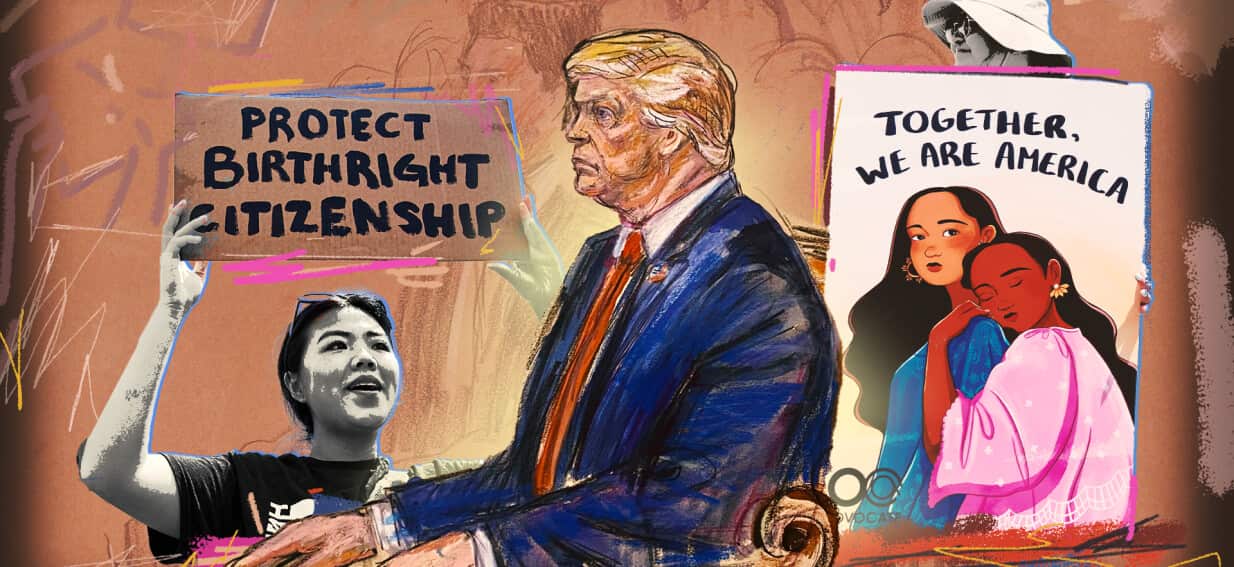
Let's start with the biggest surprise of the day. Trump made a massive push on his very first day back in the Oval Office to end automatic birthright citizenship. The executive order targeted children born on US soil to parents who are undocumented or holding temporary visas. It was the absolute crown jewel of his hardline immigration agenda.
The Supreme Court just killed it.
In a 6-3 decision, the justices maintained the long-standing status quo. Anyone born on American soil is a citizen, regardless of their parents' legal status. It is a crushing legal defeat for the administration. For decades, conservative legal theorists have argued that the Fourteenth Amendment has been misinterpreted. They claimed the phrase "subject to the jurisdiction thereof" excluded the children of foreign nationals.
The court did not buy it.
Trump did not hide his frustration. He took to Truth Social to vent, calling the decision "too bad for our Country" before pivoting immediately to a new strategy. He claims the administration can easily fix the issue through congressional legislation. Good luck with that. With a deeply divided Capitol Hill, passing a sweeping immigration bill that fundamentally alters citizenship rights is a steep hill to climb.
This ruling provides immediate relief to hundreds of thousands of immigrant families. It also shows that even with a conservative supermajority, the court is not willing to rip up over a century of settled constitutional understanding on a presidential whim.
A Double Edged Sword for Executive Power
The most legally complex fight of the day involved a massive showdown over who actually runs the federal government. For the past year, the White House has been locked in a bitter feud with the Federal Reserve. Trump wanted to fire Fed Governor Lisa Cook, the first Black woman to sit on the board. The administration alleged she committed mortgage fraud by claiming primary residence status on two separate properties to lock in better interest rates. Cook flatly denied the allegations. She sued, arguing the president lacked the constitutional authority to throw her out.
The court delivered a split verdict that defies simple categorization.
First, the immediate loss for the White House. In a tight 5-4 ruling, the Supreme Court blocked Trump from immediately removing Cook. Chief Justice John Roberts teamed up with Brett Kavanaugh and the court's three liberals to protect the central bank. Roberts argued that giving the president at-will firing power over Fed governors would destroy the institution's historic insulation from political games. He wrote that it would turn protected, for-cause employment into a political joke.
Cook stays in her job for now while the lower courts handle the messy factual disputes. She released a sharp statement claiming the entire affair was never about mortgage paperwork. She called it a manufactured pretext designed to punish her for refusing to bow to White House pressure on interest rates.
But do not think for a second that the executive branch walked away empty-handed. While the court protected the Federal Reserve, it completely gutted the rest of the federal bureaucracy.
In a separate 6-3 decision involving former Federal Trade Commission member Rebecca Slaughter, the court did something truly radical. It explicitly overturned Humphrey’s Executor, a 91-year-old legal precedent that protected the leaders of independent regulatory agencies from arbitrary firing.
Chief Justice Roberts wrote that shielding these independent chiefs from presidential removal violates the basic separation of powers. This means Trump now holds the power to fire the heads of the FTC, the National Labor Relations Board, the Consumer Product Safety Commission, and dozens of other powerful regulatory bodies whenever he wants.
Trump immediately celebrated this on social media, calling it an honor to win such a historic ruling on presidential authority. He is right about the scale of the victory. The ruling completely alters how Washington works. The independent agencies that regulate everything from corporate monopolies to union disputes are no longer independent. They answer directly to the president.
The Left Laments a Massive Cash Influx
While the media focused heavily on the executive power battles, another quiet ruling dropped that will completely alter the upcoming midterm elections. The Supreme Court lifted long-standing restrictions on the amount of money a political party can spend in direct coordination with an individual candidate.
The case was a pet project of Vice President JD Vance. He spear-headed the legal push back when he was running for his Senate seat, arguing that these spending limits violated the First Amendment. The conservative majority agreed.
Previously, outside groups and corporations had immense freedom to spend money thanks to older rulings like Citizens United. But the actual political parties faced strict caps on how much cash they could pump into direct advertising and campaign coordination for specific politicians. Those guardrails are officially gone.
The backlash from Democrats was instant and furious. Senate Democratic minority leader Chuck Schumer issued a blistering condemnation. He argued that the court basically handed wealthy elite donors and corporate interest groups a direct pipeline to buy American elections. He warned that this would trigger an unprecedented arms race of political spending.
To put this in context, the 2024 election cycle already cost a staggering $15.9 billion, making it the most expensive campaign season in modern history. Removing the coordination caps between parties and candidates means the next cycle will likely blow that record out of the water. Money will flow faster, more directly, and with far less transparency than ever before.
Culture War Victories and the New Baseline
Social conservatives did not leave empty-handed. The court firmly backed state laws that bar transgender athletes from competing in girls' and women's school sports. Trump immediately praised the decision on Truth Social, declaring that it takes a ridiculous situation entirely off the table.
This ruling does not exist in a vacuum. It lands right in the middle of a coordinated, multi-state effort to restrict transgender participation in public life. Across the country, 27 states have already instituted strict limits on gender-affirming care, and the administration has aggressively pushed to remove trans personnel from the military. By upholding the sports bans, the Supreme Court has signaled that it is perfectly comfortable letting states regulate these issues without federal interference.
What Happens Next
If you are trying to navigate this new political landscape, do not look for a single winner. Look at the practical realities on the ground. The chessboard has completely shifted. Here is what you need to watch for immediately:
- Watch the Federal Reserve carefully. The court saved Lisa Cook's job, but the White House is not backing down. Watch how the administration utilizes public pressure now that the legal battle returns to the lower courts.
- Expect a regulatory purge. With the destruction of Humphrey’s Executor, watch for the immediate removal of any remaining independent agency commissioners who do not align with the administration's deregulation goals. The FTC and NLRB are about to look radically different.
- Prepare for a deluge of political ads. The midterm campaigns are about to become incredibly expensive. Political parties will now act as massive, centralized mega-PACs, coordinating directly with candidates to flood the airwaves.
The Supreme Court did not give Donald Trump everything he wanted on Tuesday. They checked his ambitions on immigration and protected the independence of the nation's monetary policy. But by handed him the keys to the wider federal bureaucracy and rewriting the rules of political finance, they ensured his influence over American life will endure for decades.