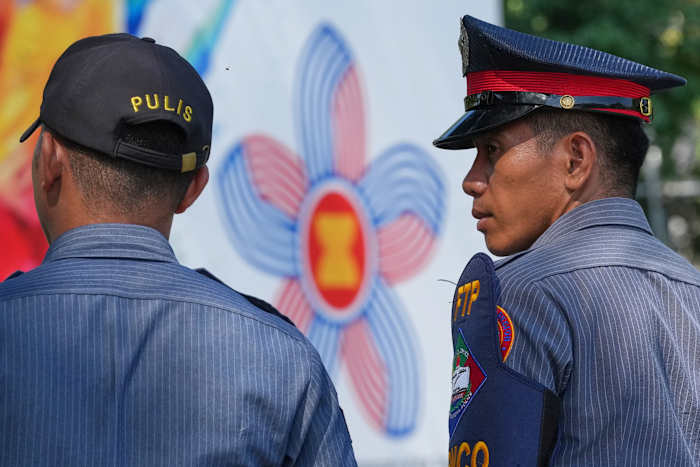
Diplomats love vague press releases. They build entire careers on phrasing point three so nobody gets offended. But as top foreign ministers gather in Manila for the 59th ASEAN Foreign Ministers' Meeting, the polite diplomatic mask is slipping.
Southeast Asia is sitting on a powder keg.
If you think this annual gathering is just another routine photo-op where leaders in patterned shirts shake hands, you haven't been paying attention to the global energy grid or maritime trade routes. The agenda hitting the table in Manila isn't just regional. It's a collision of three massive, interconnected crises: a full-blown war in the Middle East threatening global oil, a brutal civil war in Myanmar that ASEAN can't fix, and worsening military standoffs in the South China Sea.
Add US Secretary of State Marco Rubio, Chinese Foreign Minister Wang Yi, and Russian Foreign Minister Sergey Lavrov into the same room, and Manila suddenly looks like the geopolitical center of the world.
Middle East Tensions Hit Southeast Asian Purses
When missiles fly in the Middle East, Southeast Asia pays the bill. It's that simple.
The renewed conflict between the United States and Iran has sent panic through international oil markets. That hits home fast in Southeast Asia, a region with over 680 million people reliant on imported Middle Eastern crude and natural gas. Roughly 20% of global oil shipments pass through the Strait of Hormuz. When hostilities flare up there, shipping lanes choke, freight insurance rates skyrocket, and local economies take a beating.
Earlier this year, Philippine President Ferdinand Marcos Jr. went so far as to declare a national energy emergency to curb hoarding and manage runaway fuel prices. That wasn't an isolated panic button. It was a preview of what happens if shipping through Hormuz completely grinds to a halt.
Draft statements from the Manila talks show ASEAN ministers calling for an immediate end to Middle East hostilities and demanding unhindered transit through the Strait of Hormuz.
Will Iran or Washington listen to ASEAN? Probably not. But the bloc's desperate focus on Middle East stability exposes a hard truth. Southeast Asia can't build economic momentum while external energy shocks keep blowing up its inflation targets.
Why Washington Sent Marco Rubio to Manila
Some foreign policy analysts argued that Washington's heavy involvement in the Middle East would force the US to ignore the Pacific.
That theory fell apart the moment US Secretary of State Marco Rubio touched down in Manila.
The State Department insists Rubio's presence signals unwavering commitment to a "free and open Indo-Pacific." The real strategy is simpler. Washington knows Beijing is watching every military resource redirected to the Middle East. Rubio is in Manila to reassure nervous Asian partners that America isn't sleeping on China's aggressive moves in the South China Sea or its pressure on Taiwan.
Rubio is also sitting down with Quad counterparts from India, Japan, and Australia. Beijing routinely slams the Quad as a regional containment scheme designed to box China in. By doubling down on these meetings right alongside the ASEAN summit, the US is telling everyone that its Indo-Pacific posture hasn't weakened, regardless of how messy things get in Tehran or Tel Aviv.
The Myanmar Stalemate Is Breaking ASEAN Apart
Inside the bloc, no issue causes more frustration than Myanmar.
Ever since the military military junta seized power from Aung San Suu Kyi's elected government in 2021, Myanmar has descended into chaos. Human rights groups estimate over 8,100 people have been killed, with more than 22,500 detained. ASEAN's lauded "Five-Point Consensus" peace plan, drawn up back in 2021, has accomplished virtually nothing because the military junta refuses to abide by it.
So ASEAN changed its tactic. And it pissed off a lot of observers.
Philippine Foreign Secretary Ma. Theresa Lazaro, acting as ASEAN's special envoy, recently met with Myanmar's junta foreign minister in Bangkok. It was the first high-level face-to-face meeting since the military was barred from official summits five years ago. Lazaro followed up by meeting with armed ethnic resistance groups and representatives from the opposition National Unity Government (NUG) in Pattaya.
Human rights advocates slammed the move. They argued that talking to junta officials legitimizes a brutal regime.
Lazaro isn't backing down. She insists that peace requires talking to every party holding a gun, whether you like them or not.
Indonesian, Singaporean, and Philippine officials remain deep-seated sceptics. They don't want the junta returning to the table without major concessions on human rights and violence reduction. Meanwhile, Thailand and Laos favor pragmatism and border stability over moral posturing. That internal division is ripping at ASEAN's core principle of unanimity.
South China Sea and the Ten Year Arbitral Echo
The Manila summit arrives right after the tenth anniversary of the landmark 2016 international arbitral ruling. That historic decision completely invalidated Beijing's expansive "nine-dash line" claims over the South China Sea.
Beijing ignored the ruling in 2016. It ignores it now.
In the years since, clashes between Chinese coast guard vessels and Philippine, Vietnamese, and Malaysian ships have grown increasingly violent. High-pressure water cannons, deliberate ramming, and military-grade lasers are now regular occurrences in disputed waters like Second Thomas Shoal.
Philippine spokesperson Dominic Xavier Imperial insists that ASEAN and Beijing are making progress on a legally binding Code of Conduct (COC) to manage maritime clashes.
Don't hold your breath.
ASEAN and China have been negotiating a Code of Conduct for over two decades. Beijing likes the negotiation process because it buys time while China builds artificial islands and projects naval dominance. A weak, non-binding code is useless. A strong, binding code requires China to give up power it already holds on the water. Neither side is ready to budge.
Real World Implications to Watch Right Now
Forget the vague press communiqués. If you want to track where Southeast Asian security and economics are actually headed over the next six months, monitor these specific indicators:
Energy price caps and emergency reserves Watch whether ASEAN nations form joint energy purchasing agreements or shared petroleum stockpiles to cushion against Middle East supply disruptions.
The Thailand-Myanmar border dynamic Track whether informal talks yield actual ceasefire zones near trade corridors along the Thai-Myanmar border, or if resistance forces launch new offensives.
South China Sea patrol frequency Keep an eye on joint naval patrols conducted by the Philippines, the US, Japan, and Australia. Increased joint presence usually triggers aggressive Chinese counter-maneuvers.
Internal ASEAN voting reform proposals Look for signals from Indonesia or Singapore calling to ditch the strict consensus model on security decisions, which currently lets single member states veto critical actions.
📖 Related: dominion virginia power outage map
Diplomacy moves slowly until a sudden shock forces everyone's hand. The Manila talks aren't a victory lap for regional stability. They're a stress test for whether Southeast Asia can survive an era of global fragmentation without breaking apart from within.