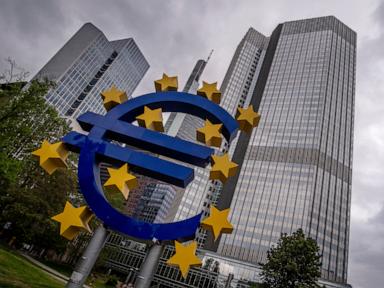
Central bankers don't like being called reactionary. They hate being told they're just buying time. When European Central Bank President Christine Lagarde stood up at the annual central banking forum in Sintra, Portugal, she had a clear message for the critics who labeled the June 11 rate hike as a mere precautionary move.
It wasn't an insurance policy. It was a direct response to an inflation threat that isn't going away. If you found value in this post, you should check out: this related article.
Without that quarter-percentage-point increase, which pushed the ECB's key rate to 3.75%, internal projections showed headline and core inflation sticking above the 2% target all the way into 2028. For a central bank legally bound to price stability, letting inflation run hot for another two years wasn't an option.
The Core Inflation Problem Turning Services Sticky
Most people look at the headline inflation numbers, see energy prices dipping, and wonder why their borrowing costs are still going up. The reality inside the eurozone is far more complex. For another angle on this development, check out the latest coverage from Financial Times.
While volatile oil and gas prices have cooled from their previous peaks, services inflation tells a completely different story. Prices in the service sector—everything from hair salons and restaurants to tourism and insurance—jumped from 3% to 3.5%.
Why does this matter? Services are heavily driven by wages. When the cost of hair appointments and restaurant meals creeps up, it usually means businesses are passing higher labor costs directly onto consumers.
The ECB isn't seeing a full-blown wage-price spiral yet. However, the current economic reality is no longer a short-lived shock. Lagarde explicitly laid out three ways a central bank can handle economic disruptions:
- Look through a temporary, minor spike.
- Make a measured adjustment for a moderate overshoot.
- Act forcefully against deeply ingrained inflation.
By choosing a 25-basis-point increase, the ECB landed squarely in the middle strategy. It wasn't an aggressive, emergency move, but it sent a sharp signal to the markets. The era of assuming inflation will naturally melt away is officially over.
Shifting From Models to Reality After the 2022 Blindspot
Central banks rely heavily on mathematical forecasting models. The problem is that these models struggle when the real world gets chaotic. Lagarde openly acknowledged that the ECB made massive forecasting errors back in 2022 following the invasion of Ukraine. They completely underestimated how high and how fast energy costs would drive up the price of everyday goods.
To fix this, the institution overhauled its approach. They intensified investments into core inflation indicators and real-time tracking tools. The goal was simple: understand how current, boots-on-the-ground economic data translates into medium-term inflation.
The strategy shift paid off. The ECB managed the recent economic volatility surrounding the Middle East crisis with minimal forecasting errors. This newfound accuracy is exactly why the bank feels confident standing by its June decision. Despite plunging oil prices immediately following the meeting, the bank insists its calculations remain entirely valid. The interest rate hike was justified in every single economic scenario they simulated.
Why Geopolitical Chaos is the New Normal
The eurozone is facing a deeper structural shift that goes beyond a single interest rate decision. The global economy is fragmenting.
We live in a fractured environment where major supply shocks are happening more frequently. Access to critical minerals, energy corridors, and international markets is being weaponized by global powers. These aren't temporary glitches in the system; they're the new baseline.
Eurozone Economic Vulnerability Tracker
--------------------------------------------------
Current Key Policy Rate:     3.75%
Target Inflation Rate:       2.00%
Services Inflation Component:  3.50%
Surprisingly, Europe is proving more durable than it used to be. The impact of recent tariff disputes and international conflicts didn't tank the economy the way past crises did. Structural improvements, tighter bank oversight, and a more flexible monetary toolbox mean the 21-nation euro area can take a punch better than it could a decade ago.
The Real Ground Level Impact for Businesses and Borrowers
If you're running a business or trying to manage debt in Europe, this policy stance means you need to adjust your expectations. Rates are staying higher for longer.
The immediate temptation for many financial managers is to pause capital investments and wait for the central bank to start cutting. That's a trap. Waiting for a return to the near-zero interest rates of the last decade is a strategy built on a fantasy.
Instead of waiting out the central bank, focus on what you can control right now:
- Stress-test your corporate debt against a baseline 3.75% to 4% borrowing cost for the next 18 to 24 months.
- Lock in fixed financing structures today rather than betting on floating-rate relief that may not arrive.
- Focus on productivity gains to absorb sticky labor costs rather than counting on margins to recover through sudden deflation.
The central bank made its choice clear. They'll willingly risk minor economic slowing today to prevent systemic inflation tomorrow. Act accordingly.