Selling cheap gadgets and apparel online used to be simple. You sourced products from factories in Yiwu or Shenzhen, packed them in standard poly mailers, and shipped them straight to consumers in Berlin or Paris. That model is hitting a brick wall. The European Union's Packaging and Packaging Waste Regulation (PPWR) has fundamentally changed how foreign merchants operate, forcing thousands of cross-border traders to rethink their entire supply chain.
If you are shipping goods into the European market, you can no longer treat packaging as an afterthought. Let us look at why Chinese e-commerce merchants feel trapped by these rules and what it actually takes to survive.
The Compliance Nightmare Across Twenty-Seven Borders
The core frustration for cross-border merchants is not just that rules exist. It is the sheer administrative chaos of compliance. Under the updated European framework, online sellers are classified as producers if they place packaged goods on the market. This means you must register with national extended producer responsibility systems in every single member state where your customers live.
Think about what that means for a small merchant running an independent storefront or selling through major digital marketplaces. You are suddenly expected to manage multi-country reporting, pay local waste recovery fees, and often appoint an authorized legal representative in multiple jurisdictions. For businesses operating on razor-thin margins, the overhead costs of hiring local compliance agents wipe out profit margins instantly. Some small-scale traders have already pulled the plug on European shipping entirely rather than risk steep fines or blocked customs cargo.
The War on Air and Empty Space
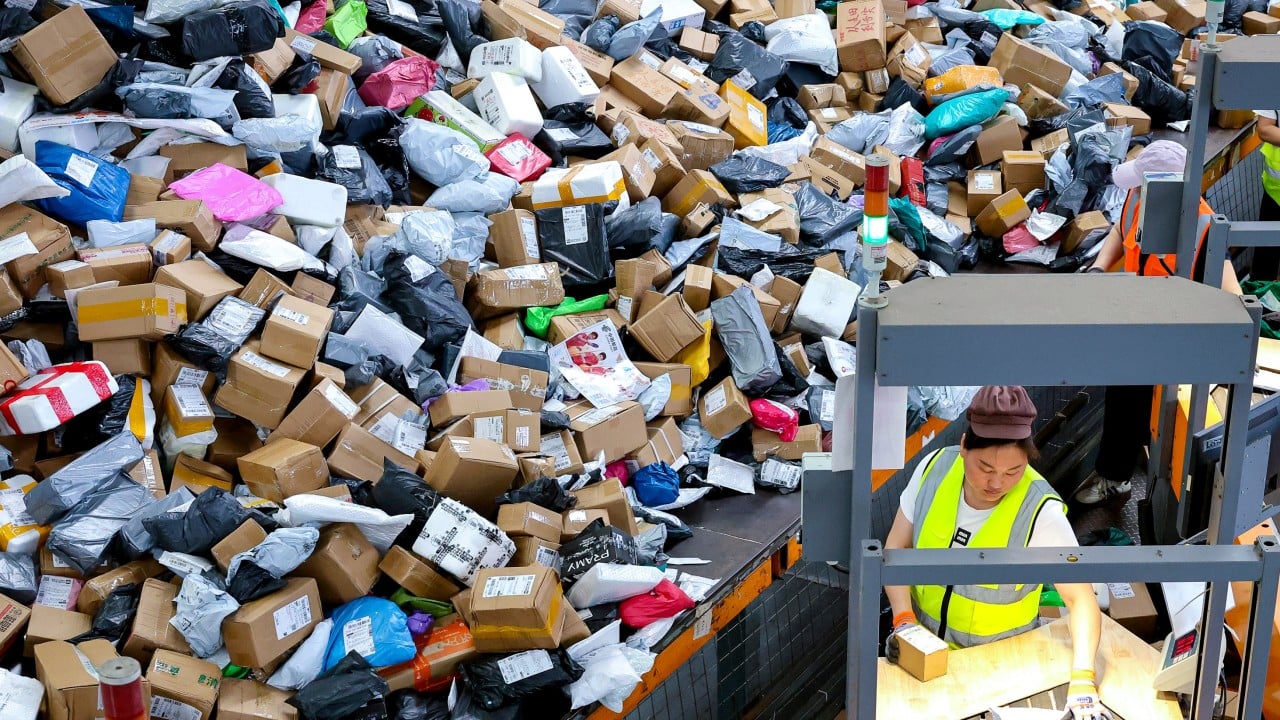
Another major pain point involves box sizing. Historically, e-commerce fulfillment centers relied on a handful of standard box sizes to ship everything from a tiny phone charger to a bulky winter coat. Workers routinely tossed in mounds of plastic bubble wrap or paper void fill to keep items secure.
The new regulations cap the empty space ratio at a maximum of fifty percent for grouped, transport, and e-commerce packaging. Oversized boxes packed with excessive air cushions are no longer just a minor operational inefficiency—they are direct compliance violations.
For Chinese merchants relying on centralized warehouses or dropshipping models, adapting to this rule requires a complete overhaul of fulfillment software and packaging inventories. You cannot simply grab the nearest cardboard box off the shelf. Automated box-cutting machinery and precise volumetric sizing tools are becoming mandatory investments just to clear customs at European ports.
Restricted Materials and Documentation Burdens
Beyond box dimensions, the regulatory microscope is zooming in on chemical compositions and material traceability. The framework imposes strict limits on heavy metals and targets restricted substances like per- and polyfluoroalkyl substances, often referred to as forever chemicals, especially in food-contact packaging.
Merchants must now collect and retain extensive technical documentation and formal declarations of conformity. If a customs official or local market surveillance authority requests proof of material compliance, you have to produce records verifying your supply chain inputs. For traders who source unbranded inventory from multiple downstream suppliers with opaque supply chains, gathering these technical files is an uphill battle.
Practical Steps for Cross-Border Survival
Sitting around and hoping enforcement will be lax is a losing strategy. European regulators are serious, and online marketplaces are increasingly on the hook to verify that third-party sellers comply with producer registration mandates. If you want to keep selling to European buyers, you have to take concrete action right now.
- Audit your current packaging inventory to measure exact void space ratios and eliminate unnecessary fillers before fulfillment.
- Work directly upstream with your manufacturing partners to secure verifiable material specifications and chemical safety data sheets.
- Partner with specialized compliance software providers or third-party logistics firms that can shoulder the burden of multi-country producer registration and reporting.
The era of frictionless, no-questions-asked cross-border shipping into Europe is over. Merchants who adapt their operations to prioritize transparency and precision will capture market share from competitors who refuse to change.