For over two decades, if you pulled a euro note out of your wallet, you looked at an imaginary bridge. Not a real bridge in Paris, Berlin, or Rome, but a fictional span designed entirely to avoid hurt national feelings. The European Central Bank wanted total neutrality. They wanted a currency that could never trigger a diplomatic spat over whose architecture deserved a spot on the twenty.
That cautious era is officially dying. For an alternative perspective, read: this related article.
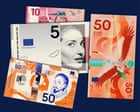
The ECB has unveiled ten shortlisted design concepts for the first complete overhaul of euro banknotes since physical cash launched in 2002. Citizens across the continent are currently weighing in through a public survey running until September 21, 2026. You can choose between two heavily contested paths: a celebration of heavyweight human intellect through iconic European figures, or a sprawling ecological journey across rivers and bird habitats.
The stakes are surprisingly high. Millions of people have already flooded the online consultation platform, proving that currency is about far more than just buying groceries. It is a battle over collective identity. Similar reporting on this matter has been published by USA.gov.
Culture Versus Conservation
The two shortlisted categories present a sharp philosophical divide.
Option one puts human achievement right on the front of the paper. If this theme wins, your bills will feature legendary figures whose lives and work transcended narrow national borders. We are talking about Ludwig van Beethoven on the ten, Marie Curie on the twenty, Miguel de Cervantes, Leonardo da Vinci, Austrian pacifist Bertha von Suttner, and soprano Maria Callas. These choices are carefully balanced, spotlighting individuals who belonged to Europe as a whole rather than a single flag. Callas was born in New York, spent her career in Greece and Italy, and sang for the world. Curie crossed the border from Warsaw to Paris to change modern physics.
Option two takes a radically different route. It swaps out dead human geniuses for living fauna. The "Rivers and birds" concept maps out European waterways from mountain springs to stormy seas, pairing each denomination with a specific bird. You get the wallcreeper, the kingfisher, the bee-eater, the white stork, the avocet, and the northern gannet. On the flip side of these nature notes, the design integrates institutional buildings representing the European Union's political and legal centers.
Storks and bee-eaters cross borders without passports. That is the point. They offer a neat metaphor for European freedom of movement, sidestepping the endless political squabbles that inevitably arise when picking human heroes.
Why The Redesign Had To Happen Now
Counterfeiting technology gets better every single day. Security is the official justification driving the multi-year overhaul managed by the ECB. Staying miles ahead of criminal syndicates requires new anti-fraud measures that simply cannot fit onto the layout of nineties-era bills.
Yet stopping counterfeiters is only half the job. The ECB realized that anonymous bridges create zero emotional attachment. People do not look at a generic twelfth-century archway and feel a swell of community spirit. By shifting toward distinct faces or shared ecosystems, European monetary authorities want people to actually care about the paper in their pockets.
Of course, moving away from neutrality opens up a minefield of regional politics. Critics have already pointed out glaring omissions in the cultural lineup. Representation across the bloc is tricky. Leave out a specific region, and local politicians throw a fit. Birds avoid that political trap nicely. A white stork does not care about geopolitical quotas.
What Happens Next
The public survey closes on September 21, 2026. Public sentiment will not be the sole decider, though. The central bank has partnered with a dedicated jury of design professionals and quantitative researchers to weigh the finalists. The Governing Council will lock in the final design before the end of 2026.
Do not clear out your wallet just yet. Even after the winning aesthetic is chosen, translating those concepts into ultra-secure, durable, mass-produced banknotes takes years. The fresh currency will not physically land in circulation until 2030 or 2031.
If you live in the eurozone, go online and cast your vote before the deadline. Decide whether you want a pocket full of historical giants or migrating wildlife. Stop letting nameless arches represent your cash.

:max_bytes(150000):strip_icc()/Untitled_Panorama13-bd44b39ffc06438f8d5490caeab65fcb.jpg)