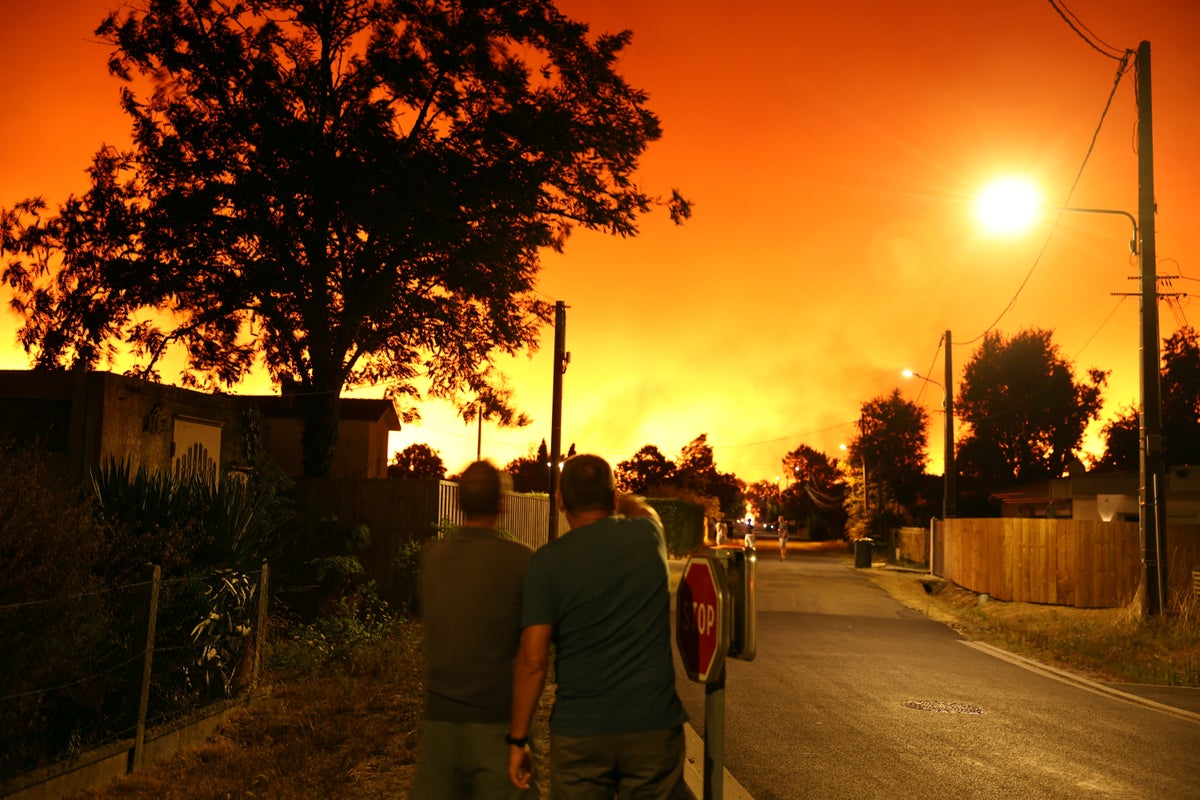
Thousands of residents and tourists across southern Europe are fleeing their homes as wildfires burn through millions of trees, holiday resorts, and quiet towns. If you feel like you read this exact same headline last year, you aren't imagining things. The megafires sweeping through France, Portugal, Spain, and Greece aren't an anomaly anymore—they're the new normal for European summers.
Extreme heat arrived unnaturally early this season. Bone-dry pine forests turned into literal powder kegs before July even got into full swing. Yet, while news channels air endless footage of orange skies and heroic firefighters dropping water from aircraft, most coverage misses the underlying reality. We keep treating these infernos as surprising natural disasters rather than predictable structural failures.
Here is what is actually happening on the ground in Europe right now, why the usual containment playbook is failing, and how we have to adapt before entire regions become uninhabitable.
The True Scale of the Frontline in Southern Europe
When a forest catches fire, news outlets tend to list off numbers: hectares burned, trucks deployed, degrees Celsius. Those numbers don't capture the chaos on the ground.
Take southern France right now. Near Perpignan, close to the Spanish border, a single blaze scorched over 4,600 hectares in a matter of hours—an area roughly equivalent to 6,500 football pitches. Over 10,000 people had to abandon their campsites and villages with whatever they could throw into the back of a car. Further up near Trevillach, flames threatened to derail the iconic Tour de France, forcing organizers to ban spectators and alter team logistics so emergency vehicles could access rural mountain roads.
Crossing over into Portugal, the situation looks just as severe. In the central Vouzela region, satellite mapping showed a blaze ripping through 12,000 hectares in three days flat. That is an area nearly half the size of Birmingham burned to ash before ground crews could establish a perimeter.
Meanwhile, in Greece, fire crews faced over 50 individual outbreaks in 24 hours. Near Thessaloniki, toxic smoke from an engulfed recycling plant forced local authorities to order residents indoors, while crews fought a separate, massive pine forest fire in Mandra, just west of Athens.
- France: Over 10,000 evacuations near Perpignan, with major fires near Pyrenean mountain routes.
- Portugal: 12,000 hectares burned around Vouzela in 72 hours, forcing cross-border backup from Spain and Italy.
- Spain: Nearly 2,200 hectares destroyed in Girona, with tens of thousands told to shelter or evacuate.
- Greece: Dozens of simultaneous fires, including high-risk blazes threatening suburbs near Athens and Thessaloniki.
Why Firefighting Aircraft Aren't Stopping the Blazes
There's a common belief that if a nation simply buys enough water-bomber planes and hires more firefighters, it can tame any wildfire. I used to think the same thing. But talk to fire chiefs on the ground, and you realize how naive that perspective is.
Water aircraft—like the famous Canadairs—are vital tools for suppressing flames so ground crews can move in. They do not put out megafires on their own. When temperatures hit 40°C (104°F) alongside gale-force winds and low humidity, water dropped from 100 feet in the air evaporates partially before it even hits the tree canopy.
Worse, intense convective heat creates its own localized wind systems. Embers fly hundreds of meters—sometimes kilometers—ahead of the main fire front. Firefighters call these "spot fires." You can drop 6,000 liters of water on a line of burning pine trees, only for embers to blow over your head and ignite the dry scrubland half a mile behind your engine.
Emergency crews aren't losing because they lack bravery or skill. They're losing because Europe's land structure has been optimized for fire over the last half-century.
The Ignored Causes Behind the Headlines
It's easy to blame climate change alone. Rising global temperatures are indisputably making the Mediterranean hotter and drier, extending the fire season by weeks. Data from the Copernicus Climate Change Service shows Europe has been warming twice as fast as the global average since the 1980s.
Climate change acts as the force multiplier, but local land management is what provides the fuel.
Rural Abandonment and Fuel Accumulation
Over the past 50 years, millions of young adults left traditional farming villages across southern Europe to work in cities. Fields once kept short by grazing goats and sheep were abandoned. Olive groves and terraced hillsides were replaced by dense, fast-growing pine and eucalyptus plantations. Eucalyptus, in particular, is filled with volatile oils. When it burns, it burns like gasoline.
Without livestock clearing underbrush or farmers harvesting dead wood, forest floors accumulate decades of flammable litter. When an early heatwave strikes, that dead wood turns into dry tinder.
Human Negligence
In Greece, fire officials report that roughly 85% of wildfires start due to human negligence. It's rarely a mastermind arsonist. It's someone using an angle grinder near dry grass on a windy afternoon. It's a spark from agricultural machinery, a discarded cigarette on a highway shoulder, or an outdoor barbecue during a burn ban.
In Girona, Spain, authorities recently detained a man suspected of accidentally sparking a 2,200-hectare blaze while doing roadside maintenance work with power tools. One tiny spark, combined with 40-degree heat and zero moisture, is all it takes to trigger an emergency response involving hundreds of personnel.
FIRE RISK TRIANGLE IN SOUTHERN EUROPE
+-------------------------------------------------------------+
| HEAT & DROUGHT       | 40°C+ early heatwaves dry out plants |
| EXTREME FUEL         | Overgrown brush & abandoned land     |
| IGNITION TRIGGER     | Sparks, power tools, farm machinery  |
+-------------------------------------------------------------+
What Actually Works to Prevent European Wildfires
We can't change Mediterranean wind patterns or instantly reverse global warming, but we can change how land is managed. Countries like Portugal and Spain are slowly learning that throwing millions of euros at emergency response after a fire starts is far more expensive—and far less effective—than preventing the fire in the first place.
Controlled Winter Burns
Fire service experts have advocated for controlled cool-season burns for decades. Burning off leaf litter and dead brush in February and March removes the fuel that feeds megafires in July. Bureaucratic hurdles and public fear of controlled smoke often prevent forest agencies from executing burns at the scale required.
Grazing Firebreaks
Instead of paying heavy machinery to clear perimeter lines around towns, several municipalities in Catalonia and Provence pay local shepherds to graze herds of goats and sheep along strategic ridges. Goats eat the tough scrubland that firefighters hate clearing. It creates low-fuel buffer zones that slow down advancing flames, giving ground crews a fighting chance.
Early AI and Satellite Detection
Catching a fire in its first 10 minutes is the difference between a small localized blaze and a week-long disaster. Greece recently deployed satellite monitoring systems linked with thermal camera networks across high-risk forest zones. Spotting smoke plumes instantly allows first responders to dispatch crews before the blaze gains momentum.
How to Prepare If You Live in or Visit High-Risk Zones
If you live in or plan to travel to southern Europe during peak summer, you need to take basic precautions. Wildfires move fast—faster than you can run, and often faster than emergency services can issue official warnings.
- Monitor Emergency Alerts Regularly: Download localized weather and emergency warning apps (like France's Météo-France or emergency broadcast alerts in Spain and Greece). Pay attention to red-flag warning days.
- Clear Defensible Space Around Property: If you own property in rural southern Europe, clear all dry brush, dead leaves, and overhanging branches within 15 meters of your house. Store firewood well away from exterior walls.
- Respect Activity Bans Completely: Never use power tools, angle grinders, or mowers outdoors during dry heat warnings. Don't light open fires or barbecues near forested areas.
- Prepare an Evacuation Kit: Keep passports, essential medications, phone chargers, and cash in a single bag ready to grab. If local authorities tell you to evacuate, leave immediately—don't wait to see if the flames crest the ridge.
Stop viewing these fires as unpredictable tragedies. They're the predictable result of combining hotter summers with neglected landscapes. Until European nations invest heavily in year-round land management and strict regional firebreaks, southern Europe will keep burning every single summer.