If you think summer in Europe is just about sipping espresso at outdoor cafes or sunbathing on the Riviera, the current weather map will shatter that illusion. Right now, a massive, stubborn atmospheric chokehold known as an Omega block has locked down Western Europe. It is not just making people sweaty. It is killing people, shutting down schools, buckling train tracks, and forcing nuclear power plants to throttle their electricity output.
This is not a standard hot week. It is a full-blown infrastructure crisis.
People are searching for answers because their air conditioners are failing, their holiday plans are ruined, or they are genuinely scared of the triple-digit numbers showing up on their phone screens. Let's cut through the generic weather reporting and look at what is actually happening on the ground, why our current systems cannot handle it, and how to protect yourself if you are trapped in the middle of it.
The Weather Wall Holding the Heat Captive
To understand why this heatwave is so brutal, you have to look at the sky. Normal weather relies on the jet stream, which acts like a high-altitude conveyor belt moving systems from west to east. When things are running smoothly, a hot day gets pushed out by a cooler rainy day after 48 hours.
An Omega block completely ruins that cycle.
The system gets its name because the jet stream bends into a shape that looks exactly like the Greek letter $\Omega$. You get a massive bulge of high pressure trapped squarely between two low-pressure systems on either side. Think of it as a pair of atmospheric walls. The high pressure brings clear skies, blazing sun, and absolutely zero wind. Because it is locked in place, the ground cooks day after day, absorbing heat and radiating it back out at night.
To make matters worse, this specific block is dragging scorching air straight up from Morocco. It has turned parts of France and the UK into a literal convection oven. These blocks usually hang around for three to ten days, but when they settle in, they can stall out for weeks.
The Records That Did Not Just Break But Shattered
We are seeing numbers that should terrify anyone looking at the long-term climate trajectory of the continent. Europe is warming at more than twice the global average, and right now, we are seeing the direct result of that trend.
France
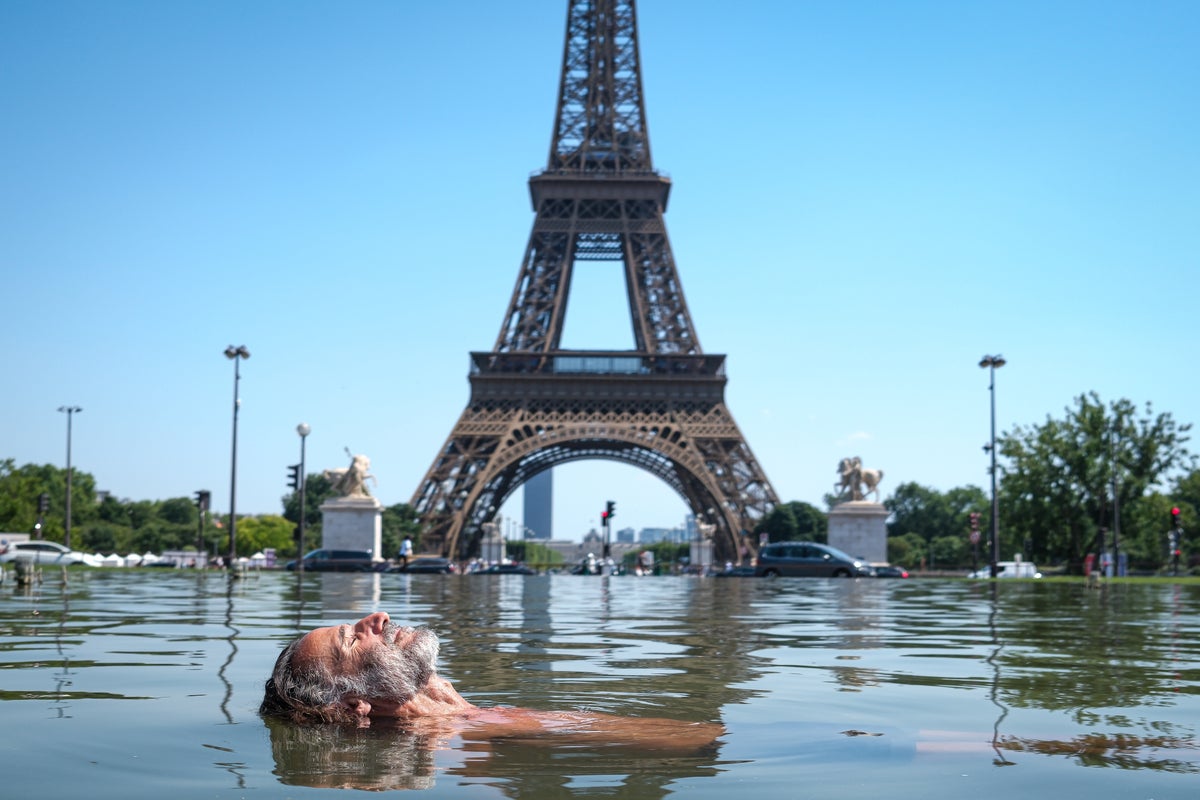
In the southwestern town of Pissos, the mercury hit a staggering 44.3 degrees Celsius (111.7 degrees Fahrenheit). That is the hottest day recorded in the country since records started nearly 80 years ago. Paris hit 40.9 degrees Celsius, a record for June that left tourists scrambling for shade beneath misting stations at the Eiffel Tower.
United Kingdom
The UK Met Office issued only its second extreme heat warning in history as southern England climbed to 36.1 degrees Celsius. While that might sound manageable to someone living in Arizona or Dubai, you have to remember that less than 5 percent of British homes have air conditioning. Brick houses built to retain winter heat turn into literal brick ovens during events like this.
Italy and Spain
Italy’s Health Ministry placed 16 major cities on its highest red alert level. Rome, Florence, Milan, and Turin are all flashing red. In Spain, temperatures routinely crossed the 40-degree mark earlier in the week, claiming the lives of elderly citizens from heatstroke before easing slightly.
The Quiet Collapse of Modern Infrastructure
When a country hits 44 degrees Celsius, things stop working. We like to think our modern world is resilient, but our energy and transport systems have strict thermal limits.
Take France’s energy grid. The country relies heavily on nuclear power for its electricity. But nuclear reactors need water from nearby rivers to cool down their systems before pushing energy to the grid. Right now, the Garonne river has hit 28 degrees Celsius, which is the absolute legal safety limit for cooling water.
Because of this, energy giant EDF had to completely shut down reactor number two at the Golfech nuclear plant. Output was slashed at other major facilities like Nogent-sur-Seine and Bugey. In total, France had to cut its nuclear power output by about 7 percent of total national demand right when everyone was trying to crank up their fans and cooling systems. Predictably, transformers failed. Near Quimper, a transformer blowout knocked out power to 68,000 households, leaving over 100,000 people without electricity in the middle of the night.
The transportation network is not doing any better. Rail operators across the UK and France have slashed train speeds or cancelled long-distance routes entirely. Steel tracks absorb direct sunlight and can easily reach temperatures 20 degrees hotter than the air. When they get that hot, they expand, warp, and buckle. If a train hits a warped rail at 100 miles per hour, it derails. The head of France's national railway, SNCF, openly advised vulnerable individuals to avoid travelling by train altogether.
The Human Toll Nobody Wants to Talk About
The news likes to show pictures of people splashing in fountains or licking ice cream cones. The reality inside local hospitals is grim.
The sudden jump from cooler spring weather to extreme summer heat gave people zero time to acclimatise. The human body takes about two weeks to adjust its sweat rate and blood volume to handle extreme temperatures. When the shift happens overnight, the cardiovascular system goes into overdrive trying to keep the core temperature down.
At least 48 people have drowned in France alone over the last few days. These were not people being careless on vacation; these were desperate individuals jumping into rivers, lakes, and unmonitored waters just to stop their bodies from overheating. Cold shock response can cause immediate cramping or heart failure when you jump into cool water with a dangerously overheated body.
Then you have the schools. Over 800 junior and middle schools across France closed their doors completely because classroom temperatures became unsafe. In the UK, hundreds more shortened their days or cancelled outdoor sports.
Even agriculture is taking a massive hit. Hundreds of thousands of birds died at poultry farms in Brittany and the Pays de la Loire when ventilation systems failed to cope with the stagnant, hot air trapped inside the barns.
How to Handle Extreme Heat When Your Environment Is Not Built For It
If you are currently traveling through Europe or living in an apartment without central air, relying on standard advice like "drink water" is not enough. You need to change how you manage your immediate environment.
Lock down your living space
Do not open your windows during the day. This is the biggest mistake people make. If the air outside is 38 degrees and the air inside is 28 degrees, opening the window just invites the heat in. Keep windows shut and pull down exterior shutters or heavy curtains the second the sun comes up. Only open them late at night when the outside temperature drops below the indoor temperature.
Understand the limits of fans
Electric fans do not cool the air; they just move it. When the ambient room temperature rises above 35 degrees Celsius (95 degrees Fahrenheit), blowing hot air over your skin will actually speed up dehydration and heat exhaustion rather than cooling you down. If it is that hot, you need to wet your skin or wear a damp t-shirt while sitting in front of the fan to use the power of evaporative cooling.
Find corporate air conditioning
If your home is unsafe, do not stay there out of stubbornness. Public libraries, shopping malls, and grocery stores are your best friends. In Switzerland, local authorities have started opening air-conditioned movie theaters for free daytime screenings just to keep vulnerable people out of the heat. Use those spaces.
Reconsider your daily schedule
Do your grocery shopping, running, or walking at 7:00 AM. By noon, the sun is too intense. Paris Fashion Week saw major labels like Dior and Rick Owens cancel afternoon slots and move their shows to early morning to prevent models and guests from fainting. If multi-million dollar fashion brands can rewrite their schedules, you can reschedule your sightseeing.
The Reality Moving Forward
The Omega block will eventually break, the low-pressure systems will push through, and temperatures will return to normal. But this event is a warning shot for European infrastructure. The continent is trapped in a loop of building systems for a climate that no longer exists. Until cities invest heavily in green urban design, decentralized cooling centers, and climate-resilient energy grids, these high-pressure blocks will continue to turn summer into a survival challenge.
Stock up on water, check on your elderly neighbors, and stay out of the midday sun.