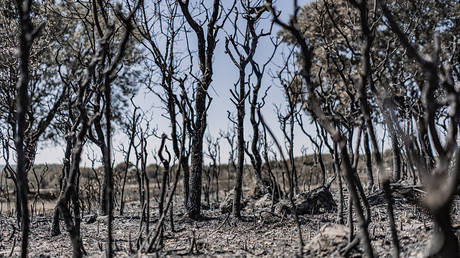
Europe is burning through cash just as fast as its forests. We are only two months into the wildfire season, and five eurozone countries have already racked up a staggering €3.1 billion just in land restoration expenses. Spain, France, Portugal, Greece, and Romania are footing the bill for nearly 500,000 charred hectares.
That single price tag already eclipses the European Commission's official €2.5 billion average annual estimate for the entire European Union. Yet, politicians and policy makers keep treating these disasters as one-off emergencies instead of a systemic economic hemorrhage.
The Numbers Behind the Smoke
Let’s look at what that €3.1 billion actually covers. It represents baseline recovery costs using the European Commission's methodology. We are talking about clearing toxic debris, prepping soil, planting new saplings, and nursing young forest cover back to life.
It sounds straightforward, but it is deeply misleading. That figure does not include destroyed homes, ruined crops, paralyzed tourism, or the soaring cost of emergency firefighting equipment. According to climate economists at institutions like ETH Zurich, the real economic toll could easily be triple once you factor in secondary impacts.
Take France and Spain as a baseline. In Gironde alone, a single fire scorched roughly 42,000 hectares, forcing 220,000 people to pack up and evacuate while temporarily halting major regional aerospace operations. In Spain, industrial groups point out that annual prevention funding sits around €800 million. Compare that to the billions spent purely on suppression and recovery, and the math looks broken. Every euro spent on early prevention can save up to a hundred euros in direct firefighting costs down the road.
Why Traditional Recovery is Failing
Most governments approach forest restoration like a landscaping project. The fire goes out, the smoke clears, and they try to rebuild the exact same ecosystem that just went up in smoke.
That strategy is a recipe for repeat disaster. Monoculture pine and eucalyptus plantations act like tinderboxes under extreme heatwaves and prolonged droughts. If you replant the exact same species without altering forest density, you are basically setting up a delayed fuse for the next summer.
Real recovery requires structural changes that bureaucrats hate funding because they take decades to show results:
- Transitioning toward diverse, mixed-age forest stands that resist rapid fire spread.
- Prioritizing drought-resistant native tree species instead of fast-growing commercial timber.
- Aggressively clearing undergrowth and maintaining managed buffer zones near the urban-rural interface.
- Investing heavily in early-detection aerial technology rather than relying solely on ground crews after ignition.
The Hidden Domino Effect
The financial shockwave doesn't stop at the treeline. The same relentless drought fueling these fires is actively choking European industry. Low water levels on the Rhine and Danube rivers are crippling freight transport. German chemical giants along the Rhine are struggling to move shipments, while nuclear power plants in Hungary and Romania have been forced to scale back or temporarily shut down reactors because there is simply not enough cooling water available.
Meanwhile, insurance markets are waking up to a terrifying reality. Climate risk analytics firms warn that nearly five million European properties will face severe wildfire threats by mid-century. Insurance premiums are climbing rapidly, and major underwriters are quietly pulling coverage from high-risk zones altogether.
If you own property or run a business in southern or western Europe, waiting for state-backed bailouts is a losing strategy. The financial reality is catching up faster than public policy can adapt. Stop treating wildfire season like bad weather. Treat it like a permanent economic shift, and demand local officials put money into prevention before the next spark hits.