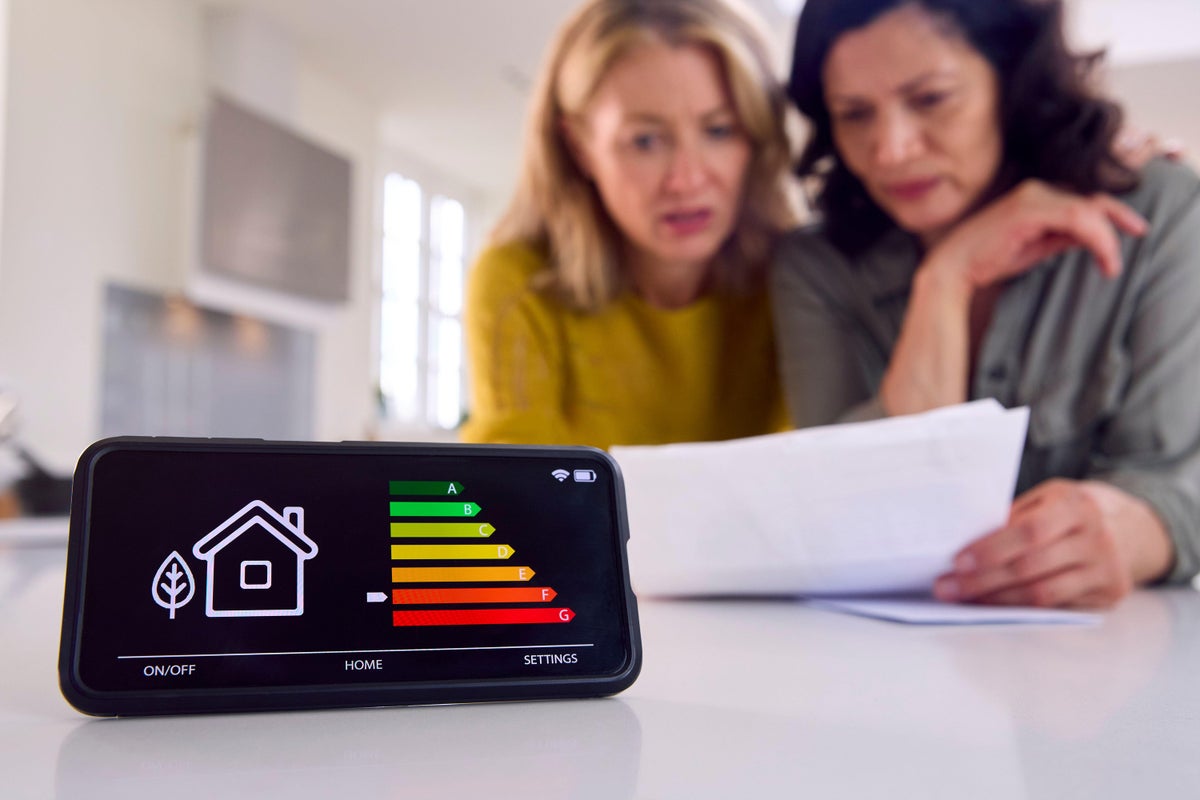
Brace yourself when opening the mail over the next few months. If you feel like you are already stretched to the limit by grocery bills and insurance premiums, the energy market has some bad news. Your home cooling costs are about to hit levels you have never seen before.
This isn't just a hunch or a vague prediction about seasonal weather. Data from the National Energy Assistance Directors Association (NEADA) shows that the average American household will fork out $792 for electricity between June and September. That is a sharp 10.5% jump from last year's $717. Look back a bit further to 2020, and the baseline cost has skyrocketed by nearly 40%.
You are paying more because a perfect storm of climate realities, massive data infrastructure growth, and aggressive utility rate hikes are colliding all at once. The cost of staying safe in your own home is officially detached from normal inflation.
The True Drivers Behind the Rate Spikes
Most people assume their bills spike in July simply because the air conditioner runs longer. That is only half the story. The price per kilowatt-hour (kWh) itself has marched steadily upward, driven by factors that have nothing to do with your thermostat settings.
First, consider the power grid infrastructure. Regulators across the country have approved massive utility rate hikes to pay for grid modernization and wildfire mitigation. Companies are spending billions to insulate wires, replace aging transformers, and rebuild transmission systems vulnerable to extreme weather events. The check for those investments goes straight to your mailbox.
Second, the unexpected elephant in the room is the explosion of artificial intelligence. Thousands of massive data centers are popping up across the country to power advanced AI services. These facilities run around the clock and pull immense amounts of juice from the same regional grids you rely on. In many communities, this sudden surge in commercial demand is outstripping local generation capacity, forcing utilities to buy expensive peak power and pass the cost down to residential consumers.
Finally, macroeconomic shifts play a heavy hand. Escalating geopolitical tensions, including recent military conflicts involving Iran, have injected volatility back into global fuel markets. When natural gas prices tick up, the cost of generating electricity rises with them in states reliant on gas-fired plants. Federal policy changes have also altered the landscape. Recent rollbacks of clean-energy incentives and the cancellation of billions in planned renewable projects mean older, more expensive fossil-fuel plants are staying online longer to meet the demand surge.
Mapping the Damage by Region
The pain of these record-high electricity bills is not distributed evenly across the United States. Depending on your zip code, your summer baseline looks vastly different.
According to NEADA projections, Arizona residents will suffer the steepest financial hit in the nation, with summer electricity bills averaging a crushing $1,060 per household—a 14% spike over last year. Texas and the surrounding West South Central states are close behind, where a high baseline of consumption pushes average summer costs to $890.
If you live in New England, you don't get a pass just because the weather is milder. States like Connecticut and Massachusetts face structural premium pricing, where residential costs are forecast to average $839 this season. This is primarily because the Northeast remains deeply vulnerable to bottlenecked natural gas delivery charges for its power plants.
The Mountain region is seeing the fastest accelerating rate of change, experiencing a 13.8% surge that will push average summer cooling totals to $728. Only the Pacific Northwest and parts of the northern plains offer any real shield, with Washington and North Dakota projecting the lowest national summer averages at $488.
The Growing Utility Debt Crisis
For millions, this is no longer a matter of adjusting the budget or skipping a few dinners out. It is a full-blown affordability crisis.
One in six American households is currently behind on utility bills. Total household utility debt across the nation is on track to hit an unprecedented $25 billion by the end of this year. When temperatures break records, the consequences of this debt turn dangerous.
During the previous calendar year, utilities cut off power to struggling households roughly 13.5 million times. Low- and moderate-income families bear almost all of this burden, often spending between 6% and 10% of their entire income strictly on energy. Compounding the issue, federal safety nets are shrinking. Funding for the Low Income Home Energy Assistance Program (LIHEAP) was cut to $4.1 billion for the current fiscal period, leaving many states without the resources needed to keep families safe from extreme summer heatwaves.
Tactical Steps to Fight Back
You cannot control global fuel prices or stop corporations from building data centers, but you can aggressively manage how your home consumes power during peak pricing hours.
Audit Your Thermostat Strategy
Do not keep your home at a static temperature all day. For every degree you raise the thermostat above 72°F during hot hours, you slice up to 3% off your cooling energy consumption. Aim for 78°F when you are home, and nudge it up to 82°F when you leave for work. Use ceiling fans to create a wind-chill effect while you are in the room, but turn them off when you leave; fans cool people, not spaces.
Track Delivery Charges and Time of Use (TOU) Rates
Call your utility provider or log into your online portal to see if you are on a Time-of-Use plan. Under these structures, power used between 2:00 PM and 8:00 PM can cost three to four times more than power consumed overnight or early in the morning. Shift high-energy chores—like running the dishwasher or drying laundry—to late evening or early morning hours.
Attack Thermal Leaks Instantly
Your air conditioner is working twice as hard if it is constantly cooling air that slips out through degraded structural seals. Spend $15 on a few tubes of exterior-grade silicone caulk and foam weatherstripping. Seal the gaps around window frames, drafty doors, and where utility lines enter your home. Focus heavily on windows facing south and west; keep blinds closed tightly during the day to block solar heat gain before it penetrates your living space.
Demand a Fixed Budget Billing Plan
If your income cannot handle a massive visual spike on your June, July, and August statements, contact your utility provider right away and ask for "Budget Billing" or "Balanced Billing." The utility company calculates your total annual usage and divides it into 12 equal monthly payments. While this does not reduce the total amount of money you pay over the course of a year, it flattens the seasonal peaks, preventing a sudden $300 leap from breaking your monthly budget when the heat hits its worst.