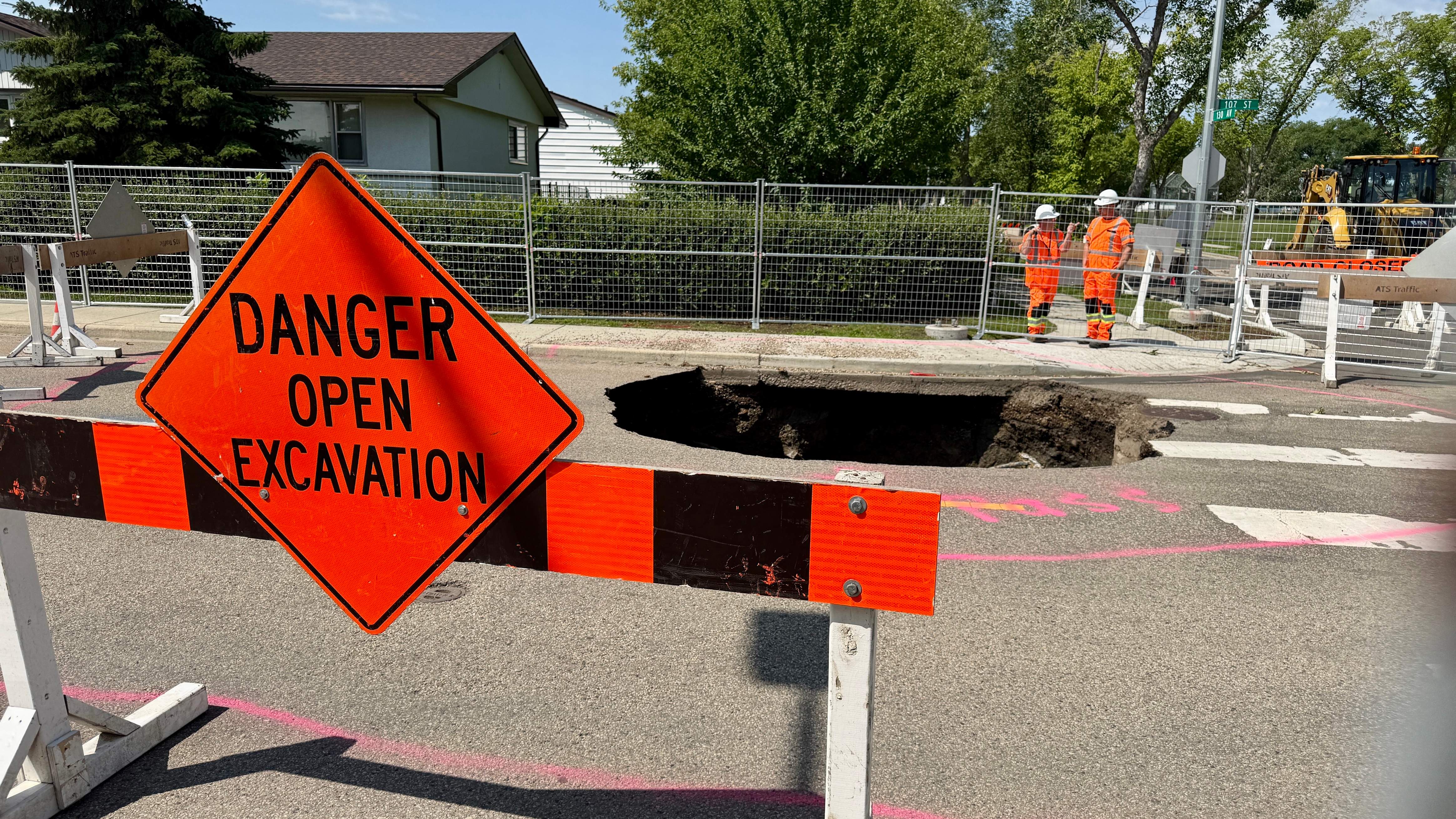
You wake up after a weekend of torrential Alberta rain, expecting some soggy lawns and a few flooded basements. Instead, you find a hole in the middle of a residential street deep enough to swallow a three-storey building.
That is exactly what happened in north Edmonton's Lauderdale neighbourhood. A massive sinkhole, measuring roughly 12 by 12 feet wide and plunging a staggering 35 feet (over 10 metres) into the earth, opened up near 130 Avenue and 107 Street. Read more on a related topic: this related article.
EPCOR crews spent Monday scrambling to stabilize the road and contain the damage. While local officials point to the severe weekend storms as the immediate trigger, this incident is a flashing red warning light for a much bigger, quieter crisis hiding right under our feet.
The Lauderdale Collapse
The storm that hit Edmonton over the weekend was brutal. It dumped enough rain to overwhelm storm systems, drown major thoroughfares like Whitemud Drive and Yellowhead Trail, and force the sudden closure of several recreation centres and the Telus World of Science. Further analysis by NBC News delves into related views on this issue.
But while surface flooding drains away in a few hours, what happens underground is a different story.
According to EPCOR, the sheer volume of water pushed the city’s wastewater system to its absolute limits. Underneath 130 Avenue, a large pipe that moves wastewater to the treatment plant failed. When a deep sewer line cracks or joints separate under pressure, the surrounding soil begins to wash into the pipe. Slowly, a hollow void eats its way upward toward the surface.
From above, the asphalt looks perfectly safe. Then, the weight of a passing car, or simply the saturated soil from a massive storm, forces the remaining crust to cave in.
What makes this Lauderdale collapse particularly frustrating is that the area recently received significant infrastructure upgrades, including a new dry pond designed to manage heavy rainfall. Yet, EPCOR confirmed this specific failure happened in a separate, older section of the pipe system. It shows that you can build all the modern storm ponds you want, but if the ancient trunk lines feeding into them are rotting, the ground will still open up.
Why Edmonton is a Sinkhole Hotspot
This is not a freak, one-off event. If you have lived in Edmonton long enough, you know we have a weird, recurring relationship with collapsing dirt.
Just a couple of weeks ago in late June, Edmonton firefighters had to use a mini excavator and heavy rescue slings to pull a young llama named Runner out of a three-metre-deep sinkhole in the city's northeast. Go back a few years, and you will find the infamous 2020 sewer trunk line collapse at 61 Avenue and 109 Street, which required a massive 23-metre-deep excavation and custom fiberglass pipes shipped all the way from Dubai just to patch the void.
So why does this keep happening here?
- Extreme Thermal Cycling: Edmonton experiences some of the most violent temperature swings on the planet. Going from -40°C in winter to +30°C in summer causes the ground to heave, shift, and crack. This relentless movement shears underground pipes and weakens soil stability year after year.
- Aging Sewer Trunk Lines: Much of the underground infrastructure in mature neighbourhoods like Lauderdale was laid down decades ago. Concrete and clay pipes have a shelf life, and many are reaching the end of their structural integrity.
- Saturated Glacial Clay: Our local soil is heavily comprised of glacial clay and silt. When dry, it's incredibly tough. But when a torrential storm saturates the ground, it turns into a heavy, shifting slurry that exerts massive pressure on buried pipes while simultaneously washing away through any tiny crack it can find.
What This Means for Your Property and Safety
When sinkholes make the news, we tend to look at them as spectacular, rare geologic anomalies. In reality, they are man-made structural failures.
While the city and utility providers are responsible for the main public lines, property owners need to understand that the lateral pipes connecting their homes to the main sewer are their own responsibility. Heavy storms and shifting ground can easily collapse older residential sewer laterals, leading to backed-up drains, soggy patches in your yard, or localized sinking on your driveway.
If you live in an older Edmonton neighbourhood, you should be proactive. Watch for localized sinkage in your lawn, unexplained cracks in your foundation, or a sudden slow drain throughout your house. Getting a sewer scope done every few years is a cheap way to ensure you aren't sitting on top of a growing void.
Next Steps for the Lauderdale Cleanup
The intersection at 130 Avenue and 107 Street remains completely closed to both vehicles and pedestrians as EPCOR continues its repair work. Because of the extreme depth of the hole—35 feet is no joke—the repair process is complex.
Crews cannot simply dump gravel into a hole that deep. They must first install heavy shoring walls to prevent the surrounding road from collapsing inward on workers. Only then can they safely excavate, replace the ruptured wastewater pipe, and meticulously backfill and compact the soil layer by layer to ensure the road doesn't sink again in six months.
Expect local detours to remain in place for the foreseeable future. Avoid the area, respect the barricades, and keep an eye on your own property for any signs of settling water or shifting ground. Our changing climate means these "once-in-a-generation" storms are becoming regular summer events, and our underground pipes simply aren't built to handle the strain.