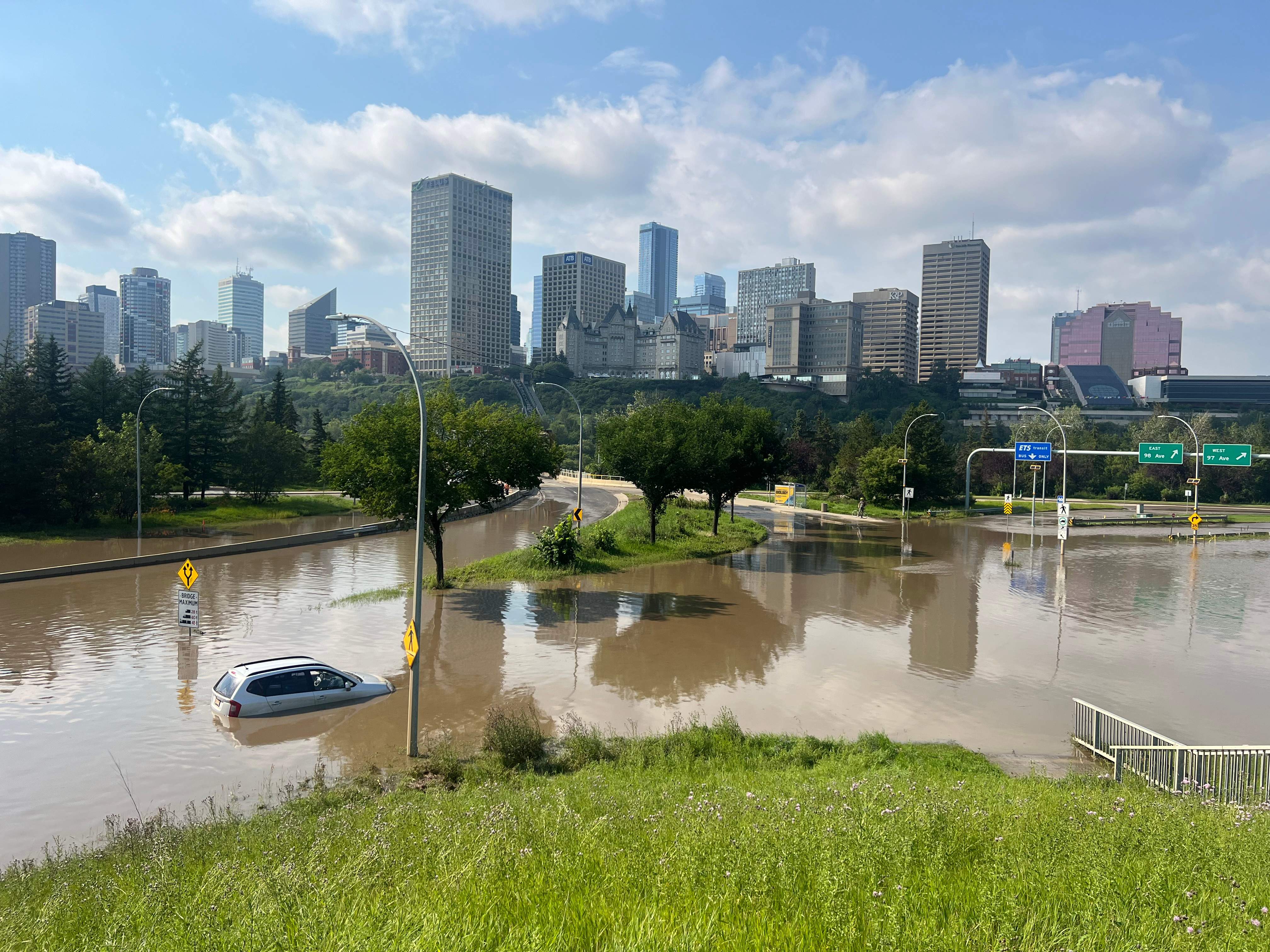
Edmonton is completely soaked. The city has officially shattered its all-time record for the wettest summer in history, and August hasn't even started yet.
If you live in Alberta's capital, you already know this. You have watched your basement drain struggle, dodged flooded interchanges on Connors Road, and watched major outdoor events scramble for cover. But the raw numbers are staggering. Environment and Climate Change Canada confirms that the region has absorbed a jaw-dropping 580 millimetres of rain since the beginning of June.
The previous record stood for more than seventy years. Back in 1953, Edmonton logged 417 millimetres across the entire June-to-August stretch. This year, the city blew past that milestone while heavy summer storms were still ramping up. An average summer usually drops about 213 millimetres total. Edmonton has basically received more than a full year's average precipitation—normally sitting around 423 millimetres—in just two months.
Why the skies opened up over Edmonton
What went wrong with the atmosphere? Meteorologist Brian Proctor puts it bluntly: moisture acts like gasoline for thunderstorms.
When you pump massive amounts of water into the local air cycle, every afternoon heating cycle triggers explosive growth. June already smashed a 112-year-old monthly record with over 260 millimetres of rain. July followed with relentless downpours, severe thunderstorm warnings, and constant flash flooding.
Instead of quick passing showers, Edmonton has faced wave after wave of intense convective systems. The city logged nearly 20 storm days in July alone. Commuters are exhausted. Road crews are working overtime.
The ripple effects across the city
A historic weather anomaly stops being just a weather story the moment it starts wrecking daily life. Edmontonians have felt the pinch everywhere.
- Massive infrastructure strain: Major roadways like the Connors Road and Scona Road interchange have turned into temporary lakes. Storm sewers have come dangerously close to failing, prompting emergency municipal alerts asking residents to hold off on heavy water use like flushing and showering.
- Entertainment and culture disrupted: Big crowds at Commonwealth Stadium during a Post Malone concert had to abruptly seek emergency shelter as severe weather rolled through. Festival organizers for upcoming events like the Edmonton Folk Music Festival have spent weeks pumping water out of Gallagher Park just to keep the site viable.
- Public spaces closed: Local landmarks took a serious hit. The Telus World of Science faces an extended closure through late this year due to heavy water damage. The Muttart Conservatory and regional spots like Elk Island National Park have dealt with sudden closures from flooding and downed trees.
How Edmonton compares to the rest of Canada
It is easy to assume everyone across the country is getting soaked, but Edmonton's situation is uniquely brutal.
Take Calgary as a point of comparison. While Edmonton passed 500 millimetres, Calgary sat at roughly 121 millimetres for the same seasonal window. Edmonton actually out-rained notoriously soggy international cities like Houston and Tampa over the same summer weeks. A persistent high-pressure ridge over the central United States created a sharp atmospheric divide, locking storm tracks directly over central Alberta while keeping other regions dry.
What to expect next
Climatological summer runs through the end of August. That means the record is going to stretch even further.
Forecasters warn that the saturated ground leaves zero buffer for absorption. Any future thunderstorm that rolls across central Alberta will instantly translate into runoff and localized pooling. If you are a homeowner, check your sump pumps today. If you are commuting, keep an eye on municipal detour maps because the ground needs weeks of dry heat to recover—and relief isn't in the immediate forecast.