Imagine spending over nine months working grueling twelve-hour shifts on a floating military base, counting down the days until you can finally hug your family. Then, your phone lights up with a message from home. Your father has just been booked into federal immigration custody.
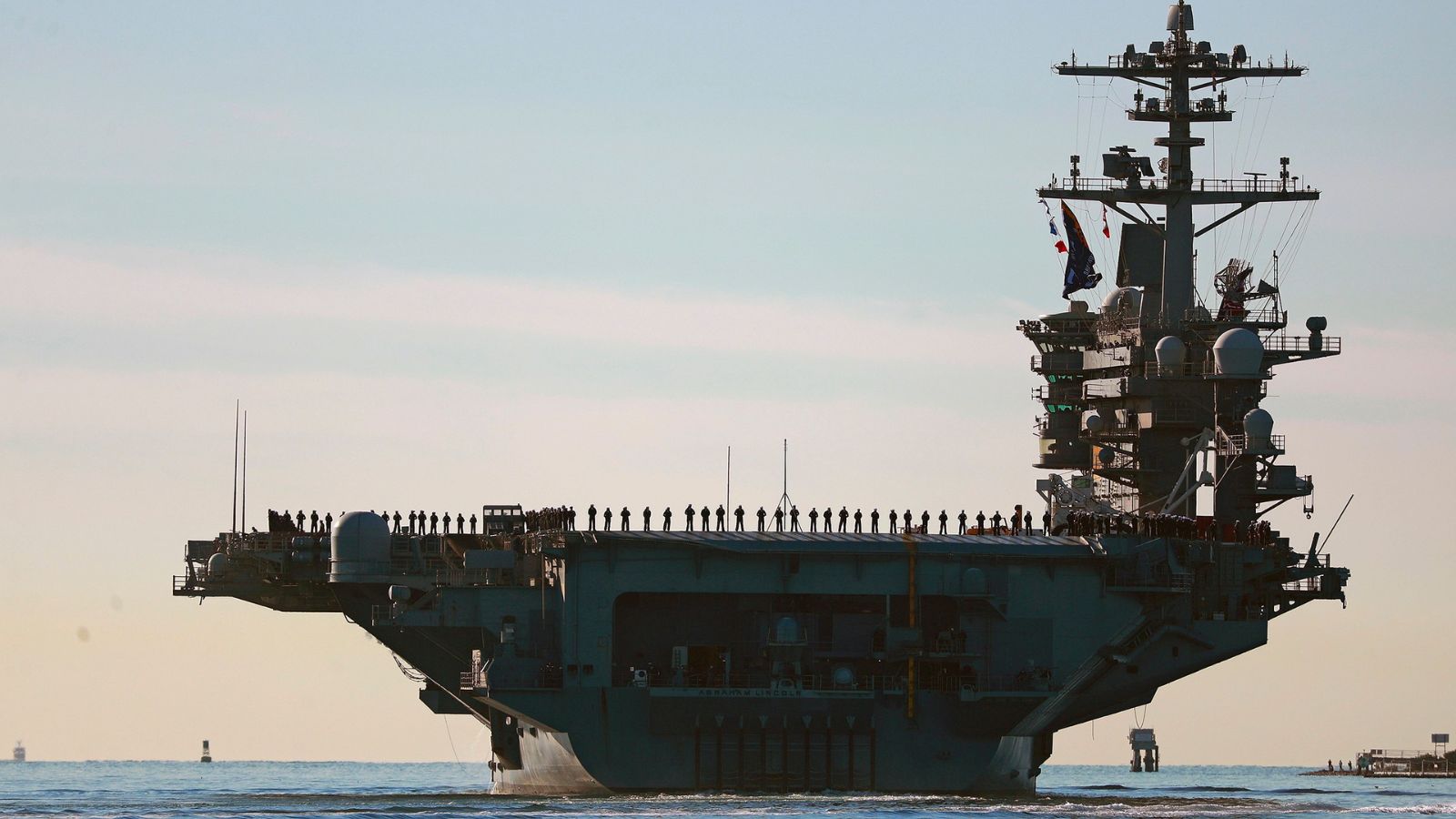
That is the nightmare reality Joshua Aviles faced while stationed thousands of miles away. While he served aboard the USS Abraham Lincoln, a naval vessel logging historic, uninterrupted months at sea in the Middle East, back home in Key West, Florida, federal agents detained his father.
Luis Manuel Aviles, a forty-eight-year-old handyman originally from Nicaragua, had lived in the United States for nearly two decades. He had just stepped out of his house to take his car to a mechanic when U.S. Border Patrol agents stopped and arrested him.
The Collision Between Military Service and Mass Deportation
This high-profile case highlights a glaring collision course within current federal policy. On one side stands the long-standing tradition of protecting military families from the immediate terror of separation. On the other stands an aggressive, unyielding mass deportation agenda that treats long-term undocumented residents with zero administrative exceptions.
Historically, federal immigration authorities exercised discretion when dealing with immediate relatives of active-duty service members. Programs like military parole-in-place were specifically designed to prevent deployed troops from worrying about whether their parents or spouses would be torn away from home while defending the flag.
Those protections have eroded rapidly. The Department of Homeland Security maintains a strict stance that having an immediate family member serving in the armed forces does not grant immunity from national immigration laws.
"This administration does not pick and choose which laws to enforce," agency officials noted in public statements following the arrest.
A Sailor’s Breaking Point at Sea
For Joshua Aviles, the timing could not have been more psychologically devastating. The USS Abraham Lincoln deployment shattered records for continuous time at sea, fueling intense scrutiny over crew fatigue, supply strains, and mental health. Sailors like Joshua endured more than 250 days without stepping foot on land.
When Joshua learned about his father's detention from the middle of the ocean, his focus instantly shifted from national defense to sheer panic.
"I don't know how I can mentally continue working twelve-plus hour days knowing that my dad is somewhere, possibly treated like a criminal," Joshua shared in a public social media post.
His sister, Katherine Delgado, pointed out that Joshua originally enlisted partly out of a belief that military service would help secure legal status for their father. Instead, the family finds themselves caught in a bureaucratic trap where a son fights overseas while his father faces removal from the only home he has known for nineteen years.
The Wider Impact on Service Families
Legal advocates tracking immigration enforcement point out that Luis Aviles is far from an isolated statistic. Investigative reporting reveals that dozens of parents and spouses of active-duty troops have been swept into federal custody under tightened enforcement mandates.
While administration officials argue that uniform enforcement preserves the rule of law, military advocacy groups warn of severe secondary effects. When a service member’s mind is consumed by the detention of a parent or spouse back home, mission readiness suffers.
Luis Aviles sits in an immigration detention facility awaiting deportation proceedings, stripped of the routine work he used to support his household. His son’s aircraft carrier finally heads toward port, but the homecoming will be defined by an empty chair and an ongoing legal battle.
The systemic conflict shows no signs of resolving. As federal agencies press forward with zero-tolerance directives, military families continue to bear the heavy human cost of a policy that draws no lines for those wearing the uniform.