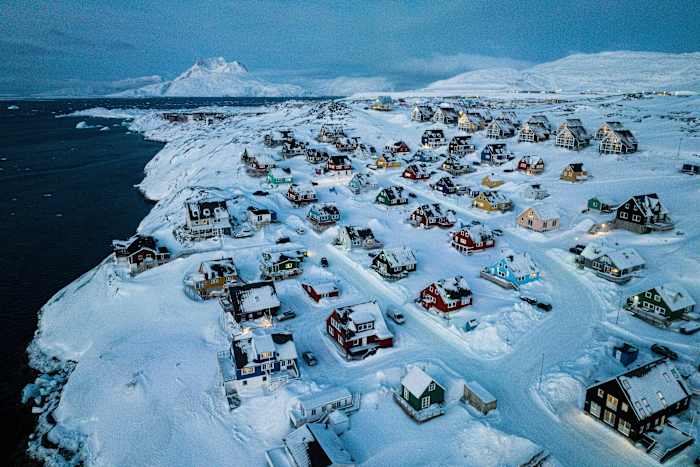
Months of high-stakes diplomatic friction between Washington and Copenhagen just reached a surprising turning point. President Donald Trump announced a sweeping security arrangement concerning Greenland, prompting Danish and Greenlandic leaders to express cautious optimism rather than immediate alarm. If you have been following the aggressive rhetoric surrounding the Arctic territory, this shift feels almost surreal.
For the past year, the prospect of the United States acquiring Greenland sparked international tension, with Washington refusing to rule out military options and European allies scrambling to protect regional stability. Now, a compromise has emerged. The impending pact promises to reshape Arctic defense without crossing the line into a forced territorial transfer.
What the Greenland Security Agreement Actually Means
Let us look past the grandstanding and evaluate the mechanics of the deal. Trump heralded the arrangement on social media as an infinite-life agreement that grants the United States permanent control over security needs in Greenland. He emphasized that the deal comes at no cost to American taxpayers and will immediately ramp up local military infrastructure.
However, Copenhagen and Nuuk are reading from a different script. Danish Prime Minister Mette Frederiksen highlighted that the text explicitly safeguards the sovereignty and territorial integrity of the Kingdom of Denmark. It also preserves the right of Greenlanders to self-determination.
So, who is right? Both sides are telling parts of the truth.
The agreement does not hand over ownership of the island. Greenland remains an autonomous territory under Danish rule. Instead, the treaty locks in permanent U.S. access, basing, and overflight rights while explicitly blocking non-NATO rivals—specifically Russia and China—from establishing military footprints or making sensitive investments without Washington's explicit written approval.
Why the Arctic Matters Right Now
You might wonder why Washington is hyper-focused on a frozen island with a population of roughly 56,000 people. Geography tells the whole story.
Positioned directly between North America and Europe, Greenland sits on the frontline of global strategic positioning. The U.S. military has operated the Pituffik Space Base, formerly known as Thule Air Base, in northwest Greenland for decades. It forms a crucial anchor for missile-warning systems and space surveillance.
As geopolitical tensions rise in the North Atlantic and European defense postures shift in response to persistent Russian aggression, Washington wants absolute insulation against foreign adversaries planting flags or surveillance hardware in the Arctic.
Why Copenhagen Is Cautiously Optimistic
Danish officials spent months quietly negotiating behind closed doors to find a middle ground that would satisfy American security appetites without compromising national sovereignty. They wanted to avoid a complete diplomatic break while staring down pressure from the White House.
The current framework achieves that delicate balance. Local grassroots activists and government leaders in Greenland have noted that the text respects local self-governance. It provides the U.S. military with the expanded operational scope it demands, while giving Copenhagen and Nuuk political breathing room.
The official signing is slated for next week on the sidelines of the United Nations General Assembly in New York. Even so, the agreement still has to clear parliamentary procedures in Denmark before becoming fully binding.
Keep an eye on how local politicians in Nuuk respond as the precise legal text comes under public scrutiny. The deal avoids a catastrophic diplomatic rupture, but managing the operational footprint of a larger foreign military presence on self-governing soil will require constant communication.