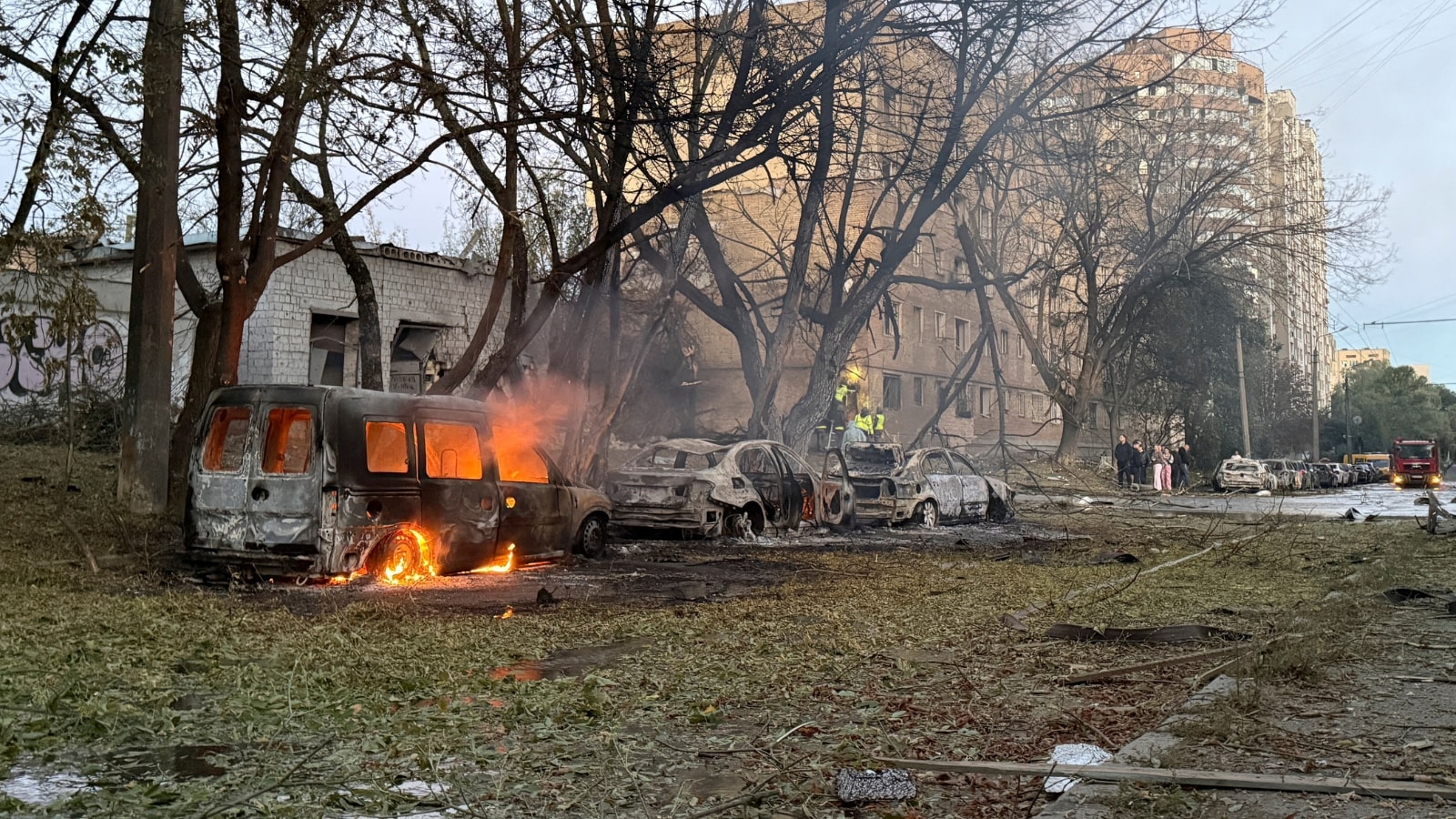
Two people are dead and at least ten others are injured after a massive barrage of Russian drones and missiles slammed into Kyiv. If you thought diplomatic visits meant a break in the violence, the reality on the ground proved you wrong instantly.
The heavy aerial assault shattered a brief three-day pause in attacks on the Ukrainian capital. That lull hadn't happened by accident. It coincided precisely with high-profile visits from U.S. peace envoys Jared Kushner and Steve Witkoff as they touched down in Kyiv for renewed negotiations. Residents had enjoyed a couple of quiet nights, only to wake up to brutal explosions across multiple districts.
The Scale of the Destruction
The attack wasn't just a token gesture. It was a complex, multi-layered bombardment. According to reports from the Ukraine Air Force, the assault involved ballistic missiles, cruise missiles, anti-ship weapons, and swarms of Shahed drones.
Damage was recorded across at least five different districts in Kyiv. Local authorities and the State Emergency Service detailed civilian infrastructure hits in over a dozen locations:
- A 26-story non-residential building caught direct hits in the Holosiivskyi district.
- Fires spread rapidly to adjacent structures, forcing emergency crews into high-risk rescue operations.
- Residents were trapped inside a five-story residential building in the Solomianskyi district before rescue teams pulled them out.
- Additional fires and structural damage struck the Darnytskyi and Podilskyi districts.
For people living through the nightly sirens, the contrast between diplomatic handshakes and flying shrapnel is jarring. As one local resident bluntly noted about the brief pause during the U.S. delegation's stay, people joked that foreign negotiators should stick around longer just to keep the skies quiet. But the moment those talks moved forward, the gloves came off again.
Beyond the Capital
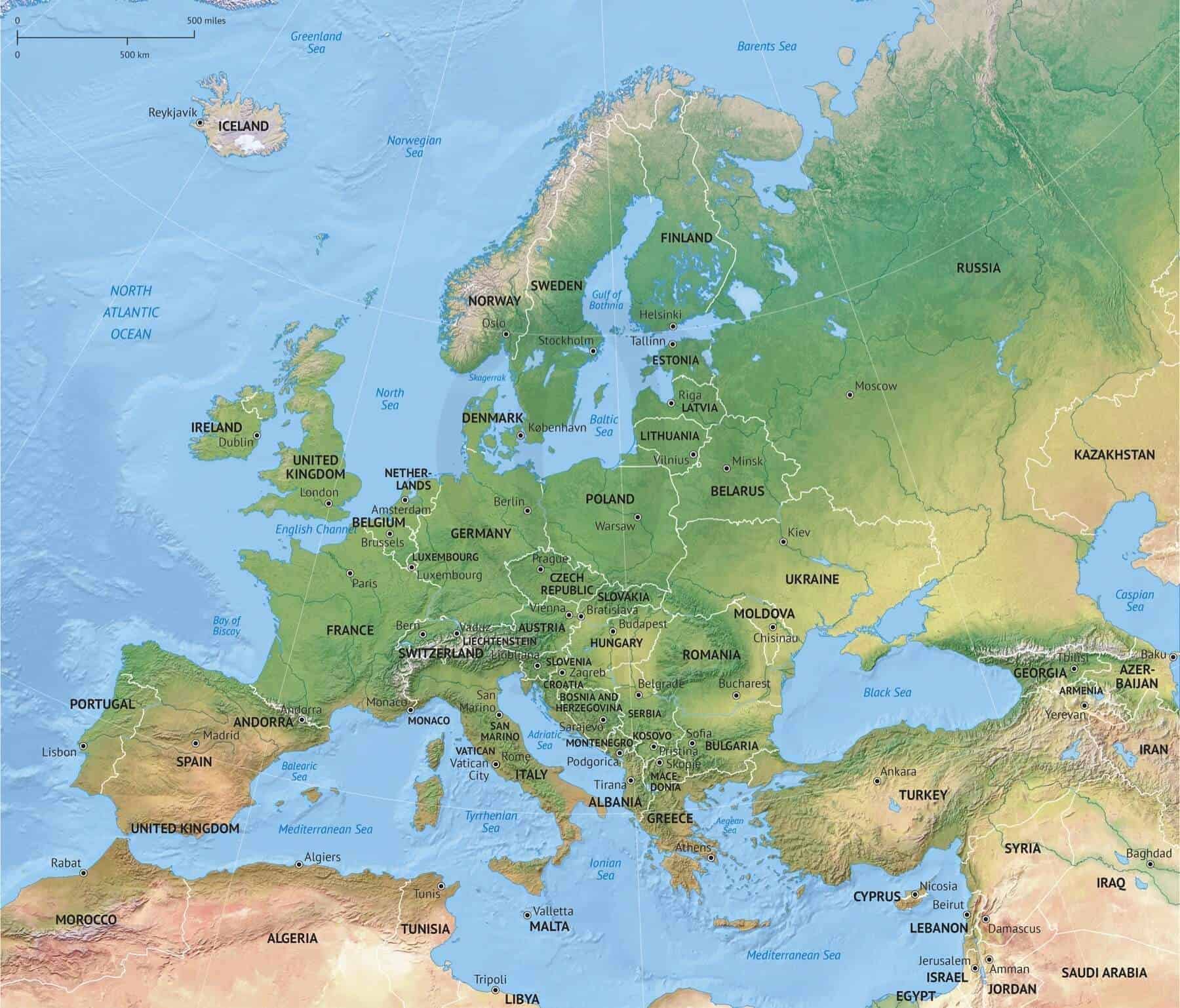
The devastation wasn't limited to Kyiv. Moscow's forces expanded their targets across multiple regions simultaneously. In the southern Odesa region, strikes hit critical locations, including the Starokozache border crossing with Moldova, sparking massive fires and forcing temporary suspensions of passenger and vehicle traffic. Other regions, including Kharkiv, Sumy, Zaporizhzhia, and Dnipropetrovsk, also took heavy hits, proving that the wide-scale campaign remains entirely active.
President Volodymyr Zelenskyy didn't mince words following the strikes, calling out the international community for a lack of forceful deterrence. He pointed out that every day without a robust global response emboldens Moscow to keep pushing civilian areas to the brink as winter approaches.
What Happens Next in the Conflict
The timing of this renewed offensive sends a loud signal. While backroom diplomatic channels are spinning up attempts to find an off-ramp for the war, the battlefield logic remains unyielding. Real negotiations require leverage, and right now, both sides are trying to carve out leverage with steel and high explosives.
If you are tracking how this war evolves, don't look at press releases. Look at the air defense logs and the structural damage reports coming out of major urban centers. The pause is over, and the diplomatic window looks narrower than ever. Take note of how quickly promises of peace evaporate when the launch codes are turned back on.