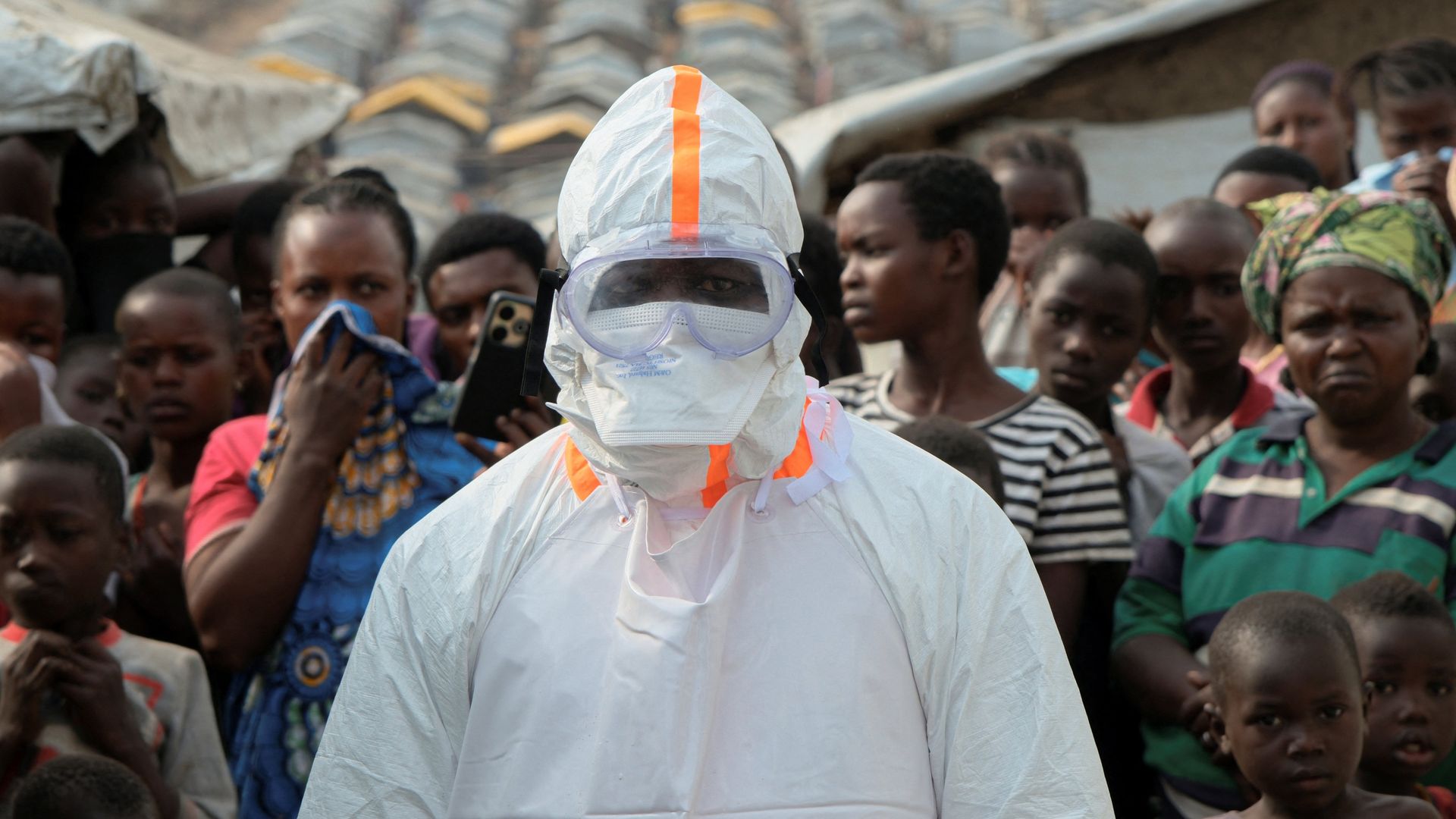
Imagine stepping onto the front lines of an Ebola outbreak without a single approved vaccine, a proven treatment, or even your last paycheck. That is the grim reality facing healthcare workers in the Democratic Republic of the Congo.
On Wednesday, health workers at Bunia General Hospital—the largest medical center in the northeastern Ituri province—walked off the job. They barricaded the entrance. They demanded the compensation they were promised but never received. This strike is not an isolated incident; it follows a similar walkout at another treatment center in Rwampara. For another view, see: this related article.
Meanwhile, the numbers are terrifying. Official figures show that confirmed Ebola cases have blown past 2,000, reaching 2,011 with at least 754 recorded deaths. This is now officially the fastest-growing Ebola outbreak on record.
The Invisible Enemy We Cannot Vaccinate Against
Most people hear the word "Ebola" and assume we have the tools to handle it. After all, the world celebrated the development of Ervebo, a highly effective vaccine used in previous outbreaks. Further coverage on this trend has been published by WebMD.
But there is a catch.
Ebola is not a single virus. The current disaster in the Congo is driven by the Bundibugyo virus, a rarer and genetically distinct species of Ebola.
The Ervebo vaccine was designed specifically to target the Zaire strain. Against the Bundibugyo strain, it is useless.
There are no licensed vaccines and no approved antiviral treatments for the Bundibugyo virus. When a patient enters an isolation ward, doctors can do little more than offer supportive care—intravenous fluids, oxygen, and pain management. It is a slow, agonizing waiting game.
More than 100 healthcare workers have already been infected since the outbreak began on May 15. Expecting these local heroes to keep working without pay, while watching their colleagues die, is not just unfair. It is unsustainable.
Why the Transmission Math is a Nightmare
If you want to understand how bad this situation is, look at the epidemiology data. It is a horror show of blind spots.
- Unknown Transmission Chains: According to the World Health Organization, a staggering 80% of new Ebola cases are popping up with zero known links to previous cases. Health officials have absolutely no idea who infected them.
- Dismal Contact Tracing: Standard protocol dictates that every person exposed to an infected individual must be monitored. Right now, contact tracing coverage is sitting at a useless 67%.
- No Patient Zero: Two months into this crisis, authorities still have not identified the index case—the "patient zero" who started it all.
How did it get this bad?
Eastern Congo is a zone of chronic instability. Armed conflict has displaced thousands of families, pushing them into crowded, temporary settlements. At the same time, informal gold mining operations create a massive, constantly moving population of workers who travel deep into the forests and across borders.
When people get sick in these remote areas, they rarely make it to a hospital. Dr. Chikwe Ihekweazu, the WHO health emergencies chief, recently pointed out that many of the newly reported deaths are people who died at home in their communities, completely cut off from the health system. They were never isolated, meaning they likely passed the virus to their families before they died.
The Race for an Experimental Vaccine
We are not completely defenseless, but we are running out of time.
The Coalition for Epidemic Preparedness Innovations (CEPI) has activated its highest emergency response level to fast-track candidates specifically designed for the Bundibugyo strain. Three distinct vaccine designs are currently in the works:
- The Viral Vector Approach: This method uses a harmless, modified vesicular stomatitis virus (VSV) engineered to display Bundibugyo proteins. It uses the same platform as the successful Zaire vaccine, making it our most promising immediate bet.
- The Adenovirus Platform: A candidate called ChAdOx1 BDBV, developed by the University of Oxford and the Serum Institute of India, is heading into early clinical trials in the UK.
- The mRNA Platform: Building on the technology used for COVID-19, researchers are working on synthetic mRNA instructions to help the body recognize Bundibugyo.
These efforts are vital for the future, but they will not stop the deaths happening in Bunia today. Clinical trials take weeks to organize and execute. Meanwhile, the virus doubles its footprint.
What Must Change Immediately
To stop this outbreak from spilling across international borders and turning into a global emergency, the response strategy needs a drastic shift.
Pay the Frontline Workers
This is the most obvious, frustrating bottleneck. Health workers cannot fight a deadly pathogen on empty stomachs. Regional authorities and international donors must bypass local bureaucratic bottlenecks to guarantee direct, weekly electronic payments to every doctor, nurse, and burial team member in Ituri.
Fund Local Community Trust Programs
Decades of conflict have left locals deeply suspicious of government officials and foreign health workers. Forcing isolation or mandate-driven contact tracing only drives the virus further underground. Money must flow directly to local elders, religious leaders, and trusted community figures who can explain transmission risks without causing panic or resistance.
Deploy Rapid Testing Kits
Because we cannot trace contacts effectively, we need to bring the lab to the patient. Distributing portable, rapid molecular diagnostic tools to remote mining camps and conflict zones is the only way to flag cases before patients travel and infect new communities.
Without these immediate shifts, we are looking at a runaway epidemic that will make previous outbreaks look mild. The healthcare workers of Congo are doing their part. It is time for the rest of the world to back them up.