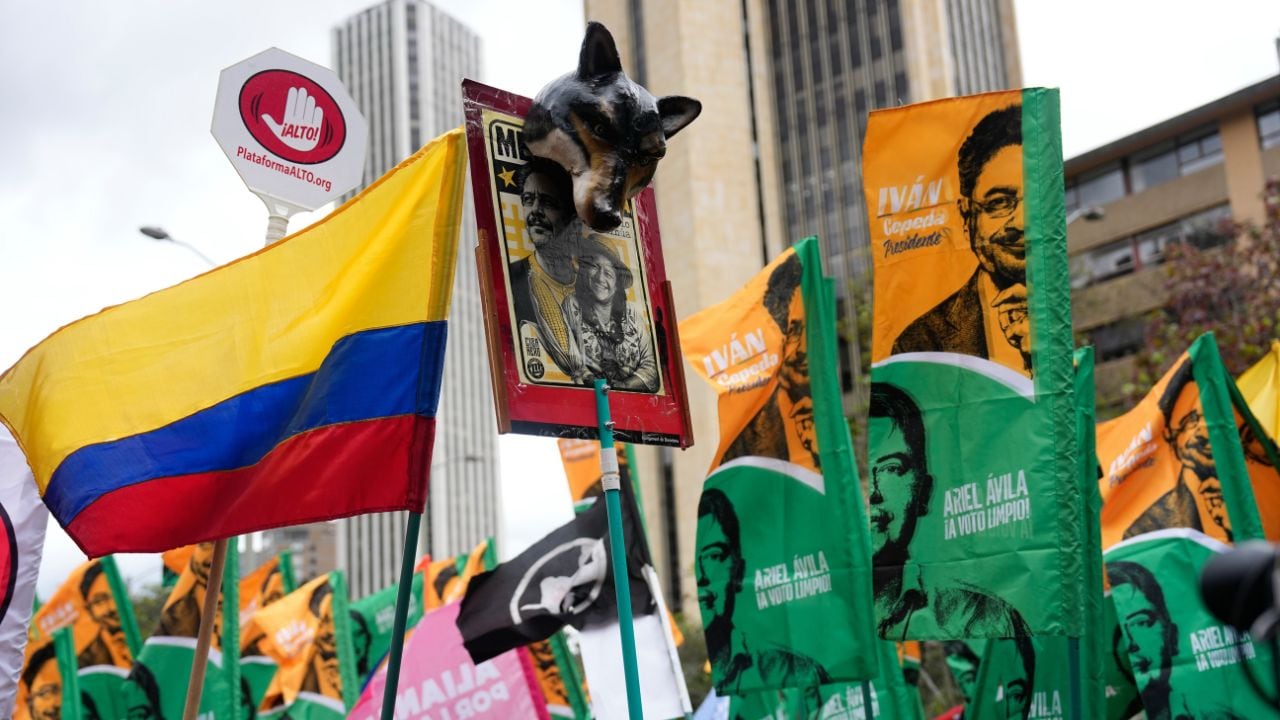
Colombia is at a boiling point. Voters are heading to the polls for a high-stakes presidential runoff that feels less like a standard election and more like an existential tug-of-war. The race pits Abelardo de la Espriella, a flashy, right-wing outsider lawyer, against Iván Cepeda, a veteran progressive lawmaker carrying the mantle of outgoing President Gustavo Petro.
Traditional political parties didn't just lose this race; they were completely obliterated in the first round on May 31. This isn't a random glitch in the system. It's a loud, unmistakable sign that Colombians are sick of the status quo. Skyrocketing food prices, a shaky healthcare system, and a terrifying resurgence of rural violence have left everyday people desperate for something—anything—different.
The Illusion of Total Peace
If you want to understand why Colombia is so deeply split right now, you have to look at what happened over the last four years. Gustavo Petro broke barriers in 2022 by becoming the nation's first leftist president. He promised structural shifts, wealth redistribution, and an ambitious "total peace" strategy to negotiate endings to conflicts with various guerrilla factions and drug cartels.
Honestly, it hasn't worked out the way his supporters hoped.
Colombia's illegal armed groups still boast more than 27,000 members. While Petro’s administration finally celebrated a minor victory when a small armed group of about 100 fighters surrendered their weapons, that's a drop in the bucket. For the average citizen living in rural provinces, car bombs, forced displacements, and targeted kidnappings are still a terrifying reality.
Ivan Cepeda wants to double down on Petro’s dialogue-first approach. He argues that trying to dismantle decades of complex, deep-rooted violence takes a massive amount of time and patience. He believes a military-only solution is a proven failure that only yields more body bags.
But patience is a luxury that many voters don't have anymore. Take a look at Yolanda Hernández, a 49-year-old street vendor who recycles trash and sells pens outside a Bogota voting station. She voted for Petro in 2022 because she wanted real change. This time, she cast her ballot for De la Espriella.
"Petro said he was going to lower the cost of services, that he was going to lower the price of food, and everything is more expensive," she said. For her, and millions like her, the progressive vision failed to deliver on basic everyday economic needs.
Enter the Colombian Donald Trump
Capitalizing on that exact frustration is Abelardo de la Espriella. He isn't your typical buttoned-up conservative politician. He’s a wealthy, celebrity defense attorney known for his flashy lifestyle, tailored suits, and a long history of representing highly controversial figures.
De la Espriella shocked the political establishment by pulling in 43.7% of the vote in the first round, beating out Cepeda who secured 40.9%.
His campaign playbook is explicitly modeled after Donald Trump and El Salvador's Nayib Bukele. He’s running on an aggressive, iron-fist security platform, promising to unleash the full force of the military to crush rebel groups and gangs. He talks about business success as a qualification for saving the economy. He frames himself as an outsider who will cut through bureaucratic red tape, lower taxes, and clean up entrenched corruption.
Critics point out a massive double standard here. De la Espriella styles himself as an anti-system crusader, yet his family has deep, decades-long political ties to the inner circle of former right-wing President Álvaro Uribe. He’s also faced intense scrutiny for his past legal work, which included defending figures linked to paramilitary organizations and controversial international financiers.
Yet, to an electorate battered by inflation and fear, his unapologetic, macho persona sounds like strength.
A Broken Economy and a Divided Public
The economic reality behind this election cycle is incredibly messy. On one hand, Petro’s administration successfully raised the minimum wage and expanded social safety nets. According to data from the Banco de la República, the poverty rate in Colombia dropped from 36% in 2022 to 31% by 2024.
On the other hand, the global inflation crunch hit regular Colombians hard. The price of basic staples has soared, and Petro’s constant public feuds with Congress and the judiciary created an environment of intense political instability. When his major health and pension reforms stalled in the legislature, Petro started floating the idea of rewriting the constitution through a Constituent Assembly.
That move backfired with centrist voters. It stoked fears that the left was trying to permanently alter the rules of the game to stay in power.
Now, the rhetoric on both sides has turned toxic. In the days leading up to the runoff, the airwaves were choked with accusations of vote-buying, fraud, and intimidation. Petro himself openly sowed doubts about the voting process, alleging without specific evidence that foreign funds were being used to distort the election outcomes.
This polarization is exactly what worries everyday citizens who just want to live their lives without fear of civil unrest. John Manrique, a lawyer from Bogota, summed up the anxiety of a nation while walking his dog on election day. "Right now, what worries me is the polarization that exists between us," he said. "What I hope is that people accept who won. Let's accept it, regardless of the side, and try to reach a social consensus."
What Happens Next
Regardless of who wins this runoff, the next president of Colombia faces a completely unmanageable inbox.
If Cepeda wins, he inherits a divided Congress that will fight his progressive agenda at every single turn, alongside an electorate that expects immediate relief from high food prices. If De la Espriella takes the presidential sash, his hardline military approach will likely trigger massive resistance from entrenched rebel groups, potentially sparking an immediate escalation of rural warfare.
If you are tracking Latin American politics or managing investments in the region, keep a close eye on these immediate indicators over the next 48 hours:
- Official Election Results and Margin of Victory: A razor-thin margin will almost certainly trigger immediate demands for recounts, public protests, and accusations of fraud from the losing camp.
- The Foreign Exchange Market: Watch the Colombian Peso (COP). A sharp drop or sudden spike on Monday morning will tell you exactly how international markets view the stability of the incoming administration.
- Public Statements from the Military: Pay attention to how leadership within the armed forces reacts to the declared winner, which will offer a strong hint regarding future security policies.
Colombia wanted an alternative to traditional, corrupt political machines. Now they have one. They just have to live with whichever extreme they chose.