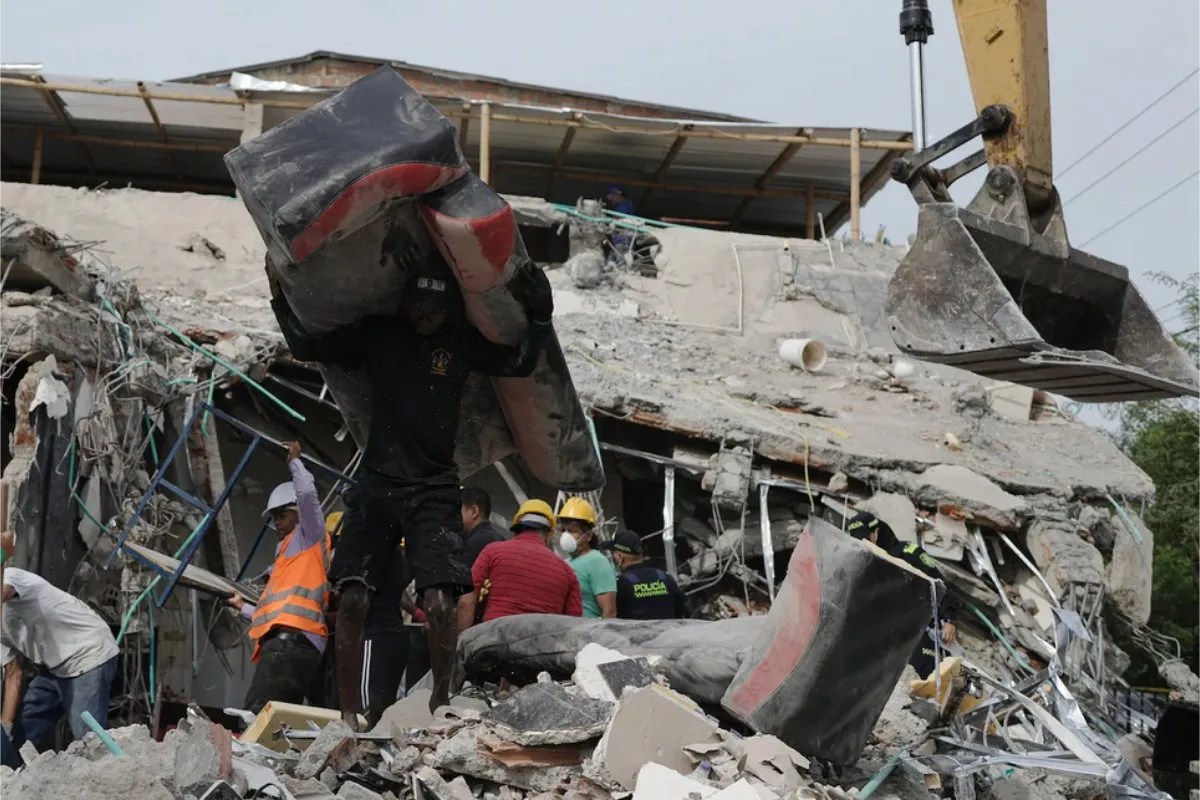
The 7.4 magnitude earthquake that struck western Colombia on August 10, 2026, isn't just another news headline. It’s a wake-up call about how quickly life changes when the ground shifts. As of August 13, the official death toll sits at 273, with over 3,800 people injured and hundreds still missing. If you’ve been following the updates, you know the numbers are grim. But the reality on the ground in cities like Cali, Pereira, and Quibdó is far more complex than just a stat sheet.
The Reality of the Search
Right now, rescue teams are pushing through the final phase of a critical 72-hour window. This is the period where the chance of finding survivors under rubble is highest. In Cali, Colombia's third-largest city, firefighters and volunteers have been working around the clock. They aren't just using heavy machinery. They're stopping every thirty minutes to ensure complete silence, listening for the faint sounds of life buried beneath concrete. Learn more on a connected subject: this related article.
It’s heartbreaking work. Some rescuers are literally digging with their bare hands. We’ve seen reports of families waiting near collapsed apartment blocks, clinging to hope that their loved ones are still breathing. This isn't just about the 273 lives lost; it's about the nearly 41,000 families whose homes have been damaged or destroyed. That’s nearly 100,000 people suddenly facing an uncertain future.
Beyond the Numbers
When a disaster like this hits, the secondary impacts are often what devastate communities long-term. David Tamayo, director of the National Unit for Disaster Risk Management (UNGRD), has been managing the fallout. The numbers tell a story of systemic disruption: More analysis by The Guardian explores similar perspectives on this issue.
- Over 12,500 homes completely destroyed.
- Roughly 75,000 homes damaged.
- More than 2,100 schools impacted.
- Over 200 health centers forced to deal with structural damage.
Think about that for a second. If you live in a place where an earthquake hits, your house might be standing, but if the local hospital is compromised, your safety net is gone. In Cali, some hospitals were forced to function at 100% capacity while dealing with their own structural failures. Doctors are being forced to triage, choosing who gets life-saving care based on immediate survival needs. That's a position no medical professional wants to be in.
Why This Matters to You
You might think, "I don't live in Colombia, so why does this matter?" Disaster readiness is universal. The situation in Colombia shows how even major cities can be overwhelmed in an instant. Infrastructure, no matter how modern, has breaking points.
If you live in a seismic zone, look at your own surroundings. Do you have a "go-bag" ready? Do you know which buildings in your city are retrofitted for major tremors? Most people don't think about these things until the shaking starts. That’s a mistake. The residents in Pereira and Manizales were just going about their lives on a normal Monday morning. Then the world turned upside down.
What Happens Next
The government has declared an economic emergency and three days of national mourning. While the focus is currently on search and rescue, the next phase involves the massive logistical hurdle of providing shelter, food, and clean water to nearly 100,000 displaced people. International organizations and local volunteers are mobilizing, but resources are thin.
If you're looking to help, don't just throw money at the first link you see. Check for verified aid channels, like established international NGOs or local Colombian humanitarian groups, that are actually on the ground.
Disasters don't wait for us to be ready. They reveal our vulnerabilities, our strengths, and our collective need to look out for one another. If there's one takeaway from the tragedy in Colombia, it’s that being prepared isn't about paranoia. It’s about respect for how powerful the earth beneath our feet really is. Stay informed, keep your emergency kits updated, and don't assume the worst won't happen. It's usually the best way to keep your family safe when the inevitable happens.