When a superpower loses the legal argument, the moral high ground, and the diplomatic chess game, what does it do? Apparently, it fires up an AI generator and makes a racist cartoon.
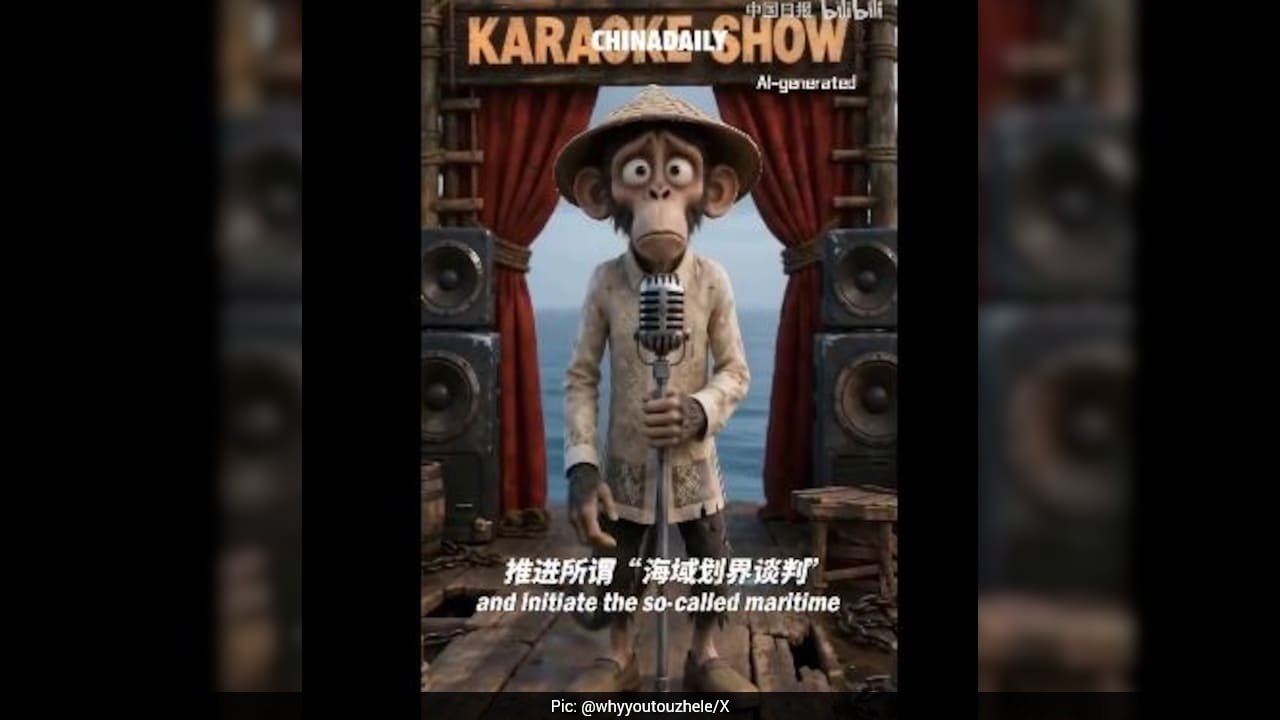
That is exactly what just happened. In mid-July 2026, Chinese state-controlled media outlet China Daily uploaded a highly controversial, AI-animated video to its Facebook page. The clip depicted a timid monkey representing the Philippines, dressed in a traditional barong and salakot (a traditional Filipino hat), being bullied and physically launched into a water cannon by arms wearing US and Japanese flags.
It did not take long for Manila to erupt.
The immediate and fierce backlash from the Philippine government highlights a dangerous shift in Beijing's regional strategy. What was once a high-stakes territorial dispute in the South China Sea has devolved into direct, state-backed racial slurs.
Deconstructing the Disastrous AI Monkey Video
The video itself is a bizarre, one-minute fever dream of propaganda.
The animation places the Filipino monkey character on a boat's karaoke stage. It starts singing a song that aligns with Beijing's narrative regarding maritime talks between Manila and Tokyo. Suddenly, an off-camera voice yells "wrong song!" and hands the monkey a sheet of paper labeled "South China Sea Arbitration Award".
When the monkey reads the paper, arms representing the US and Japan shove the character into a catapult. The cartoon monkey is flung directly into a blasting water cannon—referencing the real-world weapon Chinese coast guard vessels regularly use to harass Filipino fishermen and sailors.
China Daily released the video on July 10, 2026. The timing was deliberate. It was timed perfectly to clash with the 10th anniversary of the 2016 Hague arbitral ruling, which resoundingly rejected China's sweeping "nine-dash line" maritime claims.
Manila Draws a Clear and Angry Line
The response from Philippine officials was swift, blunt, and completely devoid of typical diplomatic fluff.
Defense Secretary Gilberto Teodoro did not hold back. He labeled the video "contemptible propaganda" and an outright disgrace.
"This mockery of the lawful 2016 Arbitral Award and the video's glorification of violence against the Filipino people and soldiers expose the moral and intellectual bankruptcy of China's propaganda machine," Teodoro stated. "It reveals the weakness of a government that resorts to racism, threats, and manufactured hatred because it has utterly failed to defend its ridiculous claims through reason, evidence, or law."
Teodoro also pointed out that the bizarre piece of media reveals a deep "schizophrenic behavior" within the Chinese Communist Party, calling it a blatant act of dehumanization.
The Philippine Department of Foreign Affairs (DFA) followed suit with an equally sharp condemnation. The agency stated that while political differences are normal, utilizing overtly degrading, inhumane, and racist imagery is completely unacceptable. The DFA demanded that China Daily immediately take the video down.
Meanwhile, Philippine Coast Guard spokesman Rear-Admiral Jay Tarriela took to X (formerly Twitter) to voice his disgust. He pointed out the extreme irony of the situation, noting how furious Beijing gets whenever Chinese leaders are caricature-targeted, yet its own state apparatus happily pumps out dehumanizing AI models of neighboring populations.
"Racism has no place in this day and age," Tarriela wrote. "Filipinos are not monkeys!"
Why Beijing's Playground Insults Show Weakness
This isn't just about hurt feelings. It's about a superpower running out of options in the court of global public opinion.
For a decade, the Philippines has leveraged the 2016 Hague ruling to build a massive, international coalition. Just days before the video aired, a group of 13 nations—including the United States and Japan—signed a joint statement affirming the ruling as legally binding.
China's aggressive maritime gray-zone tactics, like ramming wooden vessels and using military-grade water cannons, have failed to force Manila to back down. Beijing has even tried targeted diplomatic bans, previously blacklisting Defense Secretary Teodoro from stepping foot in mainland China, Hong Kong, or Macau. None of it has worked.
When legal arguments fail, and physical intimidation only rallies more global allies to your opponent's side, resorting to crude, state-sponsored racism is a desperate move. It's a massive strategic blunder. Instead of painting the Philippines as a helpless puppet of the West, the video has succeeded only in uniting the Filipino public in anger and reinforcing the narrative that China is an erratic, untrustworthy neighbor.
What Happens Next
The diplomatic fallout from this failed propaganda attempt will likely linger. If you are tracking the South China Sea situation, watch for these next steps:
- Increased Diplomatic Protests: Expect the DFA to follow up their public statements with formal, paper-trail diplomatic protests filed directly to the Chinese Embassy in Manila.
- A Pust for Tech Moderation: There will be mounting pressure on platforms like Facebook (Meta) to strictly enforce their hate speech policies regarding state-backed media accounts utilizing AI for racial targeting.
- Stronger Regional Coalitions: Look for the Philippines to lean even harder into joint naval drills and security agreements with Japan, Australia, and the US as a direct counterweight to Beijing’s psychological warfare.