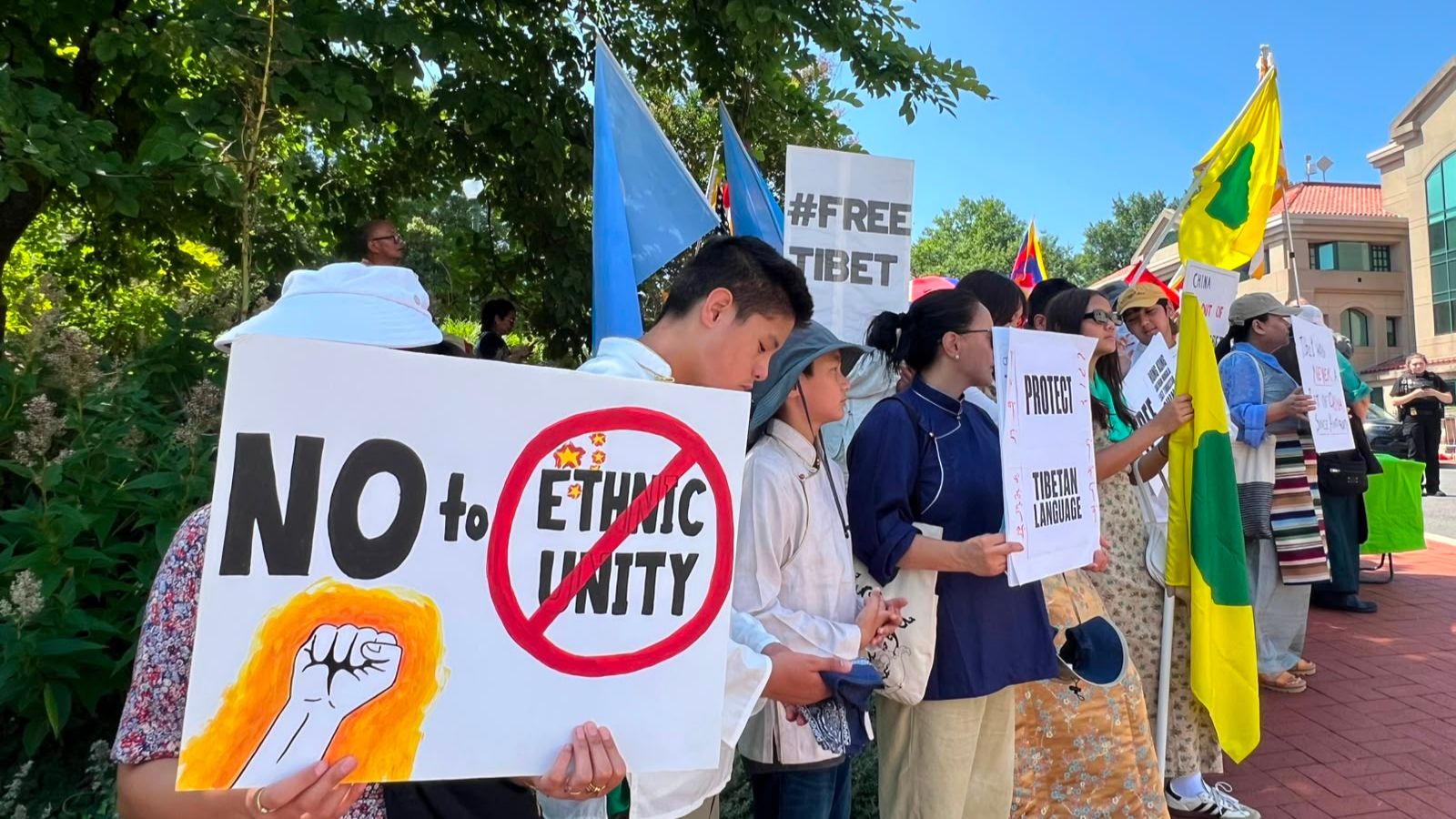
Beijing just handed itself a massive new legal weapon. On July 1, 2026, Chinas highly controversial Law on Promoting Ethnic Unity and Progress officially took effect. The Chinese Communist Party frames it as a harmless blueprint for social harmony. The rest of the world sees something far more sinister.
The United States, the European Union, the United Nations, and Taiwan have spent the last few weeks fiercely condemning the legislation, demanding its immediate repeal. Beijing has fired back, telling foreign critics to stay out of its domestic affairs. But this isn't just another standard diplomatic spat. This law changes the rules of the game for how China treats minority populations inside its borders—and how it targets critics living completely outside of them. Learn more on a connected issue: this related article.
If you think this is just a local administrative update, you're missing the bigger picture. Here is what is actually happening beneath the state media spin.
The Push for Total Cultural Conformity
Let's look at what the law actually mandates. China officially recognizes 55 ethnic minority groups, making up about 8.9% of the country's population. For decades, the Chinese constitution technically promised these groups a level of regional and cultural autonomy. This new law essentially guts those old promises. Additional journalism by USA.gov highlights related views on this issue.
Instead of celebrating diversity, the legislation explicitly forces a singular, state-defined national identity. That identity is heavily dominated by Han Chinese culture and strict political loyalty to the ruling party.
The mechanics of this cultural erasure are built directly into the text of the law. It completely codifies the dominance of Standard Chinese, or Putonghua, in public life. Preschoolers must now learn Mandarin, and schools nationwide are barred from using minority languages as the primary language of instruction. If a public sign uses a minority script, Chinese characters must be displayed more prominently.
The law even dives into private family life. Article 20 places a legal obligation on parents to guide their kids to love the party and the Chinese nation. It also encourages intermarriage between the Han majority and minority groups, while forbidding anyone from blocking marriages based on ethnicity.
The Extraterritorial Trap
The biggest reason Washington, Brussels, and Taipei are sounding the alarm isn't just what happens inside Xinjiang or Tibet. It is Article 63.
This specific clause asserts that any organization or individual outside of China who commits acts that "undermine ethnic unity" can be held legally responsible. In plain English, Beijing is claiming global jurisdiction.
If a human rights activist in London holds a rally for Uyghur rights, or a researcher in Washington publishes a paper on Tibetan cultural preservation, China now considers that a crime under this law.
Senior Chinese judicial officials, including Vice Justice Minister Hu Weilie, have publicly defended this clause. They claim the global reach is a legitimate way to fight separatism and that Western media outlets are distorting the facts. But international legal experts aren't buying it. They know exactly how Beijing operates. The law provides a fresh legal cover for transnational repression—meaning the harassment, surveillance, and intimidation of diaspora communities and foreign critics worldwide.
Global Pushback and the Real Stakes
The international reaction has been swift, though Beijing shows zero signs of backing down.
- The United Nations: UN rights chief Volker Türk has bluntly called for the law's repeal, warning that it severely restricts freedoms of religion, language, and culture.
- The United States: A bipartisan group of senators, led by Nevada Democrat Jacky Rosen, introduced a resolution blasting the law for threatening global sovereignty and attempting cultural erasure.
- The European Union: The European Parliament passed its own resolution urging EU member states to immediately suspend extradition treaties with China to protect people from being dragged into this legal trap.
- Taiwan: Officials in Taipei are deeply worried. The Mainland Affairs Council warned Taiwanese citizens that traveling to China or Hong Kong is now riskier than ever, given that Beijing can use the law's vague language to fabricate charges against visitors.
What This Means Moving Forward
This isn't a sudden shift in policy. Beijing has been testing these forced assimilation tactics for years in Inner Mongolia, Xinjiang, and Tibet through local regulations. This new law simply takes those local experiments and turns them into a mandatory, institutionalized national framework.
If you deal with international business, cross-border activism, or academic research involving China, you need to adjust your risk calculus immediately.
First, expect travel to China and territories under its control to carry significantly higher risks for anyone who has ever spoken out about minority rights. The legal definitions in this document are intentionally vague, leaving massive room for arbitrary enforcement by border guards and local police.
Second, if you run or work for an organization that deals with human rights or minority advocacy, audit your cybersecurity and physical security protocols. With a fresh legal mandate on the books, Chinese intelligence agencies will likely escalate their digital and physical surveillance of diaspora groups and activists globally.
Beijing has made its stance crystal clear. Cultural assimilation is no longer just a political preference. It is now the law of the land, and the party expects the entire world to comply.