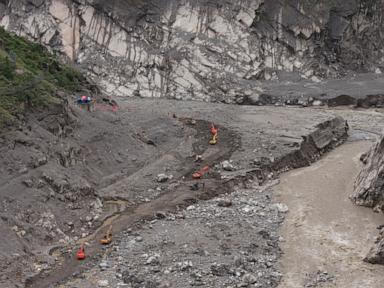
When a catastrophic glacial collapse and flash flood tore through the China-Nepal border on August 26, the torrent washed away more than just roads and bridges. It swept away Beijing's illusion of absolute control, triggering an immediate and aggressive information lockdown.
While neighboring Nepal opened its doors to journalists, published daily rescue updates, and created online registries with the names of the missing, China did the exact opposite. If you look at domestic Chinese social media platforms like Douyin or Weibo right now, you won't find raw eyewitness footage of the disaster. You'll find carefully curated loops of state media broadcasts highlighting rescue dogs, drone teams, and officials directing operations from a safe distance.
Why the stark contrast? It boils down to a fundamental reflex of governance. When a disaster strikes on Chinese soil, the regime doesn't view the catastrophe as a public safety emergency alone. They view it as an ideological threat.
Beijing's information blackout follows a predictable, well-documented playbook. Access to the affected areas in the Tibet Autonomous Region was restricted strictly to state outlets like Xinhua News and CCTV. Independent international journalists requesting entry were blocked. More critically, families of the missing have been systematically sidelined. State broadcasts refuse to name individual victims or broadcast the grief of their relatives. They prefer clean, sanitized heroism over raw human suffering.
Government optics dictate reality. Admitting massive casualties or structural failures equates to admitting vulnerability.
The strategy goes far beyond simple censorship. It involves active criminalization. Tibetan cyberpolice announced punishments for at least ten individuals accused of "spreading rumors online." Their crime? Questioning the official death toll. When everyday citizens posted online suggesting that the true number of missing people far exceeded the official numbers—which sat at 43 dead and over 500 missing—they were slapped with fines and police detentions lasting up to ten days.
This isn't an isolated incident. Think back to the severe typhoon flooding in Guangxi earlier this year, where authorities waited over a month to adjust the official death toll from 39 to 159. The goal is always the same. Time buys narrative control. By slow-walking statistics and wiping independent footage from the internet, authorities flatten public discourse before it can gain momentum.
Meanwhile, this iron-fisted approach creates a dangerous information vacuum. When official channels refuse transparency, conspiracy theories inevitably flourish abroad. Observers in South Korea, Canada, and Western nations fill the void with speculation, wondering if upstream infrastructure projects contributed to the Himalayan disaster. Scientists point to a natural glacial lake outburst triggered by climate change and rising regional temperatures, but the lack of transparent local data makes independent verification nearly impossible.
Truth becomes the first casualty of the floodwaters. When a government prioritizes saving face over saving reputations through honesty, it breeds an atmosphere of profound mistrust. Families looking for loved ones across transboundary rivers are left in the dark, forced to rely on fragmented reports while state censors scrub the web clean.
Information control cannot stop a glacier from melting, nor can it prevent extreme weather fueled by a warming planet. It can only ensure that when disaster strikes, the public remains blind to the human cost.

.full.2635583.jpg)