You don't often see a modern state execute or sentence a bureaucrat to death for financial crimes anymore. Most countries moved away from capital punishment for white-collar offenses decades ago. China historically kept the option on the books but rarely used it for purely economic corruption, usually favoring a suspended death sentence that quietly turns into life in prison.
That baseline just shattered.
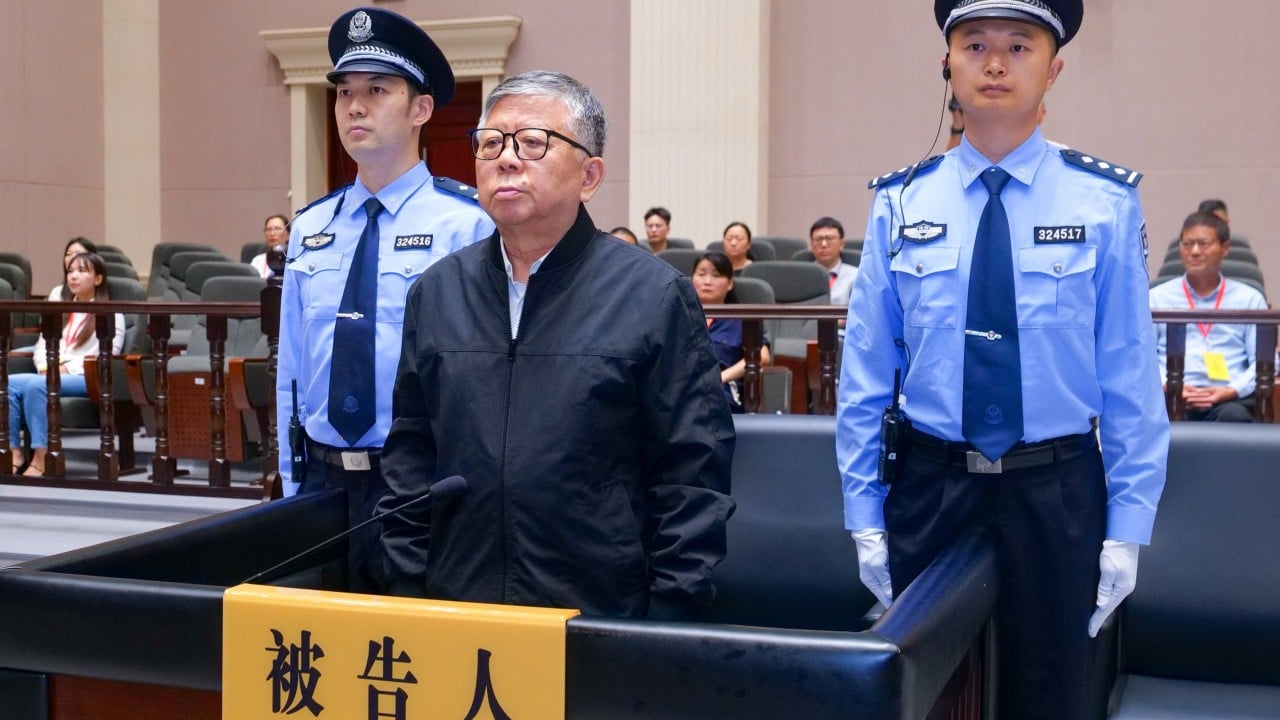
The Changzhou Intermediate People's Court in Jiangsu province just handed down an immediate death sentence to Yang Youlin. He's the former executive deputy director of the Nanjing Economic and Technological Development Zone. The charge sheet reads like an absolute corporate nightmare. Over a span of thirty years, from 1993 to 2023, Yang systematically extracted more than 2.21 billion yuan, which translates to roughly $323 million to $325 million depending on the exchange rate day. He didn't just take bribes. The court found him guilty of embezzlement, gross abuse of power, and systemic money laundering.
This isn't just another routine anti-graft announcement from Beijing. It signals a brutal shifting of the gears in how China handles elite corruption. It tells us that the threshold for survival in China's political machine has completely changed.
The Extraordinary Mechanics of a Thirty Year Graft Scheme
To understand how someone accumulates $323 million in a single economic development zone, you have to look at how local Chinese economies actually function. Yang Youlin wasn't a top-tier minister in Beijing. He operated at the mid-tier provincial level, which is precisely where the massive infrastructure booms happen.
Nanjing's economic development zone serves as a massive magnet for manufacturing, tech investments, and heavy industrial footprints. For three decades, Yang held immense power over who got a piece of that action. The court documents reveal that he targeted four specific loopholes to build his fortune.
First, he rigged the project bidding systems. If an enterprise wanted to build a massive factory or secure a government-backed infrastructure contract, they had to go through his office. He ensured that selected entities won these bids in exchange for astronomical kickbacks.
Second, he controlled land use rights transfers. In China, all land belongs to the state, and local officials negotiate the long-term leases that businesses need to build facilities. By manipulating these valuations and fast-tracking approvals, Yang cleared paths for private developers who paid him handsomely.
Third, he coordinated capital flows. He directed state-backed investment funds and local bank credits toward his preferred allies, essentially using public money to enrich companies that were secretly funding his personal accounts.
Finally, he set up complex money laundering networks to move these massive pools of capital out of the immediate sight of provincial auditors. The shear length of his run, stretching across thirty separate years, shows how deeply embedded his network was within the local system.
Breaking Down the Billion Yuan Threshold for Capital Punishment
To put this verdict into perspective, we have to look at the historical patterns of President Xi Jinping's anti-corruption drive. Since the campaign started over a decade ago, millions of officials have faced investigation. The vast majority receive party discipline, demotions, or standard prison sentences.
When the bribe amounts cross into the tens of millions of dollars, courts usually issue a death sentence with a two-year reprieve. If the convict doesn't commit further crimes in prison during those two years, the sentence automatically converts to life imprisonment without parole. It's a functional life term.
An immediate death sentence, meaning actual capital punishment without the safety net of a reprieve, is reserved for what the state deems exceptionally egregious behavior. Over the last few years, a clear boundary line has emerged. That line sits right around the one-billion-yuan mark.
Look at the recent precedents. In 2021, Lai Xiaomin, the former chairman of China Huarong Asset Management, was sentenced to death and executed after being convicted of taking 1.79 billion yuan in bribes. In 2024, Li Jianping, a local official from the Inner Mongolia region, met the same fate after his graft case topped 3 billion yuan. Yang Youlin's 2.21 billion yuan haul places him squarely in this ultra-corrupt tier.
The message from the judiciary is clear. If you cross the billion-yuan line, the state will no longer offer you a path to live out your days in a cell. They will kill you.
The Clear Timing of Beijing's Domestic Political Message
The timing of Yang's death sentence isn't an accident. Just last week, during a major address marking the 105th anniversary of the founding of the Chinese Communist Party, President Xi Jinping aggressively doubled down on his signature domestic policy. He explicitly stated that the party remains completely determined to eliminate all viruses that erode its health.
Many outside observers assumed that after more than ten years of continuous purges, the anti-corruption drive would eventually wind down or lose its edge. There was a theory that the leadership would pivot entirely toward economic stabilization and ease up on internal policing. Yang's verdict completely refutes that idea.
The state media coverage of Yang's total admission of guilt and his public expressions of remorse in the Changzhou court served a distinct domestic purpose. It acts as a stark warning to the current crop of bureaucrats managing China's current economic recovery packages. The leadership knows that economic pressure creates temptation. By executing a high-profile figure who managed an economic zone, the central government is broadcasting that financial desperation or economic urgency won't serve as an excuse for cutting corners or taking bribes.
What This Verdict Means for International Businesses and Supply Chains
If you operate a business that relies on Chinese supply chains or local manufacturing hubs, you can't afford to treat this as isolated political theater. The fallout from these high-level executions reshapes the day-to-day realities of doing business on the ground.
When a dominant figure like Yang Youlin falls, his entire local network of business partners, subcontractors, and intermediaries faces immediate scrutiny. Contracts that his office signed or fast-tracked over the last decade could be called into question, frozen, or entirely canceled by investigators.
International firms often find themselves caught in the crossfire when their local joint-venture partners or landlords suddenly disappear into the state disciplinary system. If your local operations depend on close relationships with economic development zones, you need to adapt immediately.
First, diversify your local regulatory touchpoints. Never rely on the patronage or protection of a single local official or zone director, no matter how powerful they seem. Yang lasted thirty years before his world collapsed, proving that time in office doesn't equal permanent safety.
Second, audit your local land leases and project bids. If your company secured manufacturing space or building permits through heavily fast-tracked processes in regional development zones, run independent compliance reviews. Ensure your documentation can withstand intense scrutiny from central government auditors who don't care about local handshakes.
Third, look closely at your intermediaries. Many foreign businesses hire local consultants or agencies to handle zoning laws and permits. If those agencies are using old-school methods of wining, dining, or outright paying off local bureaucrats to get things done, they are exposing your enterprise to catastrophic legal risk under China's current enforcement climate.
The era of navigating Chinese commerce through opaque personal favors and massive local kickbacks is officially dead. The stakes are no longer just corporate fines or reputational damage. When the local official across the table faces a literal firing squad or lethal injection for taking dirty money, the entire system is forced to change how it plays the game.