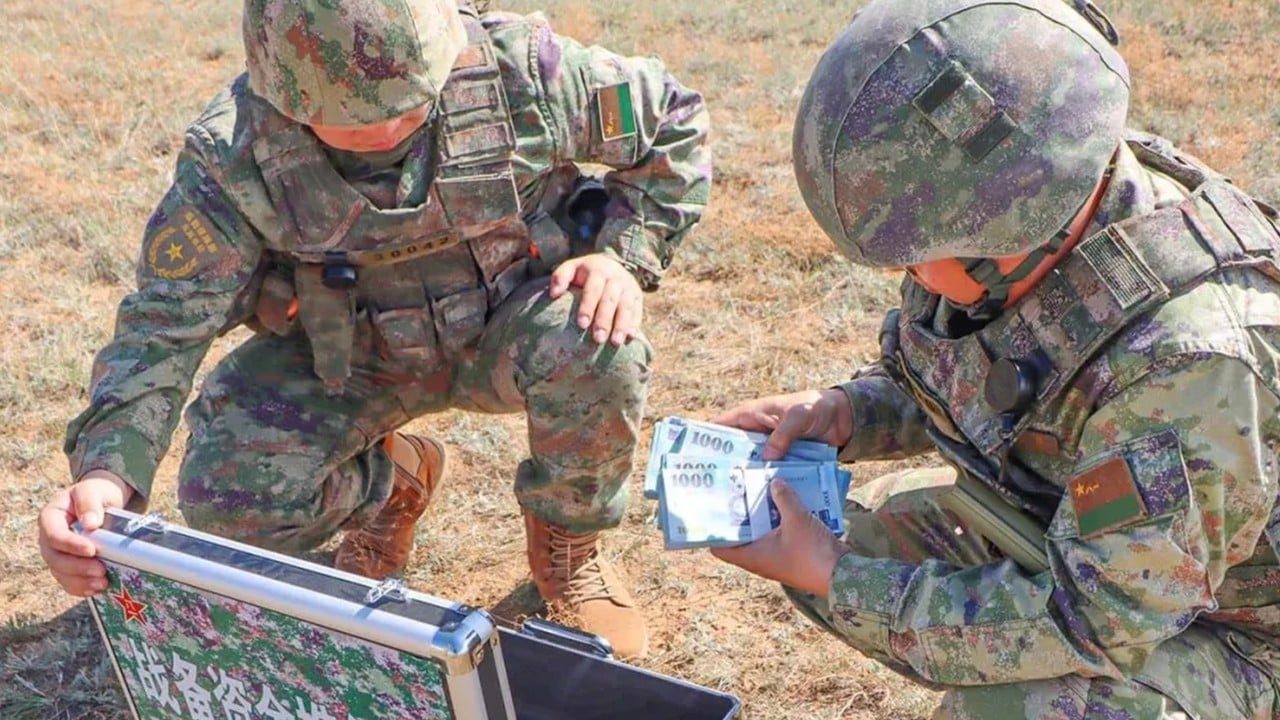
The military isn't just about bullets and missiles. It’s also about cold, hard cash. You might have seen reports about Chinese troops air-dropping gold and foreign currency during recent exercises. It sounds like a scene from a movie, but it's a calculated signal about how Beijing plans to run a post-invasion economy.
Most observers focus on the ships and aircraft when they analyze the PLA’s "Justice Mission" drills. That’s a mistake. The real story here is the logistical planning for a scenario where local banking systems vanish overnight. By practicing the delivery of New Taiwan dollars, US currency, and gold bullion, the PLA is signaling that they are preparing for the total collapse of an adversary’s financial infrastructure.
Financial Warfare Is More Than Just Sanctions
We usually think of financial warfare as freezing assets or kicking a country off the SWIFT banking system. This, however, is the ground-level version. When a military occupies a territory, the biggest hurdle isn't just the resistance you face on the streets; it’s keeping the lights on, the shops open, and the local population from panicking.
If you’re planning a blockade or an occupation, you need a way to pay for supplies. You need to be able to pay soldiers. Most importantly, you need to prevent the local currency from becoming completely worthless, which would trigger a humanitarian catastrophe.
Think about what happens to a local economy when a conflict breaks out. Electronic transactions stop working. Credit cards become useless plastic. Banks shutter their windows. In that void, physical assets like gold and stable foreign currencies become the only things that hold value. By incorporating these items into their supply drills, the PLA is showing they’ve studied the failures of other major powers in recent conflict zones. They don't intend to be caught without a way to buy the loyalty or the resources they need.
The Strategy Behind the Currency Mix
Why would they carry US dollars and New Taiwan dollars alongside gold? It’s basic risk management.
- Gold: This is the ultimate hedge. Regardless of whether a regime survives or a central bank collapses, gold is universally recognized. It’s the backup plan for when all other financial trust fails.
- US Dollars: Even in a conflict between China and the US, the dollar remains the world’s primary reserve currency. It’s liquid, widely accepted in illicit and grey markets, and essential for purchasing anything on the international market.
- New Taiwan Dollars: You need this for the locals. To control a population, you need to keep their daily life running. If you want to pay for local food, labor, or services, you need the currency they trust and use every day.
This isn't just a gimmick. It’s a logistics requirement. Integrating this into "wartime financial support" exercises means the PLA is moving toward a model where their units are self-sufficient even when they are completely cut off from the mainland’s digital banking backbone.
Why This Matters for 2026 and Beyond
The focus on these specific financial maneuvers confirms what many analysts have whispered for years: Beijing is modeling a multi-domain conflict. They aren't just practicing a beach landing. They’re practicing the administration of a territory under duress.
If you’re looking at these drills, stop getting distracted by the total number of fighter jets. Start looking at the support units. Look at how they handle logistics. Look at how they move non-combat assets. When a military starts practicing how to pay for things in the field, it’s a strong indicator that they believe the conflict will be protracted, not a quick, decisive strike.
The takeaway? The era of purely military logistics is gone. We’ve entered a period where the battle for control is fought just as much in the ledger as it is on the radar screen. You have to keep an eye on these "boring" logistical exercises if you want to understand the actual timeline of potential cross-strait instability.
If you’re interested in how this plays out, watch the next major exercise. If the focus shifts from "blockade" to "sustainment," then you’ll know they are moving from signaling to actual operational readiness. Don't bet on conventional wisdom—watch the cash flow.