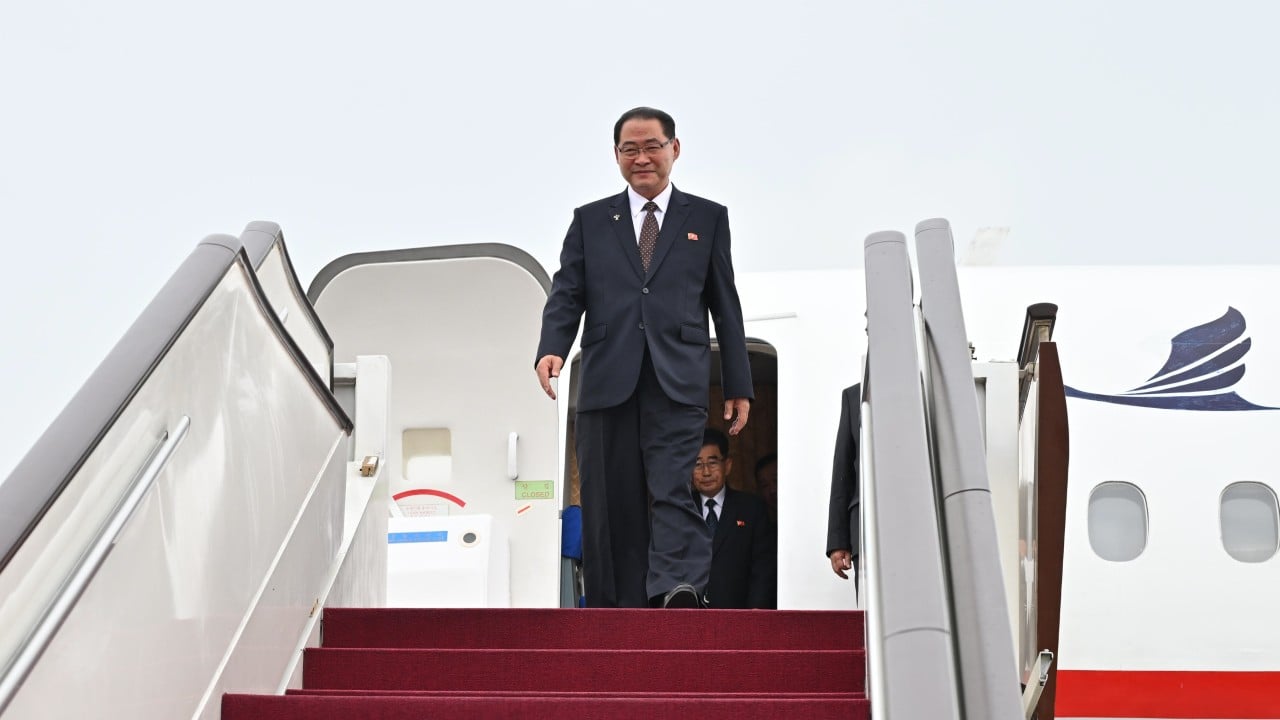
Don't buy into the sudden burst of brotherly love coming out of Beijing. When North Korean Cabinet Premier Pak Thae Song landed in China for a high-profile three-day visit, the Chinese state machinery rolled out the red carpet with an intensity we haven't seen in years. President Xi Jinping met Pak personally, showering the relationship with rare, heavy-handed praise about its robust vitality.
It looks like a picture-perfect alliance on the surface. They're celebrating the 65th anniversary of their 1961 defense pact—the Treaty of Friendship, Cooperation, and Mutual Assistance. It's the only formal defense treaty China holds with any nation. But if you strip away the state media fluff, this sudden diplomatic thaw isn't about genuine friendship. It's a calculated, transactional response to a rapidly shifting global chessboard.
The real reason behind this sudden affection isn't a secret. Beijing and Pyongyang are backing into a corner together because their external environments are getting too hot to handle alone.
The Trilateral Pressure Cooker
Look at the timing. Pak’s trip to Beijing comes less than a month after Xi Jinping made his own rare state visit to Pyongyang. This sudden back-to-back diplomacy isn't an accident. The US, Japan, and South Korea have been locking arms in a tightening trilateral defense alliance. Joint military drills, real-time missile-data sharing, and explicit deterrence strategies are making both China and North Korea incredibly anxious.
For Beijing, the biggest nightmare is a Washington-led containment ring right on its doorstep. By publicizing its tight bond with Pyongyang, China sends a clear warning to the West: pressure us too hard, and we can make things very complicated for you on the Korean Peninsula.
North Korea has its own reasons to play along. Kim Jong Un knows he can't survive on isolation alone. While Pyongyang has been cozying up to Russia during the Ukraine war, exchanging munitions for tech and diplomatic cover, that relationship has its limits. If talk of a Ukraine peace deal advances, Russia's immediate need for North Korean artillery might drop. Kim needs to ensure his economic lifeline to Beijing remains wide open, no matter what happens in Europe.
The Nuclear Elephant in the Room
There's a massive point of friction that state media completely ignores. Right before Xi’s June visit to Pyongyang, Kim Jong Un toured a nuclear factory and boldly announced plans to expand his country’s nuclear capacity at an exponential rate. His sister, Kim Yo Jong, followed up by calling Western demands for denuclearization an anarchistic dream, declaring their nuclear status entirely irreversible.
This puts Beijing in a tough spot. China hates North Korea's nuclear testing because it gives the US the perfect excuse to build up advanced military assets—like missile defense shields and aircraft carriers—right in East Asia.
Beijing used to push for a denuclearized peninsula. Now? They've basically given up on that goal publicly. Pressuring Kim on nukes right now would only sour the relationship and push him completely into Vladimir Putin's arms. China chooses to downplay the nuclear issue, focusing instead on shared economic interests and defense partnerships. It's a classic case of prioritizing strategic stability over non-proliferation.
Reading Between the Diplomatic Lines
When you read that China praises the "robust vitality" of the partnership, understand the real message. This is a marriage of convenience. North Korea gets food, fuel, and a diplomatic shield at the UN Security Council. China gets a buffer zone against US troops stationed in South Korea and a wild-card proxy it can lean on during geopolitical standoffs.
If you want to understand where this goes next, stop looking at the smiles in the photo-ops and watch the actual trade metrics and joint military movements. The alliance isn't breaking, but it isn't built on trust either. It's built on a shared checklist of geopolitical anxieties.
Your best move to stay ahead of these regional shifts is to track the upcoming joint naval maneuvers in the Yellow Sea. Watch whether North Korean vessels actually integrate into China-Russia drills, which will tell you exactly how far Beijing is willing to let this alignment go. Keep your eyes on actual resource flows, not the speeches.