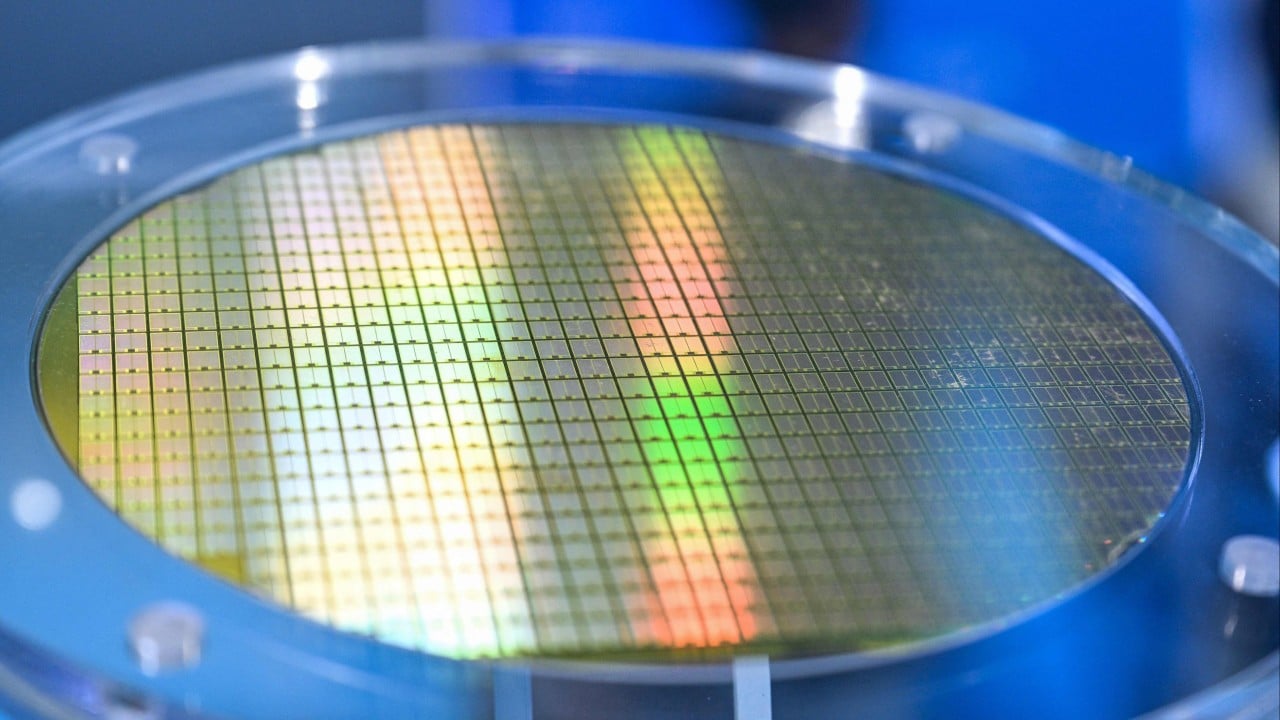
The semiconductor supply chain is fracturing under heavy geopolitical pressure. If you think standard silicon fabrication is the only game in town, you are missing a massive shift happening behind closed doors. Yangtze Memory Technologies Corp, better known as YMTC, is making aggressive moves through its backed investment vehicles to fund alternative semiconductor paths.
Let's look at what is actually happening. A venture fund backed by YMTC recently took a financial stake in SOI Micro, a Guangzhou-based chip developer. Their goal isn't just incremental growth. They want to pioneer low-power, alternative semiconductor manufacturing paths that sidestep traditional western-dominated supply chains.
Escaping the Standard Silicon Bottleneck
For years, the semiconductor industry followed a single, rigid playbook dominated by extreme ultraviolet lithography and standard planar or FinFET architectures. When US export controls locked Chinese memory makers out of core equipment markets, the strategy had to change overnight. Pouring money into standard equipment clones wasn't enough anymore.
Investors backing YMTC realized that fighting on traditional turf means playing a rigged game. Instead, funding alternative routes—such as specialized silicon-on-insulator (SOI) technologies and advanced packaging architectures—allows domestic designers to bypass specific equipment choke points.
Traditional Route: Heavy reliance on restricted EUV/DUV lithography
Alternative Route: SOI technology & advanced packaging to lower power thresholds
It is a messy process. Transitioning away from mainstream toolsets costs billions and introduces massive engineering hurdles. Yield rates suffer. Performance benchmarks take hits. Yet, the sheer amount of capital flowing into these alternative projects shows that self-sufficiency outweighs short-term economic efficiency for these stakeholders.
The Real Cost of Tech Decoupling
You cannot talk about YMTC's investment strategy without acknowledging the massive financial bleeding caused by trade restrictions. YMTC previously pumped billions into replacing restricted American and allied hardware. But replacing a machine part is different from inventing a new fabrication paradigm.
By targeting firms like SOI Micro, the YMTC-backed ecosystem is hedging its bets. They are looking at architectures that can deliver competitive performance metrics—especially in power efficiency—without requiring the absolute smallest, most heavily restricted transistor nodes.
- Traditional scaling relies on shrinking physical gates.
- Alternative routing focuses on material science and substrate innovation.
- Power efficiency becomes the primary metric when raw clock speeds are capped by tool availability.
What This Means for Global Markets
Most casual observers think export bans simply halt progress. The reality on the ground is far more stubborn. Constraint breeds weird innovations. When engineers can't buy the best tool, they rewrite the manufacturing logic.
If alternative routes gain commercial traction inside domestic consumer electronics and server farms, global semiconductor giants might face unexpected competition. It won't look like standard Samsung or Micron memory. It will be an entirely parallel ecosystem built to function without western components.
Keep an eye on where these state-backed venture funds place their next checks. The real battle for hardware dominance isn't happening at the bleeding edge of standard lithography anymore. It is happening in the messy, unorthodox laboratories trying to rewrite how chips are built from the substrate up.