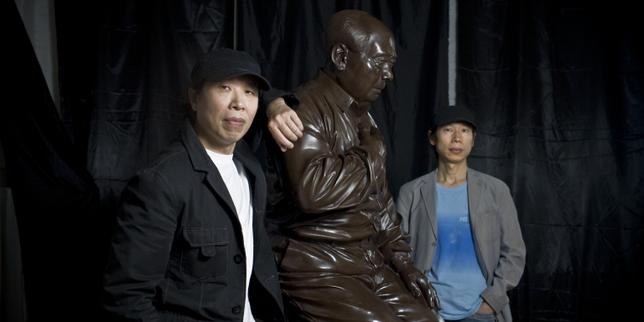
Satire used to have a fighting chance in contemporary Chinese art, but that era is officially over. Gao Zhen, internationally recognized as one half of the rebellious Gao Brothers, just received a three-year prison sentence from a court in Hebei province. His crime? Creating provocative sculptures of Mao Zedong more than a decade ago.
If you think this is just another local legal dispute, you're missing the broader picture. This ruling marks a terrifying shift where historical revisionism meets retroactive criminal punishment. Let's break down what actually happened, why the legal gymnastics behind this case are absurd, and what it signals for creative freedom moving forward. Meanwhile, you can explore similar developments here: Why Congo Ebola Responders Are Refusing To Work Without Pay.
The Sculptures That Triggered the State
Gao Zhen didn't get arrested for something he sculpted last week. The charges stem from decades-old art pieces created alongside his brother, Gao Qiang. Back in the 2000s, the Gao Brothers built a career on pushing boundaries during a brief window of relative cultural openness.
The primary targets of state ire include two specific projects: To see the full picture, we recommend the excellent report by Associated Press.
- Mao's Guilt (2009): A striking, life-sized sculpture showing the former leader kneeling in heavy repentance.
- Miss Mao: A grotesque, caricatured portrayal featuring exaggerated facial features and oversized breasts.
For years, these pieces existed in galleries, foreign exhibitions, and private collections. They were provocative, sure. But they were part of a post-Mao wave of reflection that modern authorities have decided to scrub entirely from public memory.
Retroactive Justice and the Hero Protection Law
Here is where the case falls apart logically and turns dangerous legally. Gao Zhen was convicted under a specific charge: "infringing upon the reputation and honor of heroes and martyrs".
There is just one glaring problem. China passed the law protecting historical heroes in 2018, and criminalized insults to them in 2021. Gao's sculptures were crafted years before these statutes existed.
Applying criminal laws retroactively violates basic legal fairness. Human rights researchers and advocacy groups, including Amnesty International, have pointed out the obvious. This isn't about upholding a statute; it's about finding a legal hammer to smash an inconvenient voice. Gao, who holds a U.S. permanent residency and splits his time between New York and China, was trapped the moment he returned to visit family in August 2024.
The Human Cost Behind Closed Doors
While headlines focus on the courtroom outcome, the family's ordeal is heartbreaking. Gao has already spent roughly two years locked away in pre-trial detention in Sanhe. His health has deteriorated significantly under harsh conditions, marked by respiratory issues, back pain, and severe heatstroke during the summer months.
Meanwhile, his wife, Zhao Yaliang, and their young son remain stuck in legal limbo inside China, blocked from returning to their home on Long Island. Even behind bars, Gao has tried to maintain his sanity through art, crafting paper cuttings and writing emotional, smudged letters to his young son because prison authorities withheld his reading glasses.
What This Means for Global Art
The message sent by the Sanhe People's Court is loud and clear. Beijing is drawing a hard red line. Independent artistic expression that questions official narratives is no longer just discouraged—it carries a heavy prison cell price tag.
Artists living abroad who think their foreign citizenship or green cards protect them when they cross back home need to look closely at Gao Zhen. The rules have changed. Nostalgia for a more open China is dead, and the state is weaponizing its legal code to ensure past critiques are permanently buried.