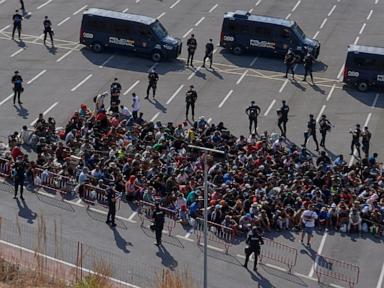
The images coming out of Ceuta this summer aren't just news flashes—they are a wake-up call for how Europe handles its borders. In late July 2026, the world watched as an estimated 80,000 people breached the frontier between Morocco and this tiny Spanish enclave. If you're looking for a simple narrative about "migrants waiting in limbo," you're missing the point. This is a massive geopolitical stress test that is currently exposing the fragility of the European Union’s entire migration architecture.
Basically, Ceuta isn't just a patch of land. It’s an autonomous Spanish city on the North African coast. Because it’s EU territory but not part of the Schengen zone, it has long been a pressure valve for migration. But this year, the valve burst.
The trigger that nobody saw coming
Most analysts point to a Supreme Court ruling in July 2026 as the spark. The court decided that Spain’s "immediate return" policy—the ability to turn people back instantly—only applied to physical land border crossings. It didn't explicitly cover those swimming around breakwaters or arriving by boat.
Trafficking networks aren't stupid. They saw a loophole and sprinted through it. Within days, the local reception facilities in Ceuta, already stretched thin, were functioning at over 2,000% of their intended capacity. Imagine trying to house thousands of people when your resources are meant for a few hundred. It’s an operational nightmare, and frankly, local officials have been left to clean up the mess with almost no help from the central government.
Why this is a total test for EU policy
If you think this is just a Spanish problem, you’re wrong. This is the first real-world test of the EU’s Pact on Migration and Asylum that only just came into force earlier this year. The promise was simple: faster returns, mandatory solidarity, and better partnerships.
So far? It’s failing the test.
We’ve seen Italy, for example, move to suspend Schengen arrangements with Spain, citing security fears. Other nations are tightening their own borders. The "solidarity" that the EU promised is being replaced by finger-pointing and diplomatic squabbling. Meanwhile, thousands of people remain in provisional housing in Ceuta, caught in a political tug-of-war that none of them asked for.
The reality of the limbo
When people talk about migrants being "in limbo," they usually mean they don't know if they'll be sent back to Morocco, allowed to stay in the enclave, or transferred to the Spanish mainland. But the reality is much harsher.
The mortality rate of this crossing has been staggering. At least 111 deaths were recorded in the immediate aftermath of the July surge. These aren't just statistics. These are people who died swimming in the heat or suffering from exhaustion during the crossing. Despite the Spanish government scrambling to install a floating barrier to satisfy the courts and restore "maritime containment," the human cost of these policy gaps is paid in lives, not just bureaucratic hurdles.
What happens next
If you're wondering how this gets resolved, stop expecting a quick fix. There isn't one. Here’s what you should actually watch:
- The Maritime Barrier: The government is installing a 500-meter floating fence. It’s a physical attempt to close the legal gap identified by the Supreme Court. Whether it actually holds or just shifts the route to more dangerous waters remains to be seen.
- Diplomatic Friction: The relationship between Spain and Morocco is the real engine here. If the two countries aren't in sync, the border will always be a site of chaos. Expect more "cooperation" rhetoric, but don't be surprised if the underlying tension remains.
- The Schengen Fallout: Watch for how other EU countries respond. If the major players keep putting up internal barriers, the dream of a border-free Europe will effectively be dead for the foreseeable future.
The people remaining in Ceuta aren't just waiting for a decision. They are living in the middle of an identity crisis for the European project. It’s messy, it’s dangerous, and it's far from over.
If you want to understand where migration policy is headed, ignore the press releases and look at what’s actually happening on the ground in places like Ceuta. That’s where the real story is written.