You won't get a second chance at this week's sky show if you sleep through your alarm. Northern Ireland observers are gearing up for a deep partial lunar eclipse, and missing the peak means waiting years for a repeat performance of this scale.
Most people think you need fancy gear or pitch-black rural skies to enjoy an eclipse. That's flat-out wrong. Astronomy is often easier than folks make it out to be.
What Actually Happens During the Eclipse
Earth slides directly between the Sun and the Moon. Simple mechanics create a stunning visual shift.
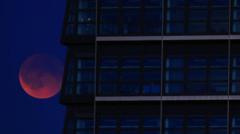
About 93% of the lunar disk slips right into Earth's deepest shadow—the umbra. Sunlight bends through our atmosphere, painting the covered portion with a rusty copper or blood-red tint.
This cosmic alignment follows hot on the heels of mid-August's partial solar eclipse. Solar and lunar eclipses travel in pairs, separated by roughly two weeks. Nature loves symmetry.
Crucial Timings You Need to Know
The spectacle unfolds in the quiet hours of the morning. Mark these British Summer Time (BST) milestones down so you don't miss a beat:
- 2.23 AM: The outer penumbral shadow touches the Moon, bringing a very subtle shading.
- 3.33 AM: The partial eclipse officially begins as the umbra takes a noticeable bite out of the lunar surface.
- 5.12 AM: Maximum eclipse hits. This is the sweet spot where 93% of the Moon sits swallowed by darkness.
- Dawn: The Moon drops low toward the western horizon as morning twilight brightens the sky.
Beating Northern Ireland Weather Challenges
Let's address the elephant in the room. Skies over Northern Ireland are notoriously fickle. Clear forecasts change into thick clouds within minutes.
Check local meteorological updates right before heading out. Pick a high vantage point with an unobstructed view toward the south-western horizon. Buildings or hills will block your line of sight just as the eclipse hits its dramatic peak.
Unlike solar events, you don't need protective glasses. Staring at a partial lunar eclipse with your bare eyes is completely safe. Grab a pair of ordinary binoculars if you want a sharper look at the copper edge.
Set your alarm early, check the cloud cover, and step outside.
Solar eclipse: When is it and how to watch it safely
This video provides additional context on safety and viewing techniques for major celestial alignments like the recent eclipse season.
http://googleusercontent.com/youtube_content/1