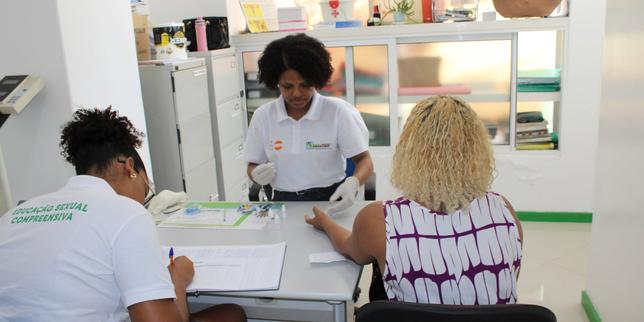
Walk through any health clinic in Praia, and you will notice something unusual for many parts of the continent. Expectant mothers are actually getting through the doors, sitting down with trained professionals, and receiving consistent prenatal care from day one. While global headlines constantly focus on healthcare failures elsewhere, Cape Verde quietly built a working system for mothers and infants.
Let's look at the facts. This Atlantic archipelago of roughly 530,000 residents managed to construct a public infrastructure where maternal and infant mortality rates rank among the lowest in Africa. When healthcare workers say that no pregnant woman can claim she missed out on medical follow-up, they are not just using empty political slogans. They are describing an operational reality rooted in decades of deliberate policy choices.
How the Island Nation Structured Its Care
Building a working medical framework takes more than good intentions. Cape Verde integrated its social security network to cover over 62 percent of active workers, creating a safety cushion that directly impacts domestic stability and access to clinics.
Local health structures rely heavily on dedicated personnel. Take professionals like Ondina Santos, a 34-year-old midwife working within family protection structures in the capital. Daily routines involve tracking pregnancies, administering childhood vaccinations, and educating new parents. These professionals form the frontline of a system that treats preventative care as a non-negotiable standard rather than an optional luxury.
Facing the Demographics of Success
Fixing maternal mortality brings entirely new problems to the surface. Ironically, as survival rates climb and public health improves, Cape Verde faces a completely different kind of pressure: a shifting demographic landscape.
Youth emigration remains a persistent hurdle, drawing young men away toward Europe in search of economic opportunity. With the standard generational replacement threshold sitting at 2.1 children per woman, policymakers are suddenly staring down the barrel of an aging population. Keeping mothers and babies healthy is only half the battle. Keeping families together on the islands is the next massive hurdle.
What Other Regions Can Actually Learn
You cannot simply copy and paste an island nation's playbook onto a continent-sized territory with millions of citizens. Yet, the core principles driving Cape Verde's success deserve a closer look.
First, accessibility comes down to decentralized clinics. Mothers don't have to travel across impassable terrain for basic checks. Second, rigorous vaccination tracking—such as protocols implemented early for hepatitis B and standard childhood immunizations—ensures children survive past infancy.
The strategy works because the state treats human dignity as an economic baseline, not a reward. If other governments want to replicate these results, they need to stop treating healthcare as an afterthought and start funding local clinics like their national survival depends on it. Because in Cape Verde, it clearly does.