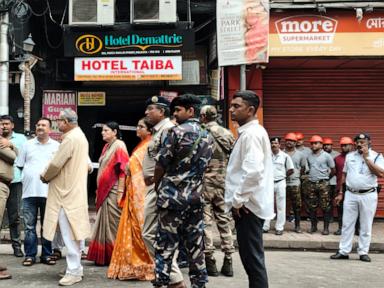
You’re planning a trip to India. You pick a budget hotel. You check in, drop your bags, and head to bed. Most people never think twice about the safety of their room until the smoke starts rolling under the door. That reality hit home in West Bengal this week, and the stories coming out of Kolkata and Tarapith are nothing short of a wake-up call for every traveler.
In the span of just forty-eight hours, two separate hotel fires have claimed at least eighteen lives. It’s a tragic, avoidable mess that highlights a massive gap in basic safety standards across the region. If you’re traveling to India or anywhere else with "budget-friendly" options, you need to understand that price tags often hide dangerous compromises.
Two Tragedies in Two Days
On Monday, a fire in the temple town of Tarapith in Birbhum district killed nine people. Survivors and investigators pointed to a terrifying reality: the emergency exits were locked. The terrace door was blocked with plywood. When the fire started at the reception area around 4:00 AM, guests didn't just have to escape the flames; they had to fight their way out of a trap.
Less than two days later, on Wednesday morning, disaster struck again in central Kolkata. A massive blaze at the Shikha Inn hotel on Mirza Ghalib Street killed another nine people, including a child. This building was an old structure in a cramped, busy neighborhood. The dense smoke proved deadly, making it impossible for people on upper floors to find a way down.
The Deadly Cost of Neglect
You might think a hotel is a hotel, but the reality on the ground is different. In cities like Kolkata, residential buildings are frequently converted into commercial hotels overnight. Often, these places don't have fire escapes. They don't have functional alarm systems. They are basically death traps with cheap room rates.
Witnesses from the Kolkata incident described the chaos. Guests weren't warned by alarms; they were woken by the screams of other boarders. By the time they smelled the smoke, the staircase was already a chimney. When officials investigate these sites, they often find the same pattern: no fire license, no fire extinguishers, and zero compliance with building codes.
If you are staying in a hotel that costs between 500 and 800 rupees a night, you aren't paying for "authentic local charm." You are often paying to stay in a building that has never seen a fire inspection.
How to Protect Yourself When You Travel
I’ve stayed in hundreds of hotels over the years, and I’ve learned to spot the red flags that most tourists ignore. If you want to make sure you wake up tomorrow morning, start doing these three things every single time you check into a hotel.
First, check the exit. The moment you drop your bag, walk to the nearest fire exit. If that door is locked, chained, or blocked by housekeeping supplies, walk back to the front desk and demand a different room or a key. If they can’t provide an accessible exit, leave. Don’t negotiate. Just leave.
Second, listen for the silence. Is there a smoke detector in your room? Does it actually have a battery in it? I’ve seen countless "budget" rooms where the alarm had been ripped out or painted over. If the room feels like a fire hazard, it is one.
Third, identify the building’s layout. If you’re staying in a multi-story, old building like the ones in central Kolkata, stay on a lower floor near the ground level. The higher you are, the harder it is for fire services to reach you during an emergency. Dense, old urban corridors are notoriously difficult for fire tenders to navigate.
Why This Keeps Happening
It’s easy to blame bad luck, but this is a structural issue. Politicians and local authorities are currently scrambling to order investigations and form "Special Investigation Teams." It sounds good for the headlines, but the reality is that the regulatory environment is weak. Hotels are allowed to operate without proper fire safety audits because enforcement is spotty at best.
The human cost here—families visiting for medical treatment, pilgrims, and travelers—is devastating. We need to stop treating safety as an optional extra in the hospitality industry.
If you are currently traveling, don't assume the building you're in is safe just because it’s a hotel. Walk the stairs. Look for the exit signs. If it looks like a fire hazard, it is. Stay alert. It might just be the most important part of your trip.