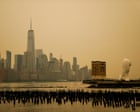
If you woke up today to an orange, hazy sky and the distinct smell of a campfire miles away, you’re not imagining it. As of July 16, 2026, over 20 states are grappling with hazardous air quality as smoke from intense Canadian wildfires and active blazes in Minnesota drifts south.
This isn't just about hazy sunsets. It's a public health event. Major cities, including Detroit, Minneapolis, and parts of New York, have seen air quality index (AQI) levels soar to hazardous categories—with some areas recording AQI readings well above 400.
Why The Air Quality Is Plummeting Right Now
We are currently caught in a "perfect storm" of atmospheric conditions. More than 100 wildfires are burning out of control in Canada, while drought-stricken forests in Minnesota provide additional fuel.
To make matters worse, a lingering heat dome is parked over the central United States. High-pressure systems like this act as a lid, trapping the smoke near the ground rather than letting it disperse into the upper atmosphere. When you combine extreme heat with dense particulate matter (PM2.5), you get a toxic cocktail that forces even healthy individuals to struggle with breathing.
The Danger of PM2.5
You’ll hear officials talk about PM2.5 constantly. These are fine inhalable particles—less than 2.5 micrometers in diameter—that are small enough to bypass your nose and throat’s natural defenses. They travel deep into your lungs and can even enter your bloodstream.
Short-term exposure leads to:
- Persistent coughing and throat irritation.
- Chest tightness and shortness of breath.
- Dizziness and fatigue.
For those with pre-existing conditions like asthma, COPD, or heart disease, this smoke is a legitimate trigger for emergency medical events.
Which States Are Most Affected
The smoke plume is dynamic, moving with shifting winds, but the current impact zone covers the Great Lakes, the upper Midwest, and the Northeast.
States currently issuing alerts include:
- Minnesota: Facing some of the most hazardous "maroon" level air quality, where everyone is advised to avoid outdoor activity.
- Michigan & Wisconsin: Detroit and surrounding areas have fluctuated between "very unhealthy" and "hazardous" levels.
- New York & Pennsylvania: Statewide air quality health advisories are in effect as the smoke moves east, turning the Manhattan skyline a grim shade of yellow.
- Massachusetts & Vermont: Reports indicate thick plumes reducing visibility significantly across the region.
How to Protect Yourself Today
Don’t wait for the sky to turn clear. If your local AQI is above 100, you need to take proactive steps to limit your exposure. Most people make the mistake of assuming that closing windows is enough. It's a start, but it’s rarely sufficient for long-term smoke events.
Create a Clean Room
Designate one room in your home—usually a bedroom—to be your "clean air sanctuary."
- Keep windows and doors tightly sealed.
- Run a portable air purifier with a HEPA filter continuously.
- If you don't have a purifier, you can build a DIY version using a box fan and a MERV 13 furnace filter, a trick endorsed by many air quality experts for emergency situations.
Manage Your Indoor Environment
Your HVAC system is a double-edged sword. If you have central air, set it to "recirculate" mode. Do not pull in fresh air from outside, as this will pump smoke directly into your living space. If you have an window air conditioner, ensure the outdoor vent is closed tight.
Avoid activities that generate indoor particles:
- Stop frying or broiling food (these generate massive amounts of indoor PM2.5).
- Avoid burning candles or incense.
- Skip the vacuuming unless your vacuum has a sealed HEPA filter, as older models just blow dust back into the air.
Masking Up
If you absolutely must go outside, a cloth mask or surgical mask will not protect you from smoke particles. You need an N95 or KN95 respirator. Ensure it forms a tight seal around your nose and chin; if you have facial hair, you won't get the necessary protection.
Stay Informed Without Panic
Air quality conditions change rapidly based on wind shifts. Don't rely on how the sky looks outside your window—visibility can be deceptive.
Check AirNow.gov for real-time data specific to your zip code. If you see alerts for "Unhealthy" (Orange) or worse, reschedule your outdoor workouts, keep the kids inside, and monitor your symptoms. This isn't the time to "tough it out." Your lungs will thank you for taking the low-activity route until the cold front clears the haze.