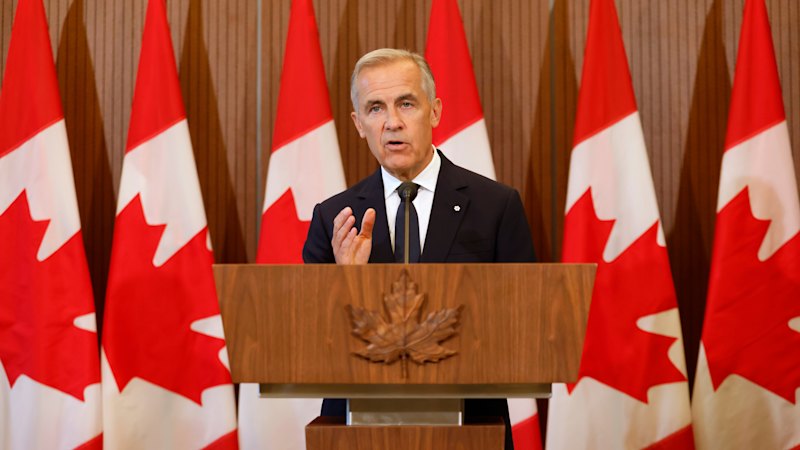
Trade negotiations between Ottawa and Washington didn't just stall on a Friday night—they exploded. Minutes before a midnight deadline, Canadian Prime Minister Mark Carney pulled the plug on high-stakes economic talks, declaring that Canada had been unfairly targeted and "attacked" by sudden policy shifts. Within hours, the White House pushed forward with punishing 50% tariffs on roughly $20 billion worth of Canadian exports.
If you think this is just another routine policy disagreement between friendly neighbors, you are missing the entire plot. This collapse marks a permanent fracture in the post-war North American economic alignment. For another perspective, see: this related article.
What Triggered the Collapse
For weeks, officials claimed they were creeping toward a workable compromise to avert a brutal tariff wall. The United States dangled potential relief on steel, aluminum, and automotive imports, while Canada weighed concessions regarding market access and dairy.
Then the floor dropped out. According to Canadian officials, Washington introduced severe last-minute terms that crossed red lines. These late additions sought to restrict Canada's sovereign right to pursue independent trade agreements with other global powers, while clawing back promised vehicle tariff exemptions. Similar reporting on the subject has been published by Forbes.
Carney didn't mince words on Parliament Hill, telling reporters that the final demands were uneconomic and insulting. "You're at war when you get attacked," Carney stated, signaling that Ottawa is done playing defense against a shifting American playbook.
On the other side, U.S. Trade Representative Jamieson Greer fired back, claiming Canada walked away from the bargaining table because Ottawa balked at finalizing commitments made earlier in the week. Washington argued it offered the best treatment given to any major exporter, only to watch Canadian negotiators pull back.
The Direct Toll on Businesses and Consumers
The immediate economic fallout hits supply chains that have spent decades integrating across the border. The 50% U.S. levy applies to a sweeping list of Canadian products ranging from industrial materials and forest products down to everyday consumer goods.
In response, Ottawa announced that dollar-for-dollar retaliatory tariffs will officially take effect on September 8, targeting U.S. steel, appliances, electronics, dairy, and agricultural machinery.
Business advocacy groups on both sides are scrambling. Major industry associations warn that consumer prices will surge immediately. Manufacturing components crossing the Detroit-Windsor corridor will face administrative bottlenecks and steep cost penalties, turning routine cross-border commerce into a financial hazard.
The End of an Era
For generations, the economic relationship between these two nations operated on a predictable baseline of mutual trust and integrated defense. That illusion is gone. Carney openly admitted that America has fundamentally changed and that returning to the old status quo is impossible.
When a trade partner uses economic integration as leverage to dictate domestic and foreign policy choices, the calculus shifts from cooperation to self-preservation. Canada is betting that its critical minerals, energy reserves, and domestic market resilience give it enough leverage to weather the storm.
Expect Ottawa to roll out targeted financial buffers for affected domestic sectors over the coming days. If you manage supply chains or investments tied to North American trade, stop waiting for a quick diplomatic fix. Plan for a protracted bilateral trade war and start auditing your exposure to the September retaliatory tariffs right now.

,webp/023/300/746/v2/2560x1440.211.webp)