Scrolling through property listings late at night usually ends in harmless daydreaming. You see a fixer-upper, check your bank account, and close the tab. But back in 2017, British tech entrepreneur Mike Conner saw something entirely different on his screen. It wasn't a quaint cottage or a suburban fixer-upper. It was Thorne Island, a crumbling 19th-century military outpost sitting abandoned off the coast of Pembrokeshire, Wales. He bought it for roughly £500,000.
Most people look at a derelict island fort and see a money pit. They aren't wrong. What followed was a grueling, decade-long ordeal involving £2 million in renovations, hundreds of helicopter trips, and a complete reimagining of what an off-grid home can actually be. If you think buying a historic ruin is just about picking out paint swatches and calling local contractors, you're missing the brutal reality of isolated maritime construction. For a different view, read: this related article.
The Reality of Restoring a Historic Island Fortress
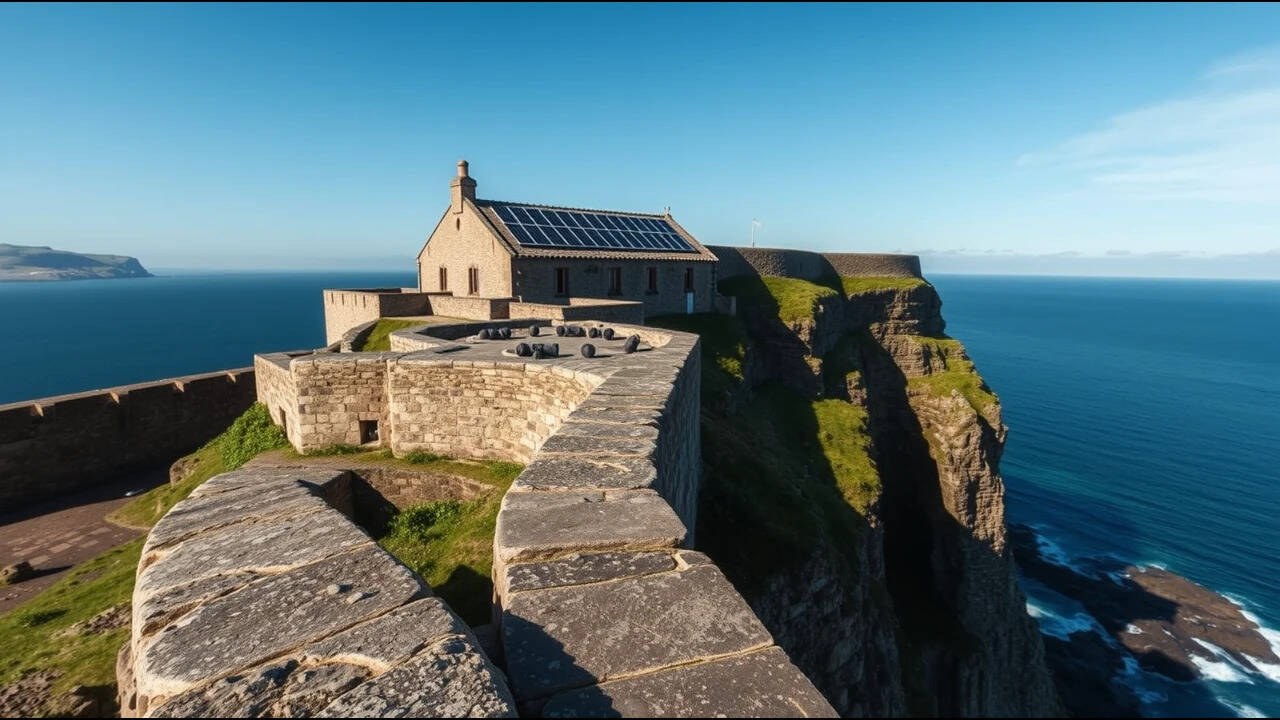
Building on the mainland is hard enough. Building on a jagged rock sitting in the middle of a high-tide channel is an entirely different level of punishment. Thorne Island guards the entrance to Milford Haven, a strategically vital waterway dating back to the mid-1800s. Lord Palmerston's government originally built the fort between 1852 and 1854 to protect Britain from a potential French naval invasion under Emperor Napoleon III. It was engineered to house around 100 soldiers, complete with heavy artillery batteries and thick granite walls designed to absorb enemy fire.
By the time Conner acquired it, those walls were fighting a losing battle against relentless moisture, salt spray, and decades of failed commercial ventures. Previous attempts to turn the island into a luxury hotel had flatly crashed and burned. When you buy a Grade II* listed structure, you can't just knock down a damp wall or slap up drywall. Every single intervention has to respect the historic fabric of the building while dragging it into the twenty-first century. Further reporting regarding this has been published by Apartment Therapy.
Logistics alone will break most projects. Because Thorne Island has no road connection to the mainland, every single bag of cement, tool, and steel beam had to arrive by boat or helicopter. Reports from the restoration show that hundreds of helicopter flights were necessary just to haul heavy supplies onto the rock. Builders lived on-site for years, battling unpredictable Welsh weather, crashing waves, and the sheer isolation of living inside a damp, wind-whipped fortress.
Surviving Completely Off the Grid
Restoring an 8,000-square-foot Victorian military base means you cannot simply call the local utility company to hook up power and water. If you want modern comforts on an isolated island, you have to build your own mini-utility grid from scratch.
The successful transformation relied heavily on heavy-duty green infrastructure. Conner installed extensive solar panel arrays, high-capacity battery storage systems, and advanced heat pumps to keep the massive stone structure livable. Water treatment facilities and dedicated sewage systems were engineered to make the island entirely self-sufficient.
This is where many amateur property restorers fail. They focus entirely on aesthetics—exposed brick, vaulted ceilings, and sweeping ocean views—while ignoring the unglamorous mechanics of waste management, freshwater sourcing, and reliable power generation. Off-grid living sounds romantic until your batteries fail during a winter gale and your water pump freezes solid. Surviving a decade of this work requires serious engineering discipline, not just a healthy budget.
What You Get for Three Million Pounds
By 2025, the decade of grueling work finally wrapped up, and Conner listed Thorne Island on the market for £3 million through Strutt & Parker. For that price tag, what do you actually get?
The finished property spans just over 8,000 square feet of interior space. It features five bedrooms, sprawling open-plan kitchens, a cozy snug, massive dining areas, a dedicated games room, and a rooftop bar overlooking the Pembrokeshire coast. The historic character was preserved through exposed stonework and soaring vaulted ceilings, while modern luxuries like a private jetty, a helipad, and a hydraulic crane make logistics manageable.
The crane is essential. Moving heavy groceries, luggage, or maintenance gear from a bouncing boat onto a steep rock face requires industrial equipment. It is a stark reminder that even with luxury finishes and open-plan living, you are still living on an exposed fortress surrounded by the Irish Sea.
Lessons From a Million-Pound Gamble
Taking on a project like Thorne Island teaches you a few hard truths about historic real estate and remote development.
First, budgets are always wrong. When you touch a Victorian ruin, hidden structural damage, asbestos, or moisture issues will instantly inflate your estimates. Second, local regulations will slow you down. Historic preservation boards have absolute authority over what you can change, meaning your timeline will inevitably double.
If you are eyeing an unconventional property or thinking about buying a remote historic structure, strip away the romantic Instagram aesthetic. Look at the logistics, calculate the utility costs, and double your budget before you sign a single contract. Otherwise, you'll end up another cautionary tale of a half-finished renovation abandoned to the elements.
Stop waiting for the right moment to take on a massive challenge. Do the math, expect everything to take twice as long, and prepare to get your hands dirty.