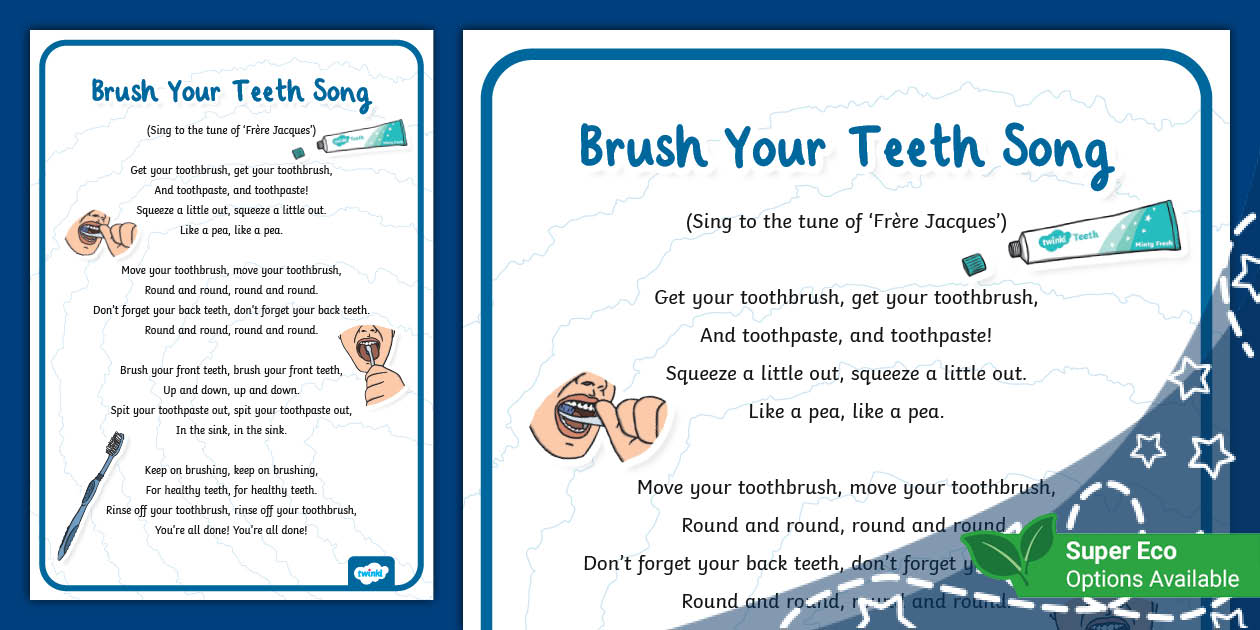
The bathroom light hums with a clinical, yellow buzz at six in the morning, a stark contrast to the blue shadows still clinging to the hallway. A toddler named Leo stands on a plastic step stool, his reflection wobbly in the mirror, eyes wide with the sort of resistance that only a two-year-old can muster against the mundane. His father, weary and still tasting his first sip of coffee, does not reach for a lecture on dental hygiene or the threat of pediatric gingivitis. Instead, he reaches for a small, rectangular speaker on the counter. With a single tap, the bright, acoustic bounce of a guitar fills the small space, and the morning ritual transforms from a battlefield into a dance. This is the enduring, quiet power of Brush Your Teeth By Raffi, a song that has anchored the chaotic mornings of three generations with the steady heartbeat of a folk legend’s optimism.
There is a specific frequency to the way Raffi Cavoukian sings. It is not the frenetic, over-engineered pitch of modern children’s media, which often feels designed to hijack a child’s dopamine receptors through sheer velocity. His voice is grounded, resonant, and remarkably patient. When he recorded the album Singable Songs for the Very Young in 1976, he was not trying to build a global brand. He was a struggling folk singer in Toronto who had spent years playing coffeehouses, hoping to be the next Joni Mitchell or James Taylor. He brought that same respect for the craft—the clean fingerpicking, the unhurried phrasing—to songs about the most basic human functions. The result was a piece of music that treated the listener as a person of dignity, even if that person was still learning how to use a spoon. Meanwhile, you can explore other stories here: Why Finding True Love in Paris Requires Forgetting the Fairytale.
The song operates on a simple, repetitive structure that mimics the very action it describes. It moves through the day—morning, afternoon, evening—creating a sense of temporal literacy for a child who does not yet understand the concept of an hour. Each verse provides a roadmap for a task that can feel invasive or tedious to a small body. Research in developmental psychology suggests that music functions as a powerful mnemonic device because it engages both the linguistic and emotional centers of the brain simultaneously. For a child like Leo, the melody provides a predictable "scaffolding" for the physical act. He knows that when the "ch-ch-ch" rhythm begins, it is time to move the bristles. The song does not just command; it accompanies.
The Architecture of Brush Your Teeth By Raffi
To understand why this specific track has outlasted nearly every other piece of educational media from the 1970s, one must look at the philosophy of the man behind the guitar. Raffi has long been an advocate for what he calls "Child Honouring," a philosophy that views children as whole human beings rather than consumers-in-waiting. This worldview is baked into the acoustic warmth of the recording. There are no synthesizers or jarring sound effects to distract from the intimacy of the performance. It feels like a conversation held over a kitchen table. To understand the complete picture, we recommend the excellent analysis by Apartment Therapy.
The production of the track is deceptively sophisticated. While many children’s songs of that era were recorded with thin, tinny arrangements, this recording features a rich bottom end and a crispness that holds up on high-fidelity audio systems. It was recorded in a basement studio with a modest budget, but the engineering focused on the clarity of the lyrics. This clarity is essential for early language learners. Phonemic awareness—the ability to hear and manipulate the individual sounds in words—is a cornerstone of literacy. By emphasizing the percussive "sh" and "th" sounds throughout the verses, the song serves as a subtle speech therapy session disguised as a sing-along.
Parents often describe the song as a "tool," but that word feels too cold, too utilitarian. It is more of a bridge. In the 1980s, as the American dental landscape shifted toward more aggressive preventative care, the song became a staple in classrooms and pediatric offices. It arrived just as the American Dental Association began to emphasize that the habits formed before the age of five were the primary predictors of oral health in adulthood. Yet, the song never feels like a medical directive. It feels like an invitation to a game. It turns a chore into a shared cultural moment between a parent who grew up with the cassette tape and a child now streaming it via a smart speaker.
The Science of the Smile
Beyond the sentimental value, there is a biological reality to the rhythm. The human heart naturally seeks entrainment, a process where our internal rhythms—heartbeat, breathing, brainwaves—align with external stimuli. The tempo of the song sits comfortably around 120 beats per minute, a pace that feels energizing but not frantic. It matches the ideal speed of a steady brushing hand. When a child hears that tempo, their motor cortex begins to fire in anticipation of the movement. It is a physical synchronization that reduces the friction of the task.
Pediatricians often note that the "battle of the brush" is rarely about the teeth themselves. It is about autonomy. A toddler is a creature newly aware of their own will, and having a plastic stick shoved into their mouth by a giant adult feels like a violation of that budding independence. The song shifts the locus of control. It is no longer the parent telling the child what to do; it is the music setting the stage. The child is no longer a passive recipient of care but a participant in a performance. They are "doing the song," which just happens to involve hygiene.
This shift is crucial for emotional development. It teaches the child that routines can be joyful rather than restrictive. It builds a sense of self-efficacy—the belief that one can successfully execute a task. When the song ends and Leo looks in the mirror with a foam-covered grin, he isn't just proud of his clean teeth. He is proud that he navigated the morning. He has mastered a small corner of his world, and he did it to the sound of a friendly voice that has been cheering on children for fifty years.
In the mid-1990s, Raffi famously turned down millions of dollars in licensing deals from major corporations, including movie studios and fast-food chains. He refused to allow his music to be used to market products to children, fearing it would exploit the trust he had built with his audience. This integrity is the silent backbone of the song. There is no commercial "hook," no tie-in to a plastic toy or a sugary cereal. It is a pure piece of communication. This lack of commercial baggage allows the song to remain timeless. It doesn't belong to a specific cartoon or a marketing campaign; it belongs to the family bathroom.
The way we consume this music has changed—from vinyl to 8-track, from CD to the ethereal cloud—but the human need for ritual remains static. In an era where childhood is increasingly digitized and high-speed, the slow, acoustic pacing of the track offers a necessary deceleration. It is a two-minute window where the digital world disappears, and the only thing that matters is the "up and down" of the brush. It is a rare moment of presence in a distracted age.
There is a profound loneliness in modern parenting, a sense of being adrift in a sea of conflicting advice and glowing screens. Often, the only thing that connects a mother in 2026 to her own mother thirty years ago is the shared memory of these lyrics. It is a cultural hand-off, a way of saying, "I went through this too." The song becomes a tether to the past, a reminder that the struggles of raising a human being are universal and enduring. The specific frustrations of the dawn-lit bathroom are not unique to any one household; they are the shared heritage of the species.
We often look for meaning in the grand gestures of life—the graduations, the weddings, the career milestones. But the substance of a life is actually found in these small, repetitive increments. It is found in the three minutes spent over a sink, the sun just starting to hit the tiles, while a gentle voice sings about the morning light. The genius of the work lies in its recognition that the smallest acts are the ones that require the most grace. It takes a certain kind of brilliance to take a mundane necessity and turn it into a song that people will remember for the rest of their lives.
Back in the bathroom, the song reaches its final, cheerful strum. Leo spits into the sink with a look of immense concentration, then looks up at his father. The tension that filled the room just minutes ago has evaporated, replaced by the quiet satisfaction of a job well done. The father wipes a stray glob of toothpaste from the boy's chin and turns off the light. They walk out into the rest of the day, the melody still humming softly in the back of their minds, a small, invisible shield against the chaos of the world.
The legacy of Brush Your Teeth By Raffi is not found in record sales or streaming numbers, though those are vast. It is found in that quiet moment of connection in the hallway. It is found in the fact that, in millions of homes across the globe, the day begins not with a shout, but with a song. It is a reminder that even the most routine parts of our existence can be imbued with a sense of wonder if we only take the time to sing about them.
The guitar fades, the speaker goes silent, and the house settles into the rhythm of the morning. The brush is back in its holder, dripping slightly, a humble monument to a task completed. In the end, we are all just trying to find our way through the day, one verse at a time, looking for a voice that tells us we are doing just fine. And as the sun finally clears the horizon, the echoes of that gentle, Canadian baritone remain, a steady pulse in the heart of the home.
The bathroom door clicks shut, leaving only the scent of mint and the memory of a smile.