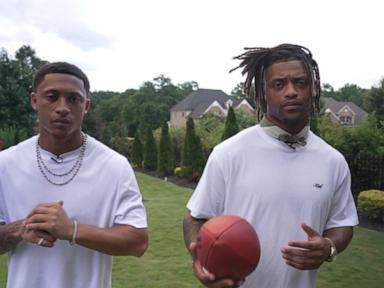
Football runs in families. It's a known fact. You see the same last names pop up on draft night every single year, echoing past generations of athletic greatness. But seeing brothers share an NFL field while wearing the exact same jersey? That is rare. Seeing them play the exact same position on that very same team? That pushes past rare straight into historical territory.
People search for this topic because it feels glitchy. It defies standard roster construction. Teams are built to maximize talent across different units, so doubling down on two siblings playing the same spot usually creates redundancy. Yet, when it actually happens, it rewrites the dynamics of a locker room.
Let's look at how this rare phenomenon shakes up professional football and why it matters more than a simple trivia fact.
The Reality of Shared Roster Spots
You can't fake chemistry on a football field. When two brothers play the same position, they share instincts built over decades of backyard games and high school battles. They know how the other moves without even looking.
Take recent history in the league. You have pairings like the Griffen twins or the Kelce brothers, though Travis and Jason famously squared off on opposite sides in the Super Bowl rather than sharing the same huddle. But when brothers occupy the exact same slotting on a single depth chart, the coaching challenge shifts completely.
Coaches hate drama. Roster battles usually breed intense competition where guys fight for every single rep. When siblings are involved, that competition takes on a different weight. They aren't trying to cut each other. They're pushing each other to the absolute limit.
What the Scouting Reports Miss
Scouts look at forty-times, vertical jumps, and game tape. They miss the psychological edge of bloodlines.
If you grow up blocking your older brother or trying to cover him on a dusty backyard turf, professional cornerbacks and linebackers don't scare you. You've already faced a fiercer critic across the dinner table every single night.
- Shared muscle memory from childhood training sessions.
- Instant communication that bypasses regular play-call syntax.
- Zero fear of holding each other accountable in front of veteran team leaders.
Breaking Down the On-Field Impact
Opposing defenses hate preparing for sibling tandems. If brothers play wide receiver or defensive back, their physical traits usually mirror each other. Same height, same stride length, same release package off the line of scrimmage.
Defensive coordinators spend hours studying tendencies. Facing two players who run routes with identical pacing breaks standard coverage recognition. You think you're tracking one guy, but his brother steps onto the field and executes the exact same cut with a slightly different tempo.
It creates a nightmare matchup matrix.
The Locker Room Dynamic
Nobody talks about the weird pressure this puts on the rest of the team. Football locker rooms operate like tight-knit military units. Hierarchy matters. Rookies carry pads; veterans get prime locker stalls.
When a family unit exists inside that ecosystem, the standard social rules bend. You have two voices speaking with one shared authority. If one brother gets benched, the other takes it personally. It forces coaching staffs to master the fine art of man-management. You aren't just handling an athlete; you're managing a family dynamic under intense media scrutiny.
Why This Trend Will Keep Growing
Modern youth training starts earlier than ever. Specialized quarterback camps, elite seven-on-seven circuits, and private position coaches turn kids into polished prospects before they even step foot on a high school campus.
Because brothers train together using the exact same professional methods, their skill sets develop in parallel. The gap between their developmental curves shrinks. Ten years ago, age gaps usually meant one brother was out of the league before the younger one arrived. Today's nutrition, sports science, and longevity programs mean their career windows overlap cleanly.
You're going to see more of this. Front offices are starting to realize that the intangible chemistry of family ties outweighs the perceived risk of roster duplication.
Stop treating it like a cute human interest story for a Sunday pre-game show. It's a distinct competitive advantage.
Watch the upcoming draft classes closely. The next pair of brothers taking over the same position group is already putting in work right now.