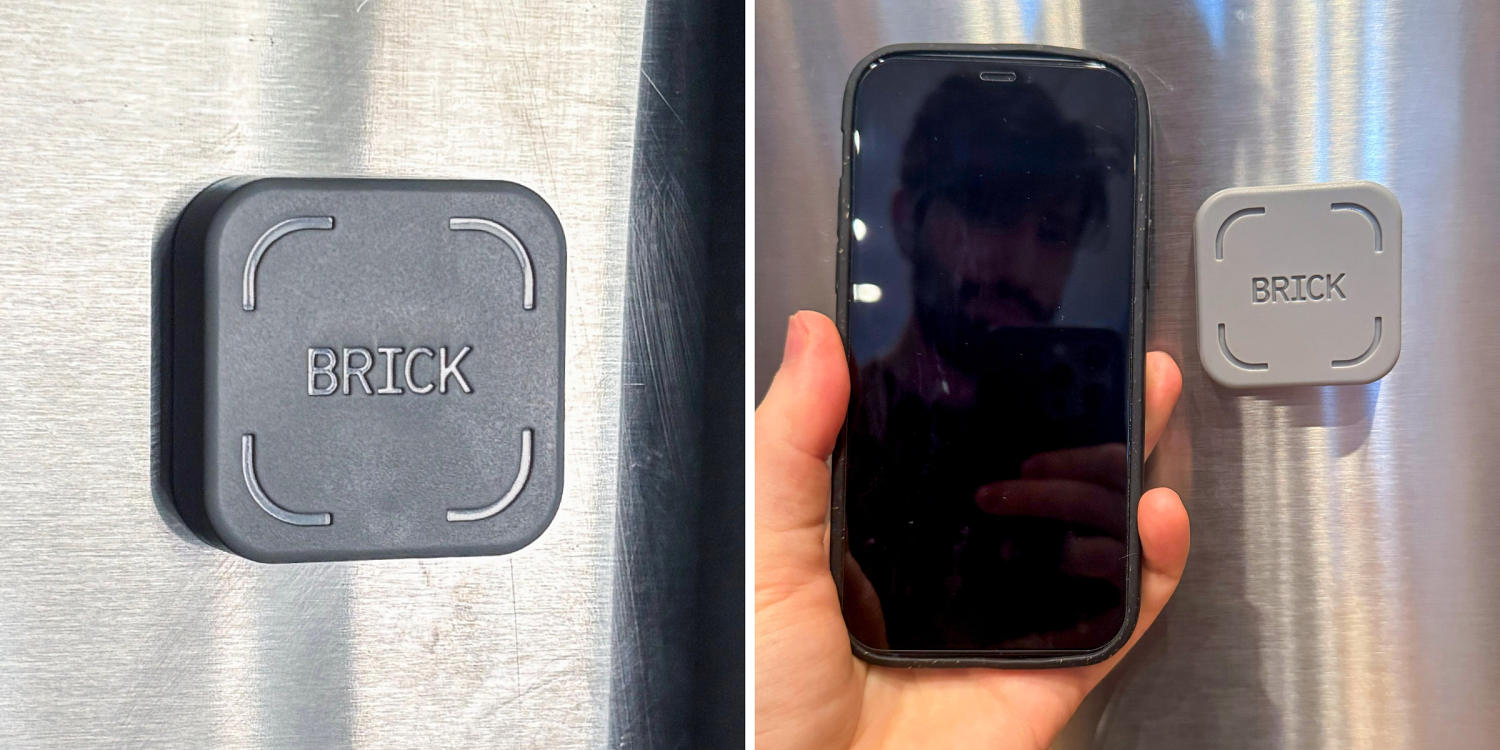
You already know the drill. You pick up your phone to check a single text notification, and forty-five minutes later, you find yourself deep inside an algorithmic vortex of short-form videos and comment section arguments. Screen time features built into iOS and Android are notoriously useless because they rely on willpower. You just tap "ignore limit for 15 minutes," and your discipline vanishes. Enter The Brick, a tiny physical hardware puck paired with an app designed to lock down your phone until you physically walk over, tap your device to the block, and unlock it.
It sounds brilliant in theory. I spent weeks living with it to see if a piece of plastic could actually cure compulsive scrolling, or if it's just another expensive gadget destined for the junk drawer.
The Psychology of Physical Friction
Software alone fails against addiction because software respects your digital autonomy. You can delete screen-time apps, bypass PIN codes, or simply reboot your device. The Brick introduces hardware friction. Once you activate "Brick mode," your selected distracting apps disappear behind a wall. You cannot unblock them from your couch. You have to get up, find the physical puck, and tap your phone against it.
That minor physical requirement changes everything. When the barrier to entry for scrolling involves moving your physical body, laziness often wins out in your favor. I found myself staring at a locked home screen, feeling the phantom itch to check my notifications, and then simply walking away to fold laundry instead. It forces you to sit with the discomfort of boredom, which is precisely what modern software tries to engineer away.
Where The Hardware Shield Cracks
The device relies on an all-or-nothing philosophy that doesn't always fit real life. You choose to block specific apps or your entire library. If you block your productivity or communication tools alongside social media, you risk cutting off actual work. If you leave them open, the temptation remains a thumb-swipe away.
There are five emergency unblocks built into the companion app, but once you burn through those, you have to email customer support to get them back. That sounds secure, but it creates a strange anxiety. What if an actual emergency happens, or you need a rideshare app while stranded outside? You start playing mental gymnastics to figure out whether your current boredom qualifies as a crisis.
Cross-platform inconsistencies also frustrate users. On iOS, the system handles blocks relatively smoothly, but Android users often find loopholes, such as accessing distracting platforms via mobile web browsers rather than dedicated apps. If a $50 hardware accessory leaves web-based escape hatches wide open, resourceful scrollers will find them within an hour.
The Real Problem It Fixes
The actual value of this device isn't technological. It's psychological. Most of us don't lack self-control because we are weak; we lack self-control because tech companies spend billions designing products optimized to exploit human dopamine loops. By outsourcing your boundary-setting to a physical object, you remove the daily negotiation with yourself. You aren't deciding whether to open Instagram every single time you unlock your phone; you decided once, hours ago, when you tapped the Brick.
That distinction matters. Willpower is a finite resource that depletes by late afternoon. Hardware doesn't care how tired you are. When it is active, the door stays locked.
Who Should Actually Buy This
If you have tried every free productivity app on the market and watched your screen time creep past four hours a day anyway, physical intervention might be your last realistic resort. It works remarkably well for deep-work blocks and forcing early bedtime routines.
If you possess baseline discipline and just need a gentle reminder to put your phone down, skip the purchase. Use built-in focus modes instead. But if your digital habits genuinely disrupt your focus, your sleep, and your peace of mind, adding a physical tollbooth to your screen time might finally break the cycle. Stop looking for a software fix for a hardware-level addiction.