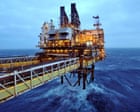
BP is walking away. After six decades of extracting hydrocarbons from turbulent British waters, the energy giant has officially launched a formal process to sell off its entire UK North Sea oil and gas business.
If you have watched major energy companies over the past few years, this exit shouldn't shock you. Under new chief executive Meg O'Neill, the company is slashing debt, streamlining operations, and aggressively shifting capital toward higher-margin regions like the United States and Brazil. The message is clear. Sentiment doesn't override balance sheets.
Let's look at what this massive corporate divorce actually means for the UK energy sector, why it happened now, and what comes next for an ageing basin.
The End of a Sixty-Year Era
BP's history in the region runs deep. Back in 1964, the company secured its very first UK North Sea licence. That gamble paid off when they struck the West Sole gasfield in late 1965, followed by the monster Forties field discovery in 1970.
For generations, British energy independence and industrial might were tied directly to these platforms. But basins get old. Output across the entire UK Continental Shelf has collapsed from a peak of roughly 4.5 million barrels of oil equivalent per day at the turn of the millennium down to around 1 million.
Last year, BP's British North Sea operations pumped out about 117,000 barrels of oil equivalent per day, making up roughly 5% of the company's total global output. That slice of the pie is no longer worth the administrative headache and capital constraints for a firm trying to slim down.
Why Meg O'Neill Pulled the Trigger
O'Neill took the helm earlier this year with a mandate to cut fluff and boost profitability. Streamlining a massive multinational corporation means making cold, hard choices about where every dollar goes.
The company's current UK sector footprint includes five major production hubs split between the central North Sea—Andrew and ETAP—and west of Shetland, featuring Clair, Clair Ridge, and Glen Lyon. These aren't small assets. They require heavy maintenance, continuous capital injections, and navigate a notoriously volatile regulatory landscape.
O'Neill didn't mince words when announcing the move, stating that while the North Sea remains integral to the UK, the business will be "better positioned as part of another company" that is willing to back its next chapter.
Put simply, BP has better places to spend its money. Waiting around for political winds to shift or tax regimes to stabilize in Whitehall is a luxury shareholders won't fund anymore.
The Tax and Policy Headache
You cannot talk about the North Sea without talking about politics and taxation. Unlike Norway, which has maintained a relatively consistent approach, the UK tax regime on North Sea producers has shifted repeatedly in recent years.
Energy companies detest unpredictability. Successive tax changes and mixed messages about the future of fossil fuels have heavily dented confidence in the basin. Even with recent political signals taking a more pragmatic tone toward drilling, major players are voting with their feet.
Shell, Chevron, ExxonMobil, and ConocoPhillips have all spent recent years offloading or reducing their exposure to the ageing basin. BP joining this exodus confirms that the era of the supermajor dominating British waters is drawing to a close. Smaller, more agile private equity-backed operators will likely inherit these fields, squeezing out remaining value under different cost structures.
What Happens to BP and the UK Workforce?
Don't mistake this sale for BP abandoning the UK entirely. The corporation still keeps its global headquarters, trading desks, aviation fuel distribution, and massive retail networks anchored in Britain. They are also heavily involved in emerging future sectors like offshore wind and carbon capture and storage.
For the roughly 1,100 workers deployed directly within BP's North Sea operations out of its broader 14,000-strong UK workforce, the immediate future involves navigating a corporate transition. Energy ministers have stated that protecting local workers and communities during the sales process remains a top priority, but transitions of this scale always bring anxiety.
The formal sales process is underway. Expect private equity firms or mid-tier exploration and production companies to circle these assets. The giants are checking out, but the oil under the sea isn't gone yet. Someone else will take the wheel.