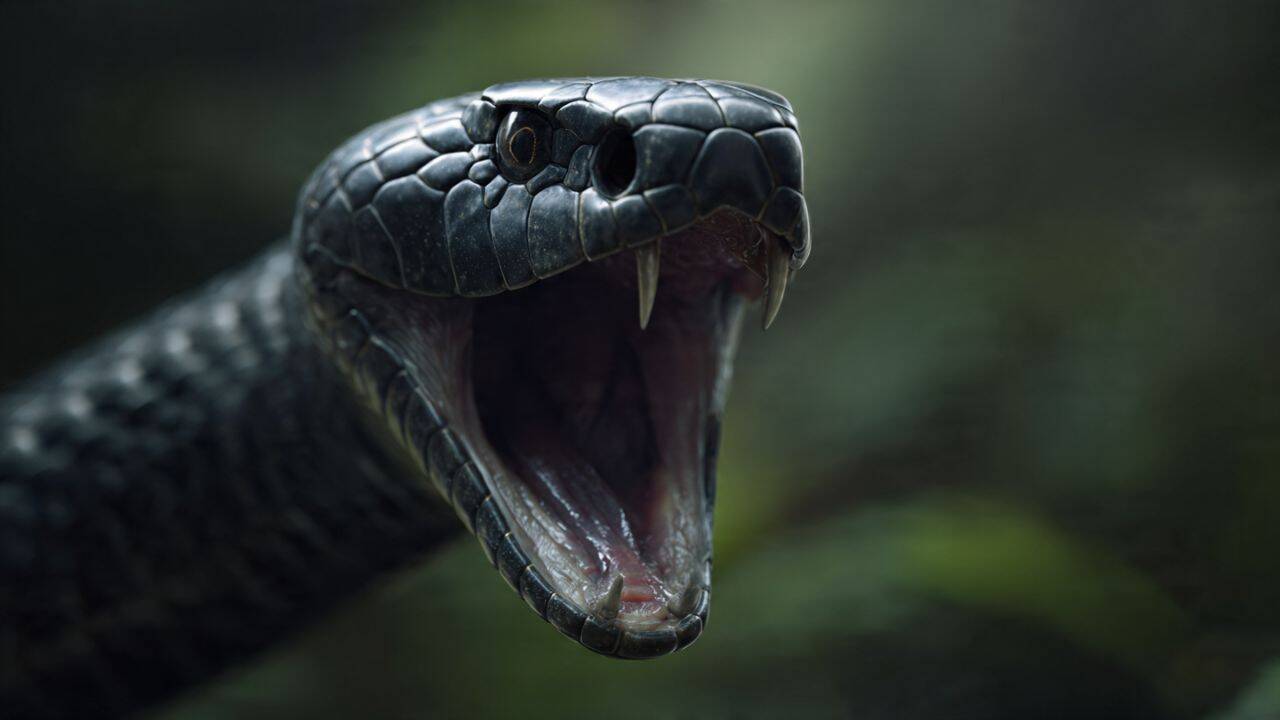
Ask anyone about Africa's most terrifying wildlife, and the black mamba usually tops the list. People picture a aggressive reptile chasing down victims at high speed across the savanna. Reality is much more complicated. The black mamba doesn't roam the entire continent randomly. It lives in specific pockets across sub-Saharan Africa, avoiding thick rainforests in favor of open scrubland, rocky hills, and dry woodlands.
If you want to know which countries hold the highest populations or see the most frequent encounters with the black mamba, you have to look at a very specific geographic range spanning across southern and eastern Africa.
Tracking the Range Across Sub-Saharan Africa
The black mamba's habitat stretches across roughly twenty-two countries, but counting individual snakes across dense bushveld is basically impossible. Instead, researchers map their density using historical bite records, ecological surveys, and local wildlife reports.
South Africa has arguably the most extensive paper trail for black mamba encounters. Between 1957 and 1979 alone, scientists logged 75 confirmed black mamba bites in the country. Famous reserves like Kruger National Park see regular sightings. What surprises many visitors is how predictable these animals actually are. Unlike nomadic hunters, individual South African mambas often return to the exact same basking spot day after day, resting in hollow logs or rock crevices between morning and afternoon hunts.
Moving north into Zimbabwe, rural census data from the early 1990s documented dozens of close encounters and bite cases. The bigger issue in rural Zimbabwe isn't the number of snakes, but the lack of readily available antivenom in remote clinics. When a neurotoxic bite happens miles from a major city, every minute counts.
Altitude and Adaptation in East Africa
While people assume these snakes prefer baking low-altitude deserts, countries like Kenya and Zambia shatter that assumption.
Zambia features rugged terrain where mambas have been spotted climbing to elevations of 1,650 meters—well past the standard 1,000-meter ceiling most textbooks assign to them. Tragedy struck there in 2019 when a visiting South African judge died from a mamba bite before he could reach emergency medical care.
Kenya pushes the altitude envelope even further, with confirmed sightings at 1,800 meters. Kenya is also home to incredible survival accounts, such as a widely reported 2016 incident where a local woman survived multiple bites from three separate mambas after being rushed to a hospital via motorcycle.
Tanzania shares a similar ecological footprint. In the Serengeti, young black mambas face severe natural pressure from predators like ground hornbills, marsh owls, and hooded vultures. Locals in parts of Tanzania refer to the snake by the Ngindo name ndemalunyayo, meaning "grass-cutter," a nod to how easily it moves through low vegetation.
Understanding the True Threat
Botswana, Namibia, Angola, and Malawi complete the primary southern and eastern stronghold for the species. In Botswana, black mambas occasionally cross paths with honey badgers. These fierce mammals possess a natural genetic resistance to certain snake venoms, leading to brutal turf wars that draw intense local attention.
Despite the terrifying legends, mambas are fundamentally shy, nervous animals. They prefer to flee rather than fight. They only strike repeatedly when cornered or accidentally stepped on.
If you are traveling through high-risk areas in southern or eastern Africa, basic precautions keep you safe. Watch where you put your hands and feet near rock piles, wear sturdy boots during bush walks, and always verify that local field stations or clinics stock proper polyvalent snake antivenom before heading deep into the wilderness.