I’ve sat across from hundreds of patients who walked into my office clutching a printout from a search engine, convinced they were dying of oral cancer or needed $10,000 in laser surgery. They saw a dark patch near their molars, panicked, and typed in What Does Black Gums Mean only to find a digital graveyard of worst-case scenarios. One patient, a man in his late twenties, spent three months obsessively scrubbing his gums with charcoal toothpaste and abrasive salts because he thought he was "cleaning" away a dark spot. By the time he reached my chair, he’d worn his enamel down to the dentin and caused permanent gingival recession. He didn't have a disease; he had natural melanin. His mistake cost him thousands in restorative bonding and a lifetime of tooth sensitivity. You don't want to be that guy. You need to stop treating your mouth like a DIY project and start understanding the biological reality of tissue pigmentation.
The Mistake of Assuming Pigment is Pathology
The biggest trap people fall into is thinking that healthy gums must be "coral pink." That's a textbook definition that ignores human genetics. If you have darker skin, your gums are likely to have darker patches. This is called melanosis. It’s not a bruise, it’s not rot, and it’s not something you can brush away.
I’ve seen people spend hundreds on "whitening" gels that aren't designed for soft tissue, causing chemical burns that actually lead to scarring—which, ironically, can look even darker or more grayish than the original spot. When you ask What Does Black Gums Mean, the answer is often "it means you have melanocytes doing their job." Melanin in the gingiva is distributed differently in everyone. Some have a solid band, others have speckles.
If the color has been there since you were a teenager and isn't changing shape or texture, it’s likely just your DNA. Trying to "fix" genetic pigmentation with over-the-counter chemicals is a fast track to a periodontal specialist and a very expensive bill for tissue grafts.
The Texture Test You're Ignoring
Instead of obsessing over the shade, look at the surface. Healthy pigmented tissue should still have a "stippled" look, like the skin of an orange. If the dark area is flat, firm, and has that texture, you're usually fine. If it's swollen, bleeding, or feels like a boggy marsh when you press it, that’s when the color matters. But most people ignore the texture and fixate on the color, which is the dental equivalent of judging a book by its cover while the pages are on fire.
## What Does Black Gums Mean When You Smoke
If you’re a smoker and you notice your gums turning a dirty brown or black, that’s Smoker’s Melanosis. It’s not just a cosmetic "stain." The nicotine in cigarettes actually stimulates the melanocytes in your tissue to produce more pigment as a defense mechanism. I’ve had patients try to get professional "gum bleaching" while still smoking a pack a day. It’s a total waste of money. The pigment will come back within months because the irritant is still there.
The cost here isn't just the $800 to $1,500 for the laser depigmentation. The cost is the hidden damage to the bone underneath. Darkened gums from smoking often mask the early signs of periodontal disease. Because nicotine constricts blood vessels, your gums won't bleed even if they’re deeply infected. You think the dark color is the problem, but the real issue is that your jawbone is receding because you can't see the inflammation.
I’ve seen smokers lose teeth that looked "fine" aside from some darkness, simply because they weren't seeing the red "warning light" of bleeding gums. If you want the color to go away, you have to stop the stimulus. No amount of laser work or expensive rinses will override a chemical habit that’s actively triggering your cells to darken.
The Metal Margin Fiasco
I once had a patient who was convinced she had a spreading fungal infection because a black line appeared at the base of her front tooth. She spent weeks using antifungal mouthwashes that nuked her mouth's natural microbiome, leading to a nasty case of thrush. The reality? She had an old porcelain-fused-to-metal (PFM) crown.
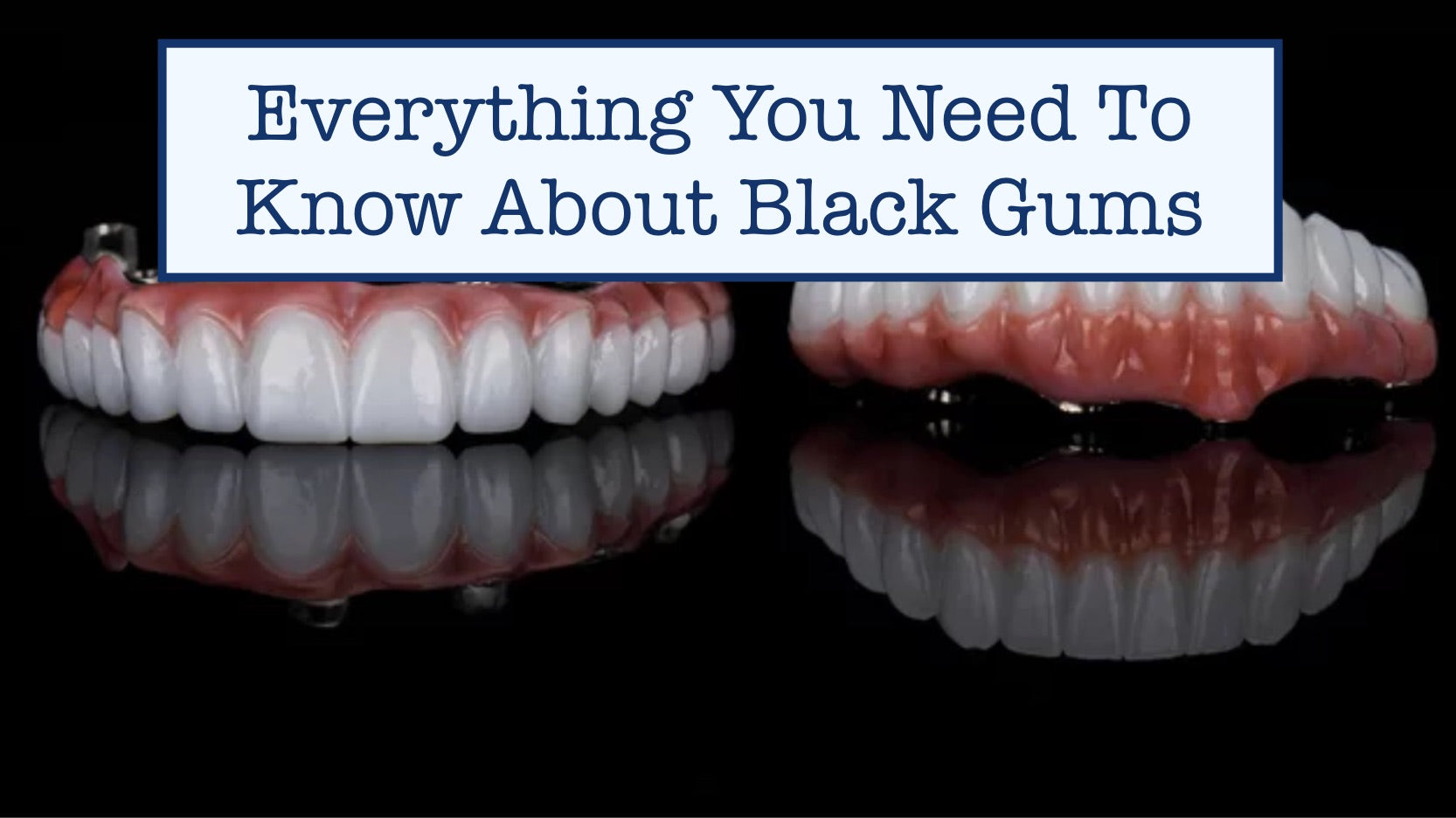
As gums recede with age, the metal substructure of those old crowns gets exposed. It looks like a black tattoo at the gumline. This is a mechanical issue, not a biological one. People often mistake this for decay or "black gums" and go down a rabbit hole of systemic health fears.
Fixing this means replacing the crown with a modern all-ceramic or zirconia version. It’s a $1,200 to $2,000 fix per tooth. If you misdiagnose this as a health issue and try to treat the "infection" yourself, you’re just wasting time while the underlying tooth might actually be developing a cavity under that old crown.
Before and After: The Crown Misstep
Let’s look at a real scenario I dealt with last year.
Before: A patient noticed a dark grey-black tint around the neck of two upper incisors. Assuming it was a sign of "rotting gums," they started using a high-concentration hydrogen peroxide rinse twice daily. Within three weeks, the tissue was raw and peeling, and the dark line looked even more prominent against the inflamed, white-ish burnt tissue. They had spent $50 on "remedies" and caused $400 worth of damage to their oral mucosa.
After: We stopped all home treatments. We identified that the "black" was simply the metal edge of a ten-year-old crown. We replaced the old crowns with lithium disilicate (E-max) restorations. The "black gums" disappeared instantly because the source of the shadow was gone. The patient’s tissue healed back to a healthy state once the chemical irritation stopped. Total cost was higher, but the result was permanent and didn't involve destroying their mouth’s lining.
Medication-Induced Pigmentation is a Real Budget-Killer
There's a specific type of dark spotting caused by medications like minocycline (used for acne) or certain antimalarials. I’ve seen people get referred for biopsies—which cost $500 to $1,000 including pathology fees—only to realize the darkening was a side effect of a pill they’d been taking for six months.
If you start seeing bluish-gray or black patches and you’re on long-term meds, tell your dentist. Don't let them go straight to "we need to cut a piece out" until you’ve ruled out your medicine cabinet. Doctors sometimes forget to tell you that what you swallow can change the color of your mouth.
This isn't something a toothbrush can fix. It’s a systemic deposition of minerals or pigments. If you stop the medication (under a doctor’s supervision), the color often fades over several months. If you panic and pay for lasers or biopsies first, you're paying for an answer you could have found for free by reading your prescription's fine print.
The "Trench Mouth" Warning
Sometimes, the darkness is actual tissue death. This is the one time you should actually worry. Acute Necrotizing Ulcerative Gingivitis (ANUG), historically called Trench Mouth, causes the little triangles of gum between your teeth (the papillae) to turn grey or black and literally die.
It smells like rotting meat. If you have "black gums" and a metallic taste or a foul odor that a gallon of mouthwash won't kill, you’re looking at a serious infection. This usually happens to people under extreme stress, with poor nutrition, or with compromised immune systems.
I’ve seen patients try to "wait it out" with salt water rinses. That’s a mistake that leads to permanent "black holes" between your teeth. Once that tissue dies and sloughs off, it does not grow back. You’ll be left with gaps that trap food and look like a picket fence with missing boards. Professional intervention with specific antibiotics and ultrasonic cleaning is the only way to stop the spread. Trying to save $200 on an emergency exam will cost you $5,000 in future gum surgery to try and rebuild those gaps.
Necrosis vs. Natural Pigmentation
It’s vital to distinguish between a healthy dark color and necrosis.
- Natural pigment: Smooth, painless, no smell, has been there for years.
- Necrosis: Painful, bleeds easily, smells terrible, appeared suddenly.
If you can’t tell the difference, don't guess. If you guess wrong and it’s an infection, you’re losing bone every hour you wait. If you guess wrong and it’s just melanin, you’re stressing for nothing.
A Reality Check on Gum Aesthetics
Here is the blunt truth: If you want to change the color of your gums for purely cosmetic reasons, you’re signing up for a high-maintenance lifestyle. Laser gum bleaching or "depigmentation" is not always a "one and done" deal.
Biology is stubborn. Your body likes the color it was born with. If you pay $1,500 to have your gums lightened, there is a 20% to 50% chance the pigment will start creeping back within 2 to 5 years. It’s not a failure of the procedure; it’s just your cells doing what they are programmed to do.
Most people I know who’ve had this done regret the "maintenance" more than the original color. You also risk permanent sensitivity. Your gum tissue is thin. If the laser goes too deep or the practitioner is aggressive, you can end up with "recessed" gums that expose your tooth roots. Now you have "pink" gums, but your teeth look three inches long and you can't drink cold water without jumping out of your skin.
Success in this area isn't about finding a magic cream or a cheap hack. It’s about being honest about why the color is there. If it's your genetics, learn to live with it—your bank account and your enamel will thank you. If it's your habits (like smoking), stop the habit or accept the color. If it's your dental work, pay for quality replacements.
The internet is great for many things, but when you look up What Does Black Gums Mean, remember that the most "viral" or scary answers are usually the least likely. Stop poking it, stop scrubbing it, and stop pouring peroxide on it. Most of the "damage" I fix in my office isn't caused by the original dark spot; it’s caused by the patient’s frantic, cheap attempts to make it disappear. Get a professional diagnosis before you start a war with your own anatomy. It’s cheaper to pay for an hour of an expert's time than a lifetime of reconstructive surgery.