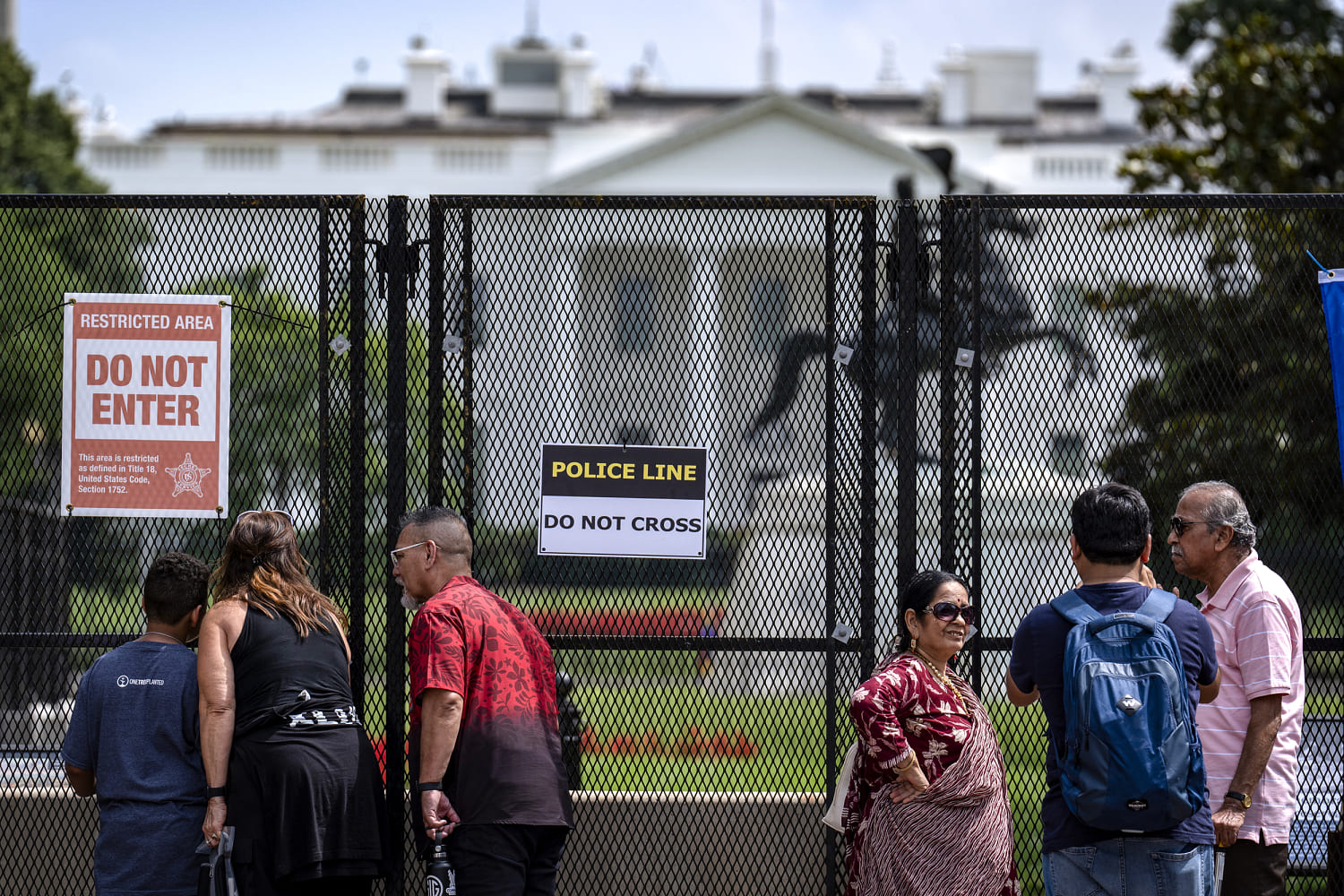
If you walked through Lafayette Square over the last few years, you probably noticed it looked less like the "People's Park" and more like a tactical obstacle course. It’s a messy maze of metal bike racks, zip-tied police barricades, and ugly concrete blocks.
Now, the federal government wants to sweep all that clutter away and replace it with something far more permanent: an eight-to-nine-foot tall fence enclosing the entire eight-acre historic landmark.
On July 16, 2026, the U.S. Commission of Fine Arts met to review a sprawling 79-page proposal submitted jointly by the Secret Service, the National Park Service, and the Interior Department. While the panel greenlit a revised design for a massive 33,000-square-foot underground visitor screening facility nearby, they held off on taking final action on the highly controversial fence.
The hesitation makes sense. This isn't just a debate about iron pickets and granite pavers. It's a fundamental clash between two core American values: the physical safety of the executive branch and the constitutional right to look the President's home in the eye and protest.
What the Security State Wants
Let's look at the actual plans. The Secret Service argues that relying on temporary barriers is inefficient, labor-intensive, and frankly, bad for tourism.
Whenever a protest sparks or threat levels rise, agents have to manually haul out heavy metal barricades, deploy massive staff to secure the perimeter, and string up police tape. The new 79-page proposal pitches a "layered, low-profile security strategy". It includes:
- 8-to-9-foot steel fences wrapping completely around the park's perimeter.
- Heavy-duty gates at the north and south entrances that can be closed in seconds during "heightened conditions".
- Integrated monitoring systems and alarms built discreetly into the landscape.
- Upgraded stone paving where walkways are repaved in thicker, heavy granite so protesters can't easily dislodge loose bricks to use as projectiles.
The goal is to establish a hard boundary that lets law enforcement instantly lock down the park when necessary. The Secret Service is pushing for a phased implementation starting in 2027.
Why This Isn't Just Another Fence
To understand why people are furious, you have to understand the geography of dissent in America.
Lafayette Square has been the nation's premier protest stage for over a century. Suffragists stood here fighting for the vote. Anti-war activists, civil rights leaders, and everyday citizens have used this patch of grass to voice their anger and their hopes directly to the Oval Office.
The park hasn't had a permanent fence since the late 1800s. Putting one back up completely alters the psychology of the space.
"When considering the current proposals for Lafayette Park, let's first ask if fencing is the right approach?"
— Charles Birnbaum, President of The Cultural Landscape Foundation
Opponents point out that even the Washington Monument operates without a surrounding cage. Adding permanent barriers here sends a grim message to the world: that the American government is afraid of its own people.
Congressional Representative Eleanor Holmes Norton, D.C.’s nonvoting delegate, immediately stepped up the fight by introducing legislation to outright prohibit permanent fencing at the park. She argues that shutting out the public continues a worrying trend of isolating our democratic institutions from the public they serve.
The Broader Battle for the White House Campus
This fencing dispute doesn't exist in a vacuum. It's part of a much wider, aggressive reshaping of the White House grounds that has historic preservationists sounding the alarm.
Right now, the executive mansion is undergoing a flurry of high-stakes construction. Workers are upgrading the historic North Portico doors and building out that 33,000-square-foot underground visitor facility. Meanwhile, a massive, highly controversial project to demolish parts of the East Wing to build a new 90,000-square-foot presidential ballroom has sparked furious letters from lawmakers and preservation groups who claim the administration is bypassing congressional approval and environmental reviews.
When you add the proposed Lafayette Square fences to the mix, critics argue we're witnessing the slow-motion transformation of a historic, open national park into an impenetrable fortress.
What Happens Next
The federal panel's decision to delay a vote on the fence means the battle is far from over. While the government has the green light to move forward on the underground visitor screening center, the Lafayette Park fence plans will undergo further scrutiny and public pushback.
If you want to make your voice heard on how our public spaces are designed, you don't have to just sit back and watch. Here is what you can do:
- Track the reviews: Follow the public meeting agendas of both the Commission of Fine Arts (CFA) and the National Capital Planning Commission (NCPC). They are legally required to post upcoming project reviews and accept public written comments.
- Contact your representatives: Reach out to your congressional representatives to express your stance on Representative Eleanor Holmes Norton's bill to ban permanent fencing around President's Park.
- Engage with preservation groups: Organizations like the Cultural Landscape Foundation and the National Trust for Historic Preservation are actively tracking these changes and coordinate public advocacy efforts.