You fill up a steaming hot bath, dump in your favorite bath salts, and sink in for a relaxing soak. Twenty minutes later, you step out—only to feel your skin pulling tight, your body itching, and your hair feeling like dry straw.
It's a frustrating paradox. The very ritual meant to restore your skin barrier might actually be stripping it raw. If you found value in this post, you should check out: this related article.
That is why bath filters have exploded across social media and home wellness lists lately. Companies promise that hooking a small filtration device onto your bathtub spout will instantly eliminate harsh chemicals, leaving you with baby-soft skin and luscious hair.
Does dumping bath water through a tiny basket or spout cover actually change anything, or is it just another wellness gimmick capitalizing on our collective anxiety about tap water? For another angle on this story, check out the recent update from The Spruce.
The short answer is yes, bath filters do work—but only for specific things. If you buy one expecting it to solve all your hard water problems, you'll be disappointed. However, if your main issue is municipal chlorine, a quality bath filter can transform your bath routine.
The Chemistry of Your Tap Water
To understand whether you need a bath filter, you have to look at what is actually flowing out of your faucet.
Municipal water treatment facilities rely heavily on disinfectants like chlorine and chloramine to keep drinking water free of dangerous pathogens. It's a necessary public health measure, but it comes at a cost to your skin.
When you run a hot bath, chlorine doesn't just stay in the tub. Heat causes it to vaporize into steam, meaning you end up breathing in small amounts of chlorine gas while sitting in a tub of chlorinated water. Chlorine strips away natural sebum—the essential lipid layer that traps moisture in your skin.
"Repeated exposure to chlorinated hot water continuously breaks down the skin's natural moisture barrier, aggravating conditions like eczema, psoriasis, and contact dermatitis."
Then there's the issue of hard water. Hard water contains high concentrations of dissolved minerals, primarily calcium and magnesium. These minerals react with soap to form a stubborn scum that coats your skin and hair, clogging pores and causing severe dryness.
Filtering vs. Softening: What a Bath Filter Can and Cannot Do
This is where most consumers get tricked by clever marketing.
Many bath filter brands claim their products "soften" water. They don't.
There is a major technological difference between filtering water and softening it:
- Filtration: Removes or neutralizes specific chemical compounds like chlorine, heavy metals, sediment, and synthetic impurities through physical media or chemical reactions.
- Softening: Removes dissolved minerals like calcium and magnesium through a process called ion exchange.
A point-of-use filter hanging off a bathtub faucet simply cannot soften water. Ion exchange requires a salt-based tank system with enough time and space for chemical swap-outs.
If your primary issue is hard water scale, a bath filter will not fix it. You need a whole-home water softener for that. But if your main struggle is the drying, irritating effects of municipal chlorine, a bath filter is a game-changing, low-cost fix.
How Bath Filters Work Inside the Cartridge
Not all bath filters are built equal. Because a bathtub fills at a much higher flow rate than a showerhead (often 4 to 7 gallons per minute compared to a shower's 1.5 to 2.5), the water passes through the filter media in a fraction of a second.
To effectively trap contaminants at high speed, brands rely on a few specific filter media:
KDF (Kinetic Degradation Fluxion)
This high-purity copper-zinc alloy uses a chemical process called redox (reduction-oxidation) to turn free chlorine into harmless, water-soluble chloride ions. It works exceptionally well in hot water, making it the gold standard for bath and shower filtration.
Activated Carbon
Compressed carbon from coconut shells or wood acts like a giant sponge, absorbing organic chemicals, bad smells, and chlorine. While incredible for cold drinking water, standard carbon loses efficiency as water temperature rises. That is why top-tier bath filters pair activated carbon with KDF.
Calcium Sulfite
Extremely fast-acting, calcium sulfite is designed to target and eliminate chlorine almost instantly, even in blistering hot water. It's commonly found in compact, high-flow tub attachments.
What Happens When You Actually Use One
Testing a bath filter reveals immediate differences that aren't just placebo.
First, the smell vanishes. If you live in an area with high chlorine levels, filling a hot tub usually produces a distinct pool-like odor. A functioning KDF or calcium sulfite filter eliminates that smell entirely.
Second, your body soap performs better. While the water isn't technically "softened," removing harsh oxidizers allows body washes and bath oils to interact more gently with your skin barrier. You step out of the tub without that immediate tight, itchy sensation on your back and legs.
Third, hair texture improves noticeably. Chlorine oxidizes hair proteins and strips color treatments. Washing hair in filtered bath water leaves strands feeling softer and significantly less brittle.
Popular Types of Bath Filters Compared
When shopping, you'll encounter two primary form factors on the market:
| Filter Type | How It Installs | Pros | Cons |
|---|---|---|---|
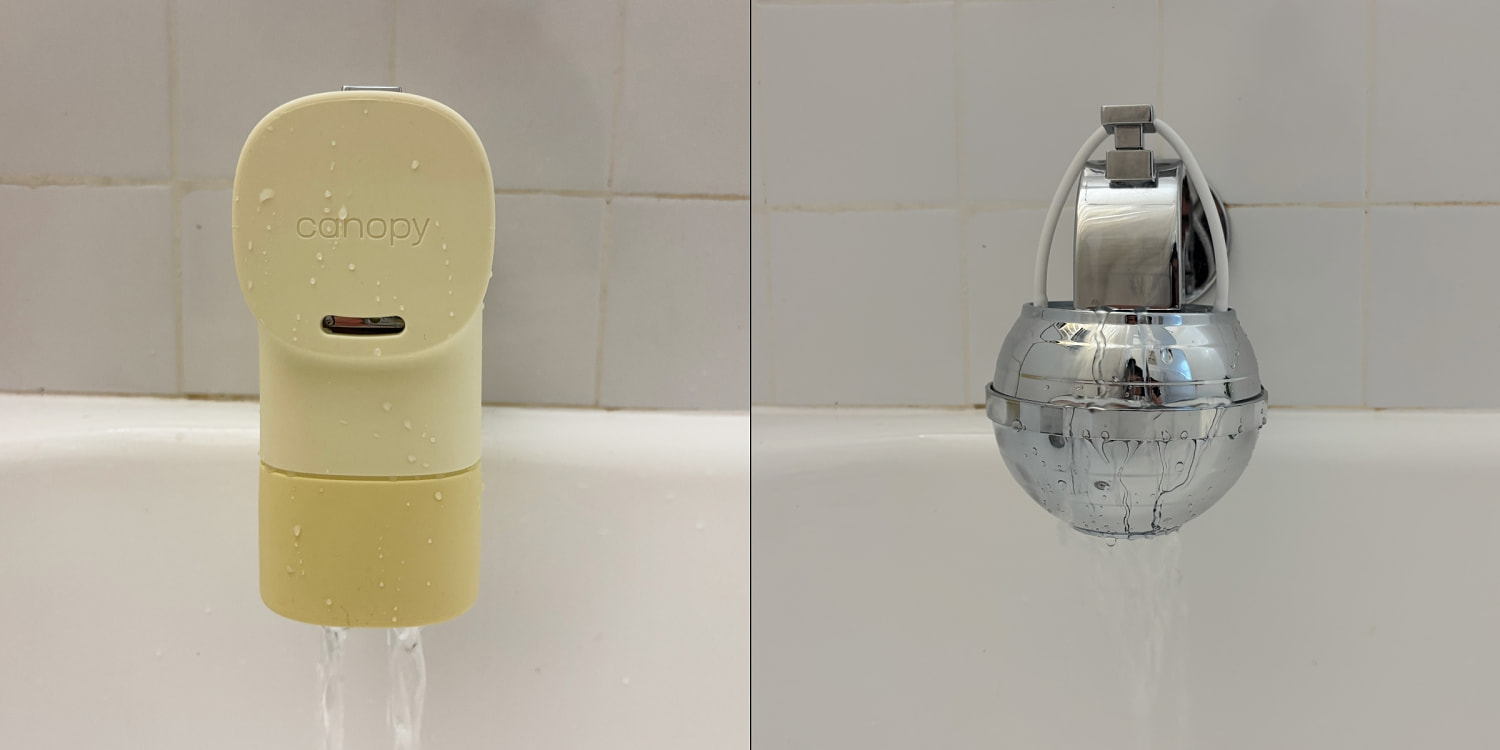
| Spout Covers | Slides directly over the bathtub faucet spout | Direct water contact, clean look, covers sharp faucet edges (great for kids) | May not fit oversized, waterfall, or abnormally shaped spouts |
| Hanging Filters | Hangs via a strap or hook directly under the water stream | Universal fit, easy to remove when taking a quick shower | Can splash if water flow is too high, less aesthetic |
Brands like Canopy have popularized silicone spout covers that blend seamlessly into modern bathroom decor while housing multi-stage filter cartridges. Meanwhile, classic hanging ball filters offer a cheaper, universal alternative for renters who can't mess with fixture dimensions.
Who Needs a Bath Filter Most?
While anyone can benefit from cleaner water, a bath filter is practically essential for a few specific groups:
- Parents with Babies or Toddlers: Infant skin is up to 30% thinner than adult skin, making it far more vulnerable to chlorine dryness and irritants. Plus, silicone spout covers double as safety bumpers against head bumps.
- People with Chronic Skin Conditions: If you suffer from eczema, psoriasis, or chronic dry skin, eliminating chlorine removes a major daily trigger.
- People with Color-Treated or Fragile Hair: Chlorine strips artificial hair color quickly and degrades keratin structures.
- Frequent Bath Takers: The longer you submerge your body in hot tap water, the more chemical absorption occurs through your skin.
How to Test Your Water Before Spending Money
Don't buy a bath filter blindly. Figure out if chlorine is actually an issue in your home first.
Grab a cheap pool testing kit or total chlorine test strips from a hardware store. Fill a glass directly from your bath tap and test it. If your chlorine levels register above 1 ppm (parts per million), a filter will yield visible, physical benefits for your skin and hair.
If your chlorine level is zero or near zero, your municipality might be using chloramines (chlorine combined with ammonia) instead. Standard bath filters struggle with chloramine because it requires much longer contact time to break down. In that scenario, you'll need a specialized catalytic carbon filter rather than a basic KDF tub filter.
Actionable Steps for Better Bath Water Today
If you're ready to upgrade your bath experience without wasting money, follow this checklist:
- Test your municipal supply: Check your local water utility's annual water quality report online to see if they use chlorine or chloramine.
- Select KDF and Calcium Sulfite media: Look specifically for bath filters that state they use KDF-55 and calcium sulfite inside their cartridges. Avoid filters that rely solely on cheap carbon beads.
- Measure your tub spout: If buying a slide-on cover filter, measure the circumference and length of your tub spout to ensure a tight fit.
- Set cartridge replacement reminders: Most bath filter cartridges last between 30 to 90 baths (or 3 months) before becoming saturated. An expired filter is just a decoration.
- Consider a whole-house approach if you have hard water: If test strips show extreme water hardness, stop looking at tap attachments and start budgeting for a whole-home water softening system.