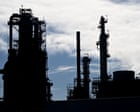
Australia imports roughly 90% of its refined liquid fuels, leaving local pump prices entirely at the mercy of distant geopolitical conflicts. When a conflict flare-up in the Middle East sends Brent crude swinging and retail petrol surging past two dollars a litre, Canberra scrambles. Now, the federal and Western Australian governments are funding a four million dollar early-stage feasibility study into constructing a brand-new, large-scale petrol refinery in Western Australia.
If it goes ahead, it will be the first new oil refinery built in the country in sixty years. But as Treasurer Jim Chalmers warns of persistent inflation pressures, the real question is whether this project is a practical shield against global oil shocks or an expensive band-aid on a structural energy problem.
The Shrinking Map of Australian Refining
Decades ago, Australia operated eight major oil refineries, ensuring a robust domestic buffer against international supply disruptions. Market economics changed that picture entirely. Cheap overseas providers, high domestic operating costs, and aging infrastructure chipped away at local margins. Refineries closed one by one. BP shut down its Fremantle refinery in Western Australia back in 2021.
Today, only two major refineries remain operational: Ampol's Lytton facility in Brisbane and Viva Energy's plant in Geelong.
Relying on just two domestic plants means any disruption to maritime trade routes or international refining capacity hits local fuel security immediately. When global crude markets spasm, Australian motorists feel the pain at the checkout of every petrol station.
The Western Australian Proposal
The proposed project in Western Australia would be spearheaded by Perdaman, the multinational behind a massive urea plant in the Pilbara. While Perdaman plans to privately fund the construction, the economics of modern refining mean the project would likely require government backing, potentially through concessional loans or other taxpayer-funded assistance to stay afloat.
Building a facility of this scale costs billions of dollars. It takes years of engineering, environmental approvals, and capital deployment before a single drop of local petrol hits the market. Energy Minister Chris Bowen calls the push a sensible measure for energy security, yet critics argue that sinking public funds into fossil fuel refining contradicts long-term emissions targets.
Treasurer Chalmers and the Inflation Tightrope
Treasurer Jim Chalmers faces a punishing balancing act. Treasury briefings warn that ongoing Middle East hostilities keep global oil prices elevated, directly threatening domestic inflation targets. When transport fuels spike, the cost of moving freight rises, pulling up the price of groceries and goods across the board.
Central banks react to sticky inflation by keeping interest rates high or raising them further. Australian households, already squeezed by mortgages and cost-of-living pressures, bear the brunt. Pumping money into traditional oil infrastructure while trying to navigate an inflation crisis requires walking a very narrow fiscal tightrope.
Environmental Pushback and Alternative Realities
Any move to subsidize a new fossil fuel refinery will draw fierce opposition from environmental groups. Critics argue that governments should use oil shocks as a catalyst to accelerate the transition toward electric freight fleets and renewable energy grids, rather than doubling down on internal combustion supply chains.
Electric vehicles and alternative transport tech are already chipping away at baseline liquid fuel demand. Spending billions on a refinery designed to operate for decades raises hard questions about stranded assets as global energy markets pivot toward decarbonisation.
What Happens Next
The four million dollar feasibility study will test whether a new Western Australian refinery can stack up commercially. If the numbers work, the Albanese government will have to decide how much public capital it is willing to commit to secure local refining capacity.
Expect fierce debate in parliament and boardrooms alike over the coming months. Watch the progress of the Western Australian scoping study and keep an eye on international crude benchmarks, as both will dictate whether Australia enters a new era of domestic fuel manufacturing or sticks to importing its vulnerability.