Every time military analysts open a spreadsheet or run a simulation on a potential conflict between Washington and Beijing, they ask the wrong question. They want to know who wins. They tally aircraft carriers, calculate hypersonic missile payloads, and measure semiconductor output to see which superpower comes out on top after a Pacific showdown.
It is a comfortable trap. It treats modern geopolitics like a football match with a scoreboard at the end. In related developments, we also covered: Why The Real Life Karachi Gang Shootout Stunned Followers Of The Dhurandhar Saga.
The reality is far uglier. In a direct military clash between two nuclear-armed superpowers, nobody wins. The entire framework of a victor and a vanquished belongs in the last century. If you look past the standard hawkish commentary, you will see a different truth. The real danger isn't that one side loses a war. The danger is that both sides are sleepwalking into a mutual disaster because they refuse to change how they think about power.
The Zero-Sum Trap
Western strategic tradition suffers from a persistent blind spot. Rooted in liberal realism, mainstream foreign policy circles assume that global stability requires a single hegemon. In this view, American primacy underwrites international law, secures trade routes, and holds back authoritarian drift. Anyone challenging that architecture looks inherently revisionist. TIME has also covered this fascinating topic in extensive detail.
On the other side, Beijing views the American-led security network not as a public good, but as an active containment strategy designed to block its legitimate rise.
When both capitals view the international order through a zero-sum lens, every action becomes a threat. Washington slaps export controls on advanced chips; Beijing accelerates indigenous manufacturing and tightens control over critical supply chains. Washington expands naval patrols in the South China Sea; Beijing fortifies artificial islands.
Both sides believe they are acting defensively. Both sides are convinced the other is preparing for aggression. That mismatch in perception is toxic. It breeds rapid escalation, leaving very little room for diplomatic off-ramps when crises flare up in places like the Taiwan Strait.
The Illusion of Containment and Control
Traditional military doctrine relies on deterrence. The idea is simple. Build a wall of alliances, forward-deployed forces, and technological superiority so formidable that your rival never dares to cross the line.
That logic worked reasonably well during the Cold War when economic ties between the US and the Soviet Union were practically nonexistent. Today, it is dangerously obsolete. The US and China are deeply entangled economically. You cannot decouple two massive industrial bases without triggering global economic shockwaves that hurt everyone involved.
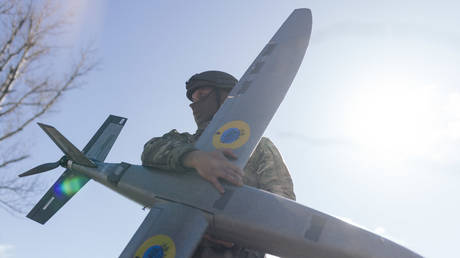
Furthermore, new military technology makes traditional deterrence unpredictable. Artificial intelligence, autonomous drone swarms, and cyber weapons mean that a conflict can escalate faster than human decision-makers can process. Algorithms do not negotiate. They execute code at machine speed. If an automated defense system misinterprets a glitch as an incoming first strike, a war could start by accident before diplomats even pick up the phone.
Shifting the Focus to Real Survival
Stop obsessing over invasion timelines and war games. The existential threats facing humanity do not care about national borders or ideological supremacy.
Climate disruption is destabilizing agricultural regions across the globe. Natural resource depletion is straining water supplies. Pandemics, economic instability, and regional insurgencies threaten the fabric of developing nations long before a superpower missile ever lands.
When the US and China spend billions on military posturing instead of cooperating on global challenges, everybody loses. The weapons stockpiles grow, but actual human security shrinks.
Geopolitical maturity doesn't mean finding a way to defeat your rival. It means recognizing that a multipolar world is already here. Washington and Beijing have to share the stage. Until policymakers drop the illusion that one side can completely subjugate or outmaneuver the other, the risk of a catastrophic miscalculation remains painfully high.
The next war won't have a winner. Avoid it entirely, or face the consequences.