Widening a major highway usually means moving massive piles of dirt, disrupting traffic for months, and spending fortunes on heavy excavation. When the Arizona Department of Transportation faced the task of expanding a 23-mile stretch of Interstate 17 north of Phoenix, they skipped the heavy earthmoving playbook. Instead, they packed thousands of tonnes of recycled glass bottles beneath the asphalt.
It sounds counterintuitive. Glass breaks under pressure. Why would engineers use it to support high-speed traffic carrying millions of commuters and freight trucks every year?
The answer lies in chemistry, weight distribution, and a clever fix for an infrastructure headache that plagues aging roads across the country.
The Hidden Trap Beneath the Pavement
Interstate 17 is a vital corridor. It connects Phoenix to northern Arizona, funneling heavy commuter traffic and massive transport trucks through rough terrain. To ease chronic congestion, state planners launched a massive improvement project. They added third travel lanes between Anthem Way and Black Canyon City, alongside dynamic flex lanes climbing toward Sunset Point.
The asphalt side of the equation was straightforward. The real trouble was hidden underground.
Decades ago, when the highway was just a two-lane route, concrete box culverts were built underneath the road to channel stormwater safely across the path. Those old structures were completely fine for their original purpose. But widening the highway meant piling extra lanes directly on top of them.
Standard fill material—crushed rock, dense soil, or heavy aggregate—would have crushed those vintage concrete boxes. Engineers had two bad options. They could tear out the old culverts, dig up the interstate, and rebuild everything from scratch. That choice would cost millions, trigger massive delays, and snarl traffic for months. Or they could find a way to make the highway weigh less.
They chose the second option.
Turning Bottle Waste Into Structural Foam
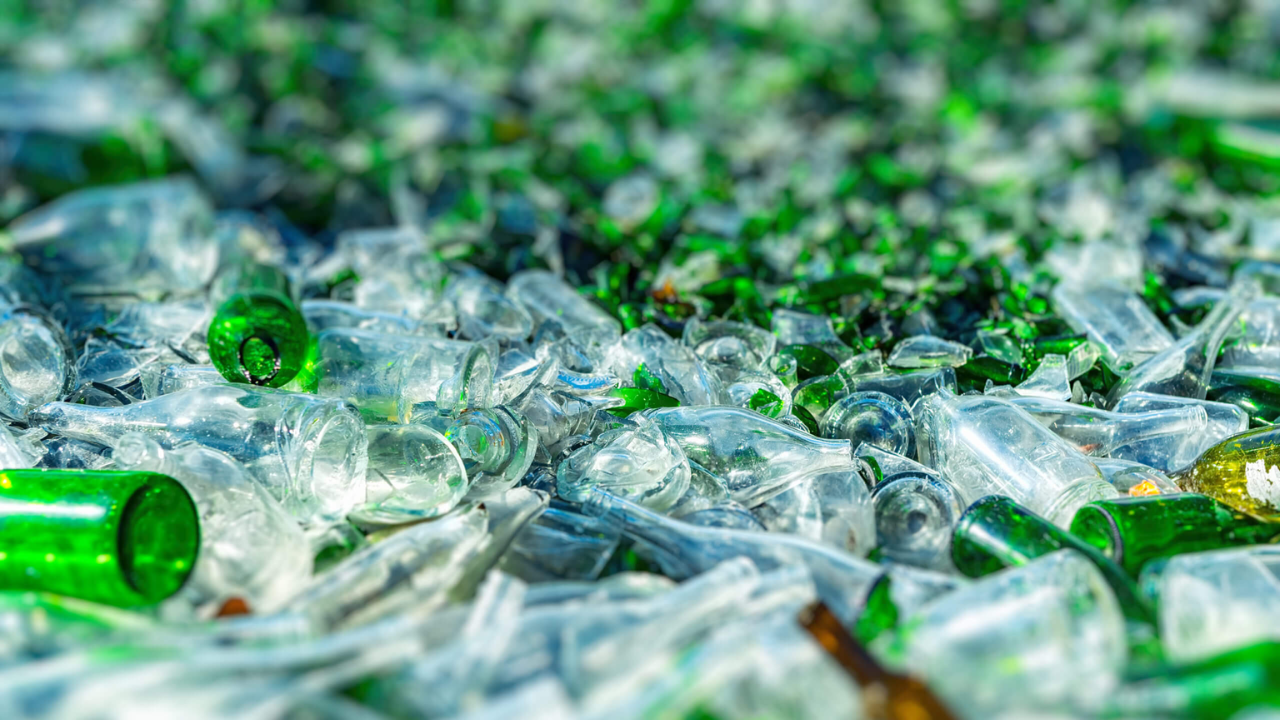
The material that saved the project is called ultra-lightweight foam glass aggregate. It starts with municipal waste—discarded glass bottles and jars that often fail to find a place in standard closed-loop container recycling due to color mixing or contamination.
Workers grind that glass into a fine powder. They mix it with a specialized foaming agent and feed the blend into a high-heat kiln. As the glass softens, the foaming agent expands, blowing tiny bubbles throughout the mixture.
The resulting product looks nothing like a shattered Heineken bottle. It cools into a porous, closed-cell material that resembles dark, lightweight gravel.
You can hold a handful of it and feel how remarkably light it is. Yet, it possesses the structural strength required to serve as proper highway fill. Because the individual cells are closed off, the material refuses to absorb water. Rainstorms or rising groundwater won't cause it to bloat or gain extra weight.
For the I-17 expansion, this waterproof, featherlight aggregate was manufactured, packed into massive bulk bags, and shipped out to Arizona. Crews installed it at 19 specific sites along the 23-mile corridor, placing it directly over the vulnerable concrete culverts.
By swapping heavy dirt for foam glass, contractors kept the load on the underground structures well within their historical limits. The old culverts didn't need to be replaced. The new highway simply went on a strict diet.
Beyond the Quick Fix
This project marks a shift in how state agencies view recycled materials. Often, recycling programs feel like symbolic gestures rather than practical engineering solutions. Municipalities collect glass, but sorting costs and low market demand mean tons of it still end up buried in landfills.
Using glass aggregate changes the math. It transforms low-value waste into a high-performance civil engineering asset. It is completely inert, non-leaching, rot-resistant, and non-flammable.
Other parts of the I-17 project leaned into similar reuse strategies. When construction crews blasted away rock in the surrounding mountains to carve out wider lanes, they didn't haul all of it away. They crushed the native stone right on-site and reused it for roadbed construction.
Infrastructure projects of this scale usually leave massive environmental footprints. By integrating foam glass at 19 key sites, Arizona managed to cut down on heavy trucking requirements, bypass destructive excavations, and give thousands of glass bottles a permanent, hidden second life.
Next time you drive over an overpass or cruise down a newly widened interstate, remember that the smoothest engineering solutions often hide right beneath your tires. Sometimes, solving a massive structural problem isn't about building stronger supports. It is about lightening the load.