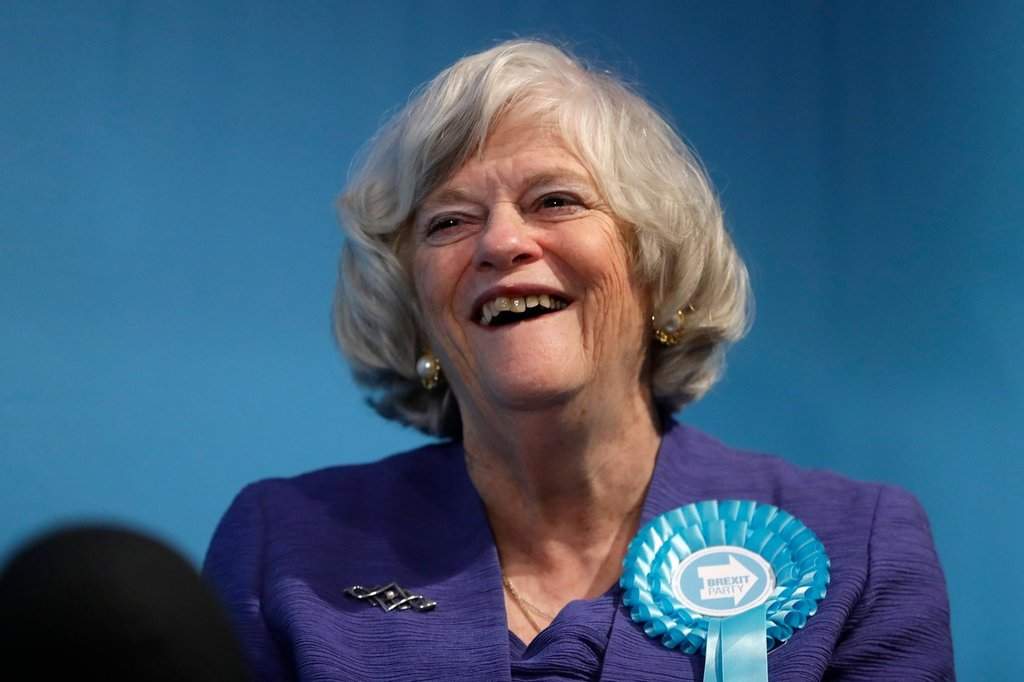
When the Crown Prosecution Service authorized murder charges on July 20 against 28-year-old Joshua Kerry, it marked a grim turning point in British public life.
Ann Widdecombe, 78, was found dead on July 9 in her remote home near Haytor Vale on Dartmoor. Investigators believe she was targeted and attacked around midday on July 8, shortly after completing a television interview. Within days, police arrested Kerry in Rotherham, South Yorkshire, roughly 270 miles away from the Devon cottage where the former cabinet minister spent her retirement.
The case has shocked the public, but for anyone watching the steady rise in political intimidation across Britain, the underlying dynamic feels terrifyingly familiar.
Inside the Investigation into Joshua Kerry
The sheer distance involved in the crime tells a troubling story on its own. Detectives suspect Kerry drove almost five hours from South Yorkshire straight to Dartmoor, carried out a brutal attack, and then made the return trip north.
Initial responses came from Devon and Cornwall Police, who briefly detained another individual before eliminating him from their inquiries. Authority quickly shifted when Counter Terrorism Policing took the lead. That transfer happened after officers executed search warrants in Rotherham and discovered evidence that raised immediate red flags regarding motive.
Charges and Court Proceedings
- Definite Charges: One count of murder against 28-year-old Joshua Kerry.
- Initial Arrest: July 11 in Rotherham on suspicion of murder.
- Rearrest: July 13 on suspicion of the commission, preparation, or instigation of acts of terrorism.
- Court Appearance: Westminster Magistrates' Court on Tuesday, July 21.
Frank Ferguson, chief crown prosecutor for the CPS Special Crime and Counter Terrorism Division, made clear that prosecutors evaluated the evidence alongside counter-terror detectives before filing formal charges. While Kerry faces a murder charge rather than a specific terror offense right now, authorities aren't ruling anything out as the case moves forward.
Why Counter-Terrorism Officers Took Over
Laurence Taylor, head of Counter Terrorism Policing, revealed outside New Scotland Yard that detectives are pursuing over 800 lines of inquiry. That level of resource allocation reflects both Widdecombe’s high public profile and the targeted nature of the assault.
When counter-terror units take over a murder probe, it usually means officers found materials or digital traces suggesting ideological intent. Detectives are explicitly looking at whether hatred of Widdecombe's outspoken social views or hostility toward the Reform UK party fueled the attack.
Widdecombe never shied away from controversy. Across four decades in politics, she built a reputation as an uncompromising figure. She served as a Conservative Home Office minister under Sir John Major, campaigned fiercely for Brexit, sat as a Member of the European Parliament, and most recently acted as a prominent spokesperson for Nigel Farage's Reform UK. She was also a staple of British pop culture, appearing on shows like Strictly Come Dancing and Celebrity Big Brother.
Her high visibility made her recognizable to millions. It also made her vulnerable.
The Broader Pattern of Violence Against UK Figures
This tragedy doesn't exist in a vacuum. British public figures face an increasingly hostile climate, and the list of attacks over the past decade paints a stark picture.
- Jo Cox (2016): The Labour MP was shot and stabbed in her Birstall constituency by a far-right extremist during the EU referendum campaign.
- Sir David Amess (2021): The veteran Conservative MP was stabbed to death during a routine constituency surgery in Leigh-on-Sea by an Islamic State supporter.
- Ann Widdecombe (2026): The former minister was killed in her own home in what police describe as a targeted attack.
Notice the shift in geography between these cases. Cox and Amess were killed in public or semi-public settings during constituency work. Widdecombe was attacked inside her isolated private home, miles away from Westminster or formal political surgeries.
That shift presents a nightmare scenario for police protection teams. Securing Parliament and formal surgeries is hard enough. Protecting hundreds of current and former politicians in their private residences across the country requires a completely different strategy.
Lone Actors and the Challenge for Intelligence Services
Security experts frequently point out that lone actors present the hardest threat to intercept. Unlike organized criminal cells or structured terrorist networks, an isolated individual usually doesn't leave a heavy digital trail. They don't need complex logistics, weapons smuggling, or group planning.
If a suspect buys a basic weapon or uses personal transport to travel across the country, traditional signal intelligence won't pick up chatter on encrypted messaging boards. The suspect isn't communicating with anyone else.
Reports indicate that Kerry was not on the radar of South Yorkshire Police prior to his arrest, nor was he flagged under the government's Prevent counter-terrorism program. That absence of prior warnings highlights the core problem facing UK intelligence. Identifying a self-radicalized individual before they take action remains extremely difficult.
How Rhetoric and Online Extremism Fuel Real-World Violence
Political commentators across the spectrum have noted how polarising debate in the UK has become. When public discourse treats political opponents as moral enemies rather than mere policy rivals, fringe individuals feel empowered to act.
Research on political violence across Europe shows a measurable rise in threats and physical harassment aimed at public figures. Extremist rhetoric online acts as a force multiplier. An isolated person sitting in a bedroom in South Yorkshire can consume endless streams of hostile content targeting specific political figures or movements.
When extreme hostility becomes normalized on social platforms, line-crossing behavior stops feeling unthinkable to an unstable mind. It begins to feel like a duty.
What Needs to Happen Next
This tragedy demands concrete adjustments to how the UK handles security for public figures and tracks online threats. Here are the immediate practical steps required from authorities and political institutions.
Enhance Home Security Standards for High-Profile Figures
The parliamentary security team must expand security assessments beyond sitting MPs. Former ministers and high-profile commentators who remain politically active need access to residential security audits, emergency response links, and basic perimeter protection measures.
Overhaul Local Intelligence Sharing
Counter-terrorism units need better mechanisms to process micro-threats. When individuals express violent intent on niche forums or local social channels, that information must feed into central threat databases faster, even if the individual has no prior criminal history.
Enforce Strict Legal Boundaries Around Active Cases
With Joshua Kerry set to appear at Westminster Magistrates' Court, the CPS has issued strict reminders about contempt of court rules. Media outlets, social media users, and political commentators must avoid publishing speculative commentary on motives that could prejudice a future jury trial.
Lower the Temperature of Political Discourse
Political leaders across all parties must actively condemn personal demonization. Robust debate over policy is essential for democracy, but framing political rivals as threats to existence creates an environment where vulnerable or radicalized individuals choose violence.

/cdn.vox-cdn.com/uploads/chorus_image/image/73064899/1255687.0.jpg)