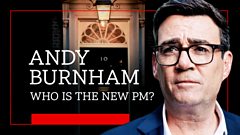
Andy Burnham officially walked through the doors of 10 Downing Street this week. He's Britain's seventh prime minister in a single decade.
If you've been watching the revolving door of UK politics since 2016, you might feel a heavy sense of déjà vu. Another leader. Another promises-filled speech on the steps outside Number 10. Another reset.
I don't blame anyone for feeling exhausted by it.
Keir Starmer's exit felt almost abrupt, yet inevitable after a brutal set of midterm local election losses and mounting pressure within his own ranks. But when Burnham stepped in after sweeping the Labour leadership contest with 379 nominations out of 401 MPs, the shift felt different. This wasn't just a swap of front-bench suits. It was a complete overhaul of political philosophy.
Most people outside Westminster still think of Burnham as the guy who used to run Greater Manchester or the health minister from Gordon Brown's cabinet. If you think his premiership will just be "Starmerism with a northern accent," you're completely misreading the situation.
The Northern Blueprint That Built the Prime Minister
To understand what Burnham is doing in London right now, you have to look at what he did in Greater Manchester over nine years.
He didn't just manage the city. He reshaped how it operated.
When he took over as Mayor of Greater Manchester in 2017, local public transport was fragmented, overpriced, and frustrating to use. Private bus operators picked profitable routes and abandoned the rest. Burnham fought the legal battles, took on private operators, and brought the bus network back under public control through the Bee Network. It was the first time an English region outside London did that since 1986.
He didn't stop at buses. On technology, he took a firm line against overseas giants. While Westminster handed huge NHS data contracts to American firms like Palantir, Burnham refused to give Palantir contracts in Greater Manchester. He wanted public oversight, local data control, and local accountability.
That same philosophy is coming to Westminster right now.
On day one in office, Burnham scrapped the £1.8 billion Digital ID card scheme scheduled for 2029. Why? He argued the money was far better spent giving families direct relief on daily living costs. That single decision showed everyone where his priorities lie. He isn't interested in grand, costly bureaucratic experiments. He wants practical relief on household bills.
What Everyone Gets Wrong About His Economic Strategy
The media love simple labels. Left-wing. Right-wing. Centrist. Reformer.
None of those labels fit what Burnham is actually setting up. His opponents like to paint him as an economic spender who will blow the budget. His supporters expect him to reverse every policy from the last decade overnight.
Neither side is right.
In his first major speech as prime minister, Burnham made a point that flew under the radar for many commentators. He stated plainly that he has always managed money prudently and won't take wild risks with the national economy. To prove it, his chancellor appointment surprised almost everyone in Westminster. By appointing John Healey as Chancellor of the Exchequer, he picked a steady, conservative pair of hands to run the Treasury.
He isn't planning a spending spree funded by borrowing. Instead, he's planning a structural shift in how public funds get spent.
His main idea is decentralization. For forty years, decision-making sat inside a few square miles of London. Treasury officials in Whitehall decided whether a bus route in Yorkshire or a clinic in Cornwall got funding. Burnham wants to push that money out into local councils and regional mayors across the entire country.
It's a huge shift.
Instead of Whitehall holding the purse strings, local leaders will get block grants to manage public services, transport, and housing directly. If a local council knows street homelessness is its biggest issue, it puts the money there.
His very first instruction as prime minister was simple. End rough sleeping on British streets. He did it in Manchester by pooling resources across housing charities, health providers, and local councils through his "A Bed Every Night" initiative. Now he wants to replicate that structure nationwide.
Five Bold Policy Moves You Can Expect Right Away
If you want to know what the next twelve months look like, look at his immediate choices. He isn't waiting around to establish his agenda.
1. Scrapping Overseas AI Dependencies
Burnham's advisers have already signaled a major shift away from relying on American tech companies for UK public infrastructure. Expect a strategy focused on domestic data centers, local ownership, and British-developed technology solutions.
2. A Total Overhaul of Social Care
He moved Yvette Cooper to the Department of Health with a specific mission. Fix social care. Burnham has argued for over a decade that social care should be integrated into the NHS, creating a unified system from cradle to grave.
3. Public Transport Re-Nationalization
Following the Manchester model, expect regional mayors to get fast-tracked powers to bring local bus networks back under public franchising. Rail integration will follow closely behind.
4. Direct Cost of Living Relief
Rather than waiting for long-term growth to trickle down, Burnham plans to redirect funds from cancelled tech projects into immediate energy bill offsets and local council support funds.
5. Devolution of Budgetary Power
A massive portion of central government funding will be handed directly to local authorities across England, Wales, and Scotland, bypassing traditional Whitehall sign-offs.
The Massive Risks Facing the Burnham Cabinet
Let's be realistic here. This isn't going to be an easy ride.
The political headwinds are fierce. Britain's economy is growing slowly. Public services are stretched thin. The NHS has massive backlogs, and public patience is almost non-existent after years of political musical chairs.
Burnham is also walking into a delicate international situation. His first leader-to-leader calls included talks with Donald Trump, Volodymyr Zelenskyy, and Ursula von der Leyen. Managing relations with a volatile US administration while trying to keep British tech and security sovereign will require diplomatic skill that Burnham hasn't had to use as a regional mayor.
There is also the internal Labour party dynamic. Sacking former cabinet members who were loyal to previous leadership creates bitter backbenchers. Those backbenchers have votes. If Burnham's economic policies take too long to show results in everyday lives, those same MPs who backed him could turn quickly.
He knows the clock is ticking. The British public doesn't want speeches. They want working trains, shorter doctor waiting lists, and cheaper groceries.
How to Track His Next Steps and Why It Matters to You
If you want to see whether Burnham's government will actually deliver or fall into the same traps as his predecessors, don't watch the drama in the House of Commons. Watch these three concrete indicators over the next 90 days:
- The Autumn Budget Statements: Watch how John Healey allocates funds between Whitehall departments and regional authorities. If regional mayors get direct control over housing and transport budgets, the reform is real.
- Social Care Legislation: Look out for early draft bills combining social care funding with NHS operational budgets. This will be the true test of his health policy.
- Local Transport Franchising Orders: Keep an eye on how quickly the Department for Transport grants franchising powers to regional authorities outside London and Manchester.
The Burnham era has started. It promises the biggest structural shift in British governance in forty years. Whether it succeeds or becomes another entry in Britain's long list of short-lived premierships will depend entirely on how fast those changes reach your front door.

/cdn.vox-cdn.com/uploads/chorus_image/image/73064899/1255687.0.jpg)