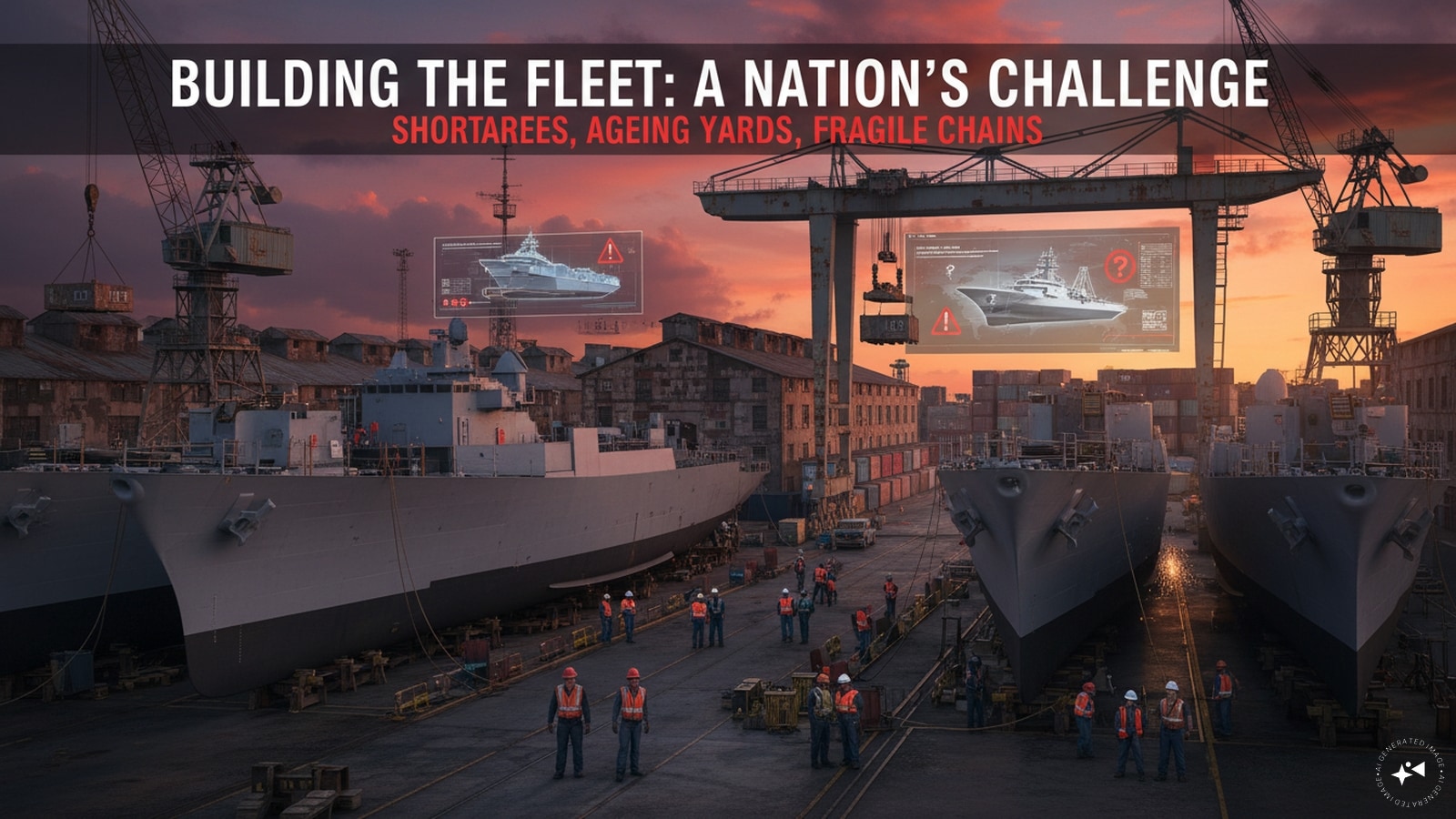
The United States Navy is shrinking while its primary geopolitical competitors are expanding their fleets at breakneck speed. If you look at why the world's most powerful military can't seem to get new hulls into the water on time, you'll find a complete breakdown in domestic industrial capacity. Billions of dollars flow from Capitol Hill into defense contracts every single year, yet major ship classes face years of delays and billions in cost overrings.
The problem isn't just about money. It's about a shattered supply chain, a severe labor drain, and decades of strategic neglect.
The Core Labor Shortage
You can't build modern warships without skilled hands. Right now, major private shipyards are struggling to recruit and retain welders, pipefitters, and marine technicians. Graying veterans are retiring in droves, taking decades of institutional knowledge with them.
When you offer a young worker entry-level wages that fail to compete with local retail or tech logistics jobs, they walk away. Shipyard work is grueling, dangerous, and often requires moving to isolated coastal manufacturing hubs.
The math is brutal. For instance, private yards contracted to build guided-missile frigates have found themselves with a workforce so constrained they can only produce a fraction of the originally promised output annually. Training a new generation takes years, and high turnover rates mean yards are constantly resetting their training pipelines.
Broken Procurement and Constant Redesigns
Another major reason the U.S. can't build ships efficiently is the habit of changing requirements midway through construction.
In an ideal manufacturing environment, you finalize a blueprint, test it, and scale production. The Navy often does the exact opposite. Program managers introduce continuous design changes even after steel has already been cut.
This practice, known in defense circles as concurrency, creates a domino effect of expensive delays. Workers have to rip out newly installed cabling or alter structural frames because defense priorities shifted or lawmakers demanded extra specs.
- Unstable funding streams leave private contractors guessing about future orders.
- Chronic design alterations force expensive rework on ships already under construction.
- A lack of competition among a handful of massive defense contractors drives up costs without performance incentives.
Infrastructure Decay and Outdated Yards
Private shipyards are working with aging physical infrastructure. Many facilities rely on dry docks, cranes, and machine tools built during the mid-20th century. Upgrading these multi-acre industrial sites requires massive capital investments that private companies hesitate to shoulder alone without guaranteed long-term federal backing.
Meanwhile, commercial shipbuilding in America has basically ceased to exist. Because the Jones Act restricts domestic coastal trade to U.S.-built ships, the domestic commercial market is tiny and heavily insulated. This means American shipyards don't benefit from the mass production efficiencies seen in global commercial maritime hubs. They build bespoke, highly complex warships in small batches, driving the price per hull sky-high.
What Needs to Happen Next
Fixing this industrial crisis requires ditching business-as-usual approaches in Washington and private boardrooms alike.
First, the Navy must freeze ship designs before construction begins. No mid-build alterations unless it's an absolute national security emergency.
Second, direct federal subsidies need to target vocational training pipelines, ensuring technical school graduates actually enter maritime trades with competitive, long-term career incentives.
Until Congress and the Pentagon align their demand signals with actual physical capacity, the U.S. will keep writing massive checks for ships that arrive years too late.